The completion of excavations in Zubin Potok, where human remains believed to belong to 23 people have been discovered, represents only the visible part of an investigation that began long before excavation teams entered the site.
Behind the operation was a lengthy investigation conducted largely away from public attention by the Kosovo Police Directorate for the Investigation of War Crimes.
According to sources cited by Sinjali, the investigation was led by a special team established by the director of the War Crimes Directorate and consisting of four police investigators and one senior officer.
Small in number, the team nevertheless reached one of the most significant results in Kosovo’s recent war-crimes investigations.
The work did not begin when excavation machinery arrived at the suspected locations.
For an extended period, investigators collected and verified information, followed leads and connected evidence that could help establish what happened during the war.
According to the sources, the investigation eventually progressed to the point where operational intelligence was translated into concrete actions.
Initial operations led to the arrest of several suspects, but the investigation continued beyond the arrests.
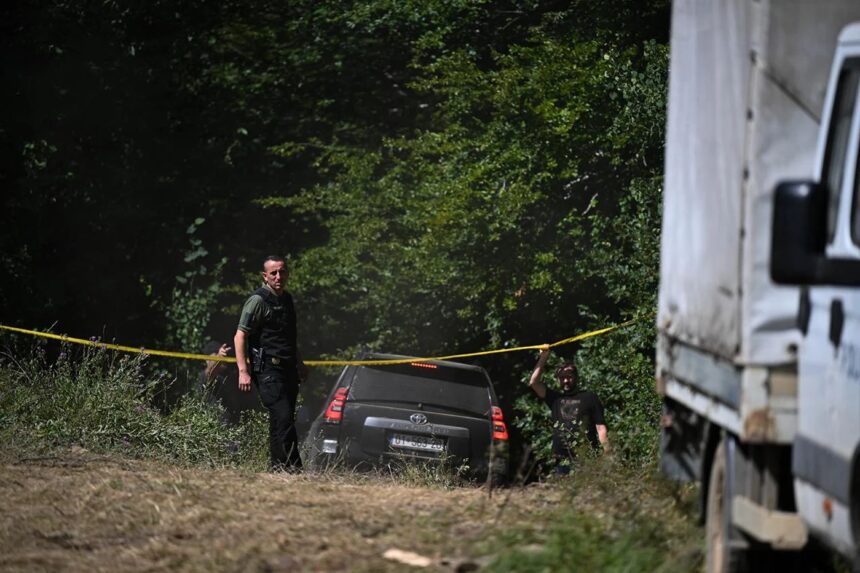
The trail followed by investigators eventually led the Kosovo Police and other competent institutions to suspected locations in Zubin Potok.
What followed carried a significance far beyond a conventional police operation, particularly for families who have spent more than two decades searching for answers about missing relatives.
The first suspected location was identified, followed by a second and then a third.
Human remains believed to belong to 23 people were discovered across the three sites uncovered during the operation, according to preliminary assessments.
For investigators, the discoveries represent the outcome of a lengthy investigative process.
For the justice system, they could provide evidence and leads that may help establish the circumstances surrounding war crimes and identify those responsible.
For families of missing persons, however, the discoveries could have an even greater meaning: the possibility that decades of uncertainty over the fate of their loved ones may finally lead to answers.
The significance of the investigation therefore cannot be measured only by the number of arrests or locations identified.
Its importance also lies in the fact that a team of just five officers, working with the wider War Crimes Directorate, managed to turn information gathered quietly over time into an investigation that eventually reached the ground where part of the truth about the war may have remained hidden for decades.
In cases of this nature, professional police work does not necessarily require publicity.
The results speak for themselves: several suspects arrested, three suspected mass graves identified and human remains believed to belong to 23 people brought to the surface.
The next steps now rest with forensic experts and judicial authorities, who must determine the identities of the victims, establish individual responsibility and reconstruct the full circumstances of what happened.
For the investigators who worked on the case, perhaps the simplest summary is also the most powerful: five police officers, a long investigation, three graves and 23 lives that, after decades, may finally have their names restored.