Is 2026 the Year of Political Resolution in Serbia?
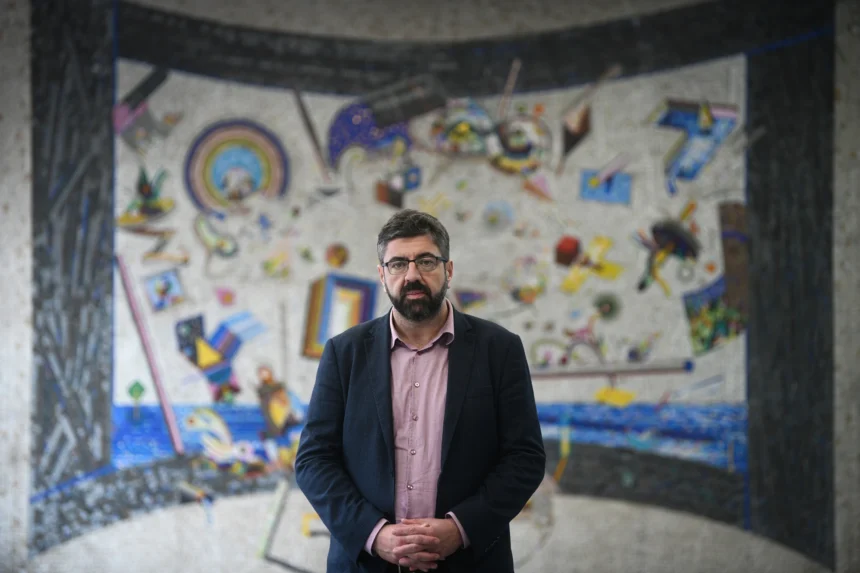
Serbia has long been ready for change, and the past year has clearly demonstrated that citizens are not only prepared but willing to actively fight for it, writes Radomir Lazović, co-president of the Green–Left Front (ZLF).
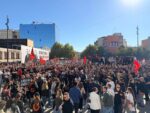
The scale and geographic spread of protests across almost every town in Serbia confirm a deep-rooted dissatisfaction with the current government. However, the same year also revealed a darker reality: the regime is prepared to use every available means to remain in power.
A Regime Fighting for Survival
According to Lazović, the authorities have resorted to hate speech, systematic disinformation, media lynching, and open violence. This includes physical assaults, people being run over by vehicles, job dismissals, blackmail, arrests, repression of independent media, and even the use of sound weapons. He warns that this is no longer a conventional political struggle, but a battle for the regime’s bare survival.
The Need for a United Opposition Front
The outcome of this struggle will largely depend on whether all anti-regime forces can unite into a broad, coordinated front. Lazović emphasizes that this unity must be based on three key agreements:
- How to force early elections
- How to win despite electoral fraud
- How to protect citizens currently targeted by the regime
Without such coordination, he argues, President Aleksandar Vučić will continue to buy time, deepen divisions, and postpone elections indefinitely.
Vučić’s Strategy: Delay, Repression, and Resource Control
Lazović rejects claims that Vučić is already politically defeated. On the contrary, he believes the regime has reconsolidated through repression and time-buying tactics. Key institutions, particularly the police and security apparatus, are increasingly staffed by the most loyal figures, willing to abuse state power to defend the ruling structure.
Vučić, Lazović argues, avoids elections not only due to fear of political accountability and declining support, but also because remaining time is being used to channel massive public funds into projects benefiting regime-linked tycoons.
Mega-Projects, Corruption, and Environmental Destruction
One such project is Expo, which Lazović describes as a multi-billion-euro burden that will deeply indebt Serbia, while enriching firms close to the ruling party. Another is the revived plan to cut down Košutnjak forest, masked once again as a “project of national importance”.
While citizens protest in the streets, Lazović warns, cultural heritage, natural resources, and public money are disappearing before their eyes.
Change Means More Than a Change of Power
The desired resolution, he stresses, is not merely a change of government, although that is a prerequisite. It must mark the beginning of genuine improvements in everyday life.
He points to alarming indicators:
- Life expectancy in Serbia is nearly 10 years lower than the EU average
- Citizens work more hours for significantly lower wages
- Food prices rival European levels, while rent and utilities consume growing portions of income
- Air pollution, unsafe food, unmanaged waste, and rising public debt endanger public health and future generations
The Green–Left Front, Lazović says, is ready to immediately propose concrete measures, including:
- Reducing food prices
- Regulating runaway housing rents
- Improving air quality
- Confiscating assets obtained through corruption
European Union Membership as a Strategic Goal
Lazović identifies EU membership as the most significant step Serbia can take toward restoring institutions, rule of law, media freedom, and economic development. The Green–Left Front and the Free Citizens’ Movement have formed a strategic partnership aimed at achieving EU accession by 2032, provided a pro-European government replaces the current regime.
Encouragingly, a special mission of the European Parliament is arriving in Serbia, following two resolutions and the harshest European Commission report to date. Lazović sees this as a major international breakthrough, noting that even some of Vučić’s former supporters within the EU are distancing themselves.
The European Union, he concludes, is increasingly standing with the citizens of Serbia — and political change should be used to finally open the door to EU membership.