Twenty-seven years after the end of the Kosovo war, the discovery of new graves and human remains shows that one of the region’s deepest unresolved wounds remains open, with around 1,700 people still officially listed as missing.
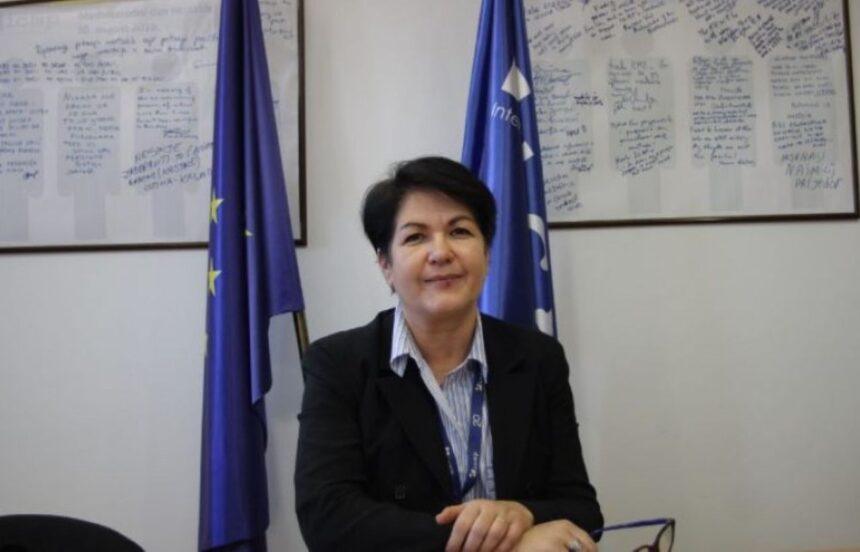
Samira Krehić, the International Commission on Missing Persons (ICMP) representative for the Western Balkans, said the passage of time is making the search increasingly difficult, as witnesses die, families move away and potentially crucial information becomes harder to obtain.
In an interview with Radio Kosovo, Krehić stressed that the search for missing persons is a complex process involving legal, institutional, scientific, financial and political factors. She also called for the issue to be treated primarily as a humanitarian and human-rights matter rather than being subjected to political disputes between Prishtina and Belgrade.
“The passage of time is one of the important factors that does not work in our favor, because witnesses die, families move away, information becomes increasingly difficult to collect and consolidate from different sources, while general interest in the issue of missing persons fades over the years,” Krehić said.
She added that political tensions between the countries involved in the conflicts further complicate efforts, particularly when cooperation and information-sharing are required to identify possible burial sites.
New discoveries show the issue is far from over
Recent discoveries of locations containing human remains, including in the Kalludër area of Zubin Potok, demonstrate that the issue of missing persons is not simply a matter of the past, Krehić said.
“The fact that new graves have recently been discovered tells us that the issue of missing persons is by no means a matter of the past,” she said, adding that the unresolved cases continue to affect families, bilateral relations and broader regional stability.
At the same time, she described the discovery of new sites as encouraging, saying it demonstrated a willingness by Kosovo institutions to continue actively searching for information and investigating potential locations.
Krehić said it is realistic to assume that additional undiscovered locations still exist in both Kosovo and Serbia.
“Based on ICMP’s extensive experience in this process and the analysis of the data we have, it is realistic to assume that there are locations that have not yet been found and investigated,” she said.
She emphasized the importance of professional analysis of existing information and cooperation among all agencies and institutions involved in the search.
Information may still be hidden in Kosovo and Serbia
Krehić also said it was reasonable to believe that information and documents relevant to the fate of missing persons may still exist but remain inaccessible to the public.
However, she stressed that such information must first be collected, examined and analyzed by competent professional institutions before being made public.
Only scientifically verified findings, she said, should be released in order to avoid creating false narratives or unrealistic expectations among families.
She also called for people who may possess information about possible burial sites to come forward, including anonymously.
ICMP has developed an application known as “Report a Grave,” which allows individuals to report suspected locations and circumstances surrounding disappearances anonymously.
According to Krehić, ICMP verifies the information using modern investigative tools, artificial intelligence, public databases and other available sources before forwarding relevant information to competent local institutions.
“Information about possible burial locations is always the starting point of the process,” she said, appealing to anyone with potentially useful information to report it.
Cooperation between Kosovo and Serbia remains essential
Krehić said regional cooperation on missing persons predates the 2023 commitments between Kosovo and Serbia.
ICMP has supported regional cooperation for years, including through the Missing Persons Group established in 2018 following the signing of the Declaration on Missing Persons at the Berlin Process summit in London.
The group brings together competent institutions from Croatia, Serbia, Bosnia and Herzegovina, Kosovo and Montenegro and has established a regional database of active missing-person cases from the territory of the former Yugoslavia.
The database allows participating institutions to monitor the status of individual cases and changes to those cases in real time.
Krehić said the EU-facilitated mechanism between Kosovo and Serbia operates within the broader normalization dialogue and should ultimately be judged by concrete results.
“For the families of missing persons, success is measured by concrete results,” she said, emphasizing that political will from all sides is necessary to turn existing commitments into practical action.
The issue should be separated from politics
Krehić argued that finding missing persons and providing families with answers is both a humanitarian imperative and a human-rights obligation.
Determining the truth based on facts, she said, strengthens public confidence in local institutions and contributes to building a stable society.
“Political will is necessary, but politicization of the process is an obstacle,” she said.
She also stressed that individual cases should be handled through professional and impartial institutions rather than being used as instruments in political disputes between Prishtina and Belgrade.
The international community, she said, should continue encouraging and supporting Kosovo, Serbia and other countries affected by the wars of the former Yugoslavia, while ensuring that existing international commitments are translated into concrete action.
However, international support should strengthen local institutions rather than replace them.
Kosovo cannot afford another 27 years
Krehić said Kosovo should not wait for results but should take decisive steps to accelerate the search for those still missing.
ICMP is prepared to provide expertise and assistance, she said, but ultimate responsibility lies with Kosovo’s institutions.
“The issue of missing persons must be depoliticized and support must be ensured for all families of missing persons, while local institutions must take the initiative in this process,” Krehić said.
She called for every lead to be investigated and for all available expertise, including that of ICMP and other international organizations, to be used.
“The families are a great force. So many years have passed, and the attention of the international community is shifting toward other crises and hotspots around the world,” she said.
The message from ICMP is therefore clear: the unresolved cases cannot simply be allowed to disappear with time. If Kosovo and Serbia are serious about addressing one of the most painful legacies of the war, they will need greater cooperation, access to information, professional investigations and sustained political commitment — before another generation of families is left waiting for answers.