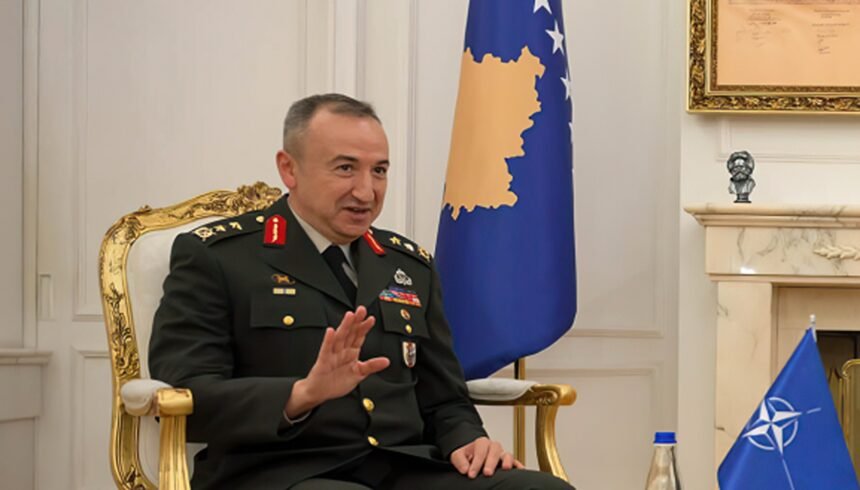
The NATO-led KFOR mission is gradually reducing its permanent presence on the main bridge over the Iber River in Mitrovica, but the process will depend on security conditions on the ground, KFOR Commander Major General Ozkan Ulutas said.
In an interview, Ulutas said the transition is part of a broader effort to optimize KFOR’s deployment and is being carried out in close coordination with the Kosovo Police, EULEX and other relevant actors.
“The transition from KFOR’s permanent presence on the Iber Bridge is based on certain conditions,” Ulutas said, stressing that the process is closely coordinated with Kosovo’s security institutions and international partners.
The drawdown does not mean KFOR is leaving northern Kosovo. Ulutas emphasized that the mission will maintain a visible presence in both North and South Mitrovica, as well as across northern Kosovo.
KFOR has previously said that the gradual transition was prompted by an improved security situation and forms part of a wider optimization of its deployment. The mission has also stressed that the process can be reversed if developments threaten lasting security or regional stability.
The future status of the bridge itself remains a separate issue. KFOR has made clear that decisions regarding whether the bridge should be opened to vehicle traffic fall to the relevant Kosovo institutions and the EU, rather than to KFOR.
Ulutas’s latest remarks underline that while KFOR is adjusting its permanent deployment at the bridge, NATO’s security presence in northern Kosovo remains firmly in place.