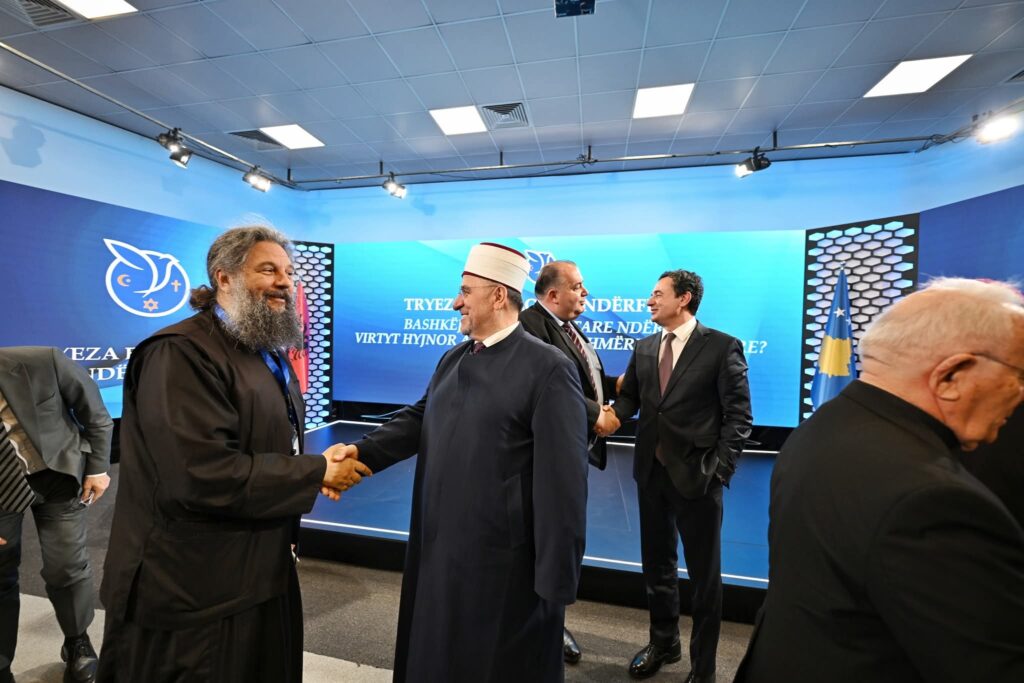
The Interfaith Dialogue roundtable titled “Interfaith coexistence among us: divine virtue or social necessity?” held today in Kosovo brought together institutional, religious, and civil society representatives, aiming to strengthen cooperation, understanding, and harmony among communities.
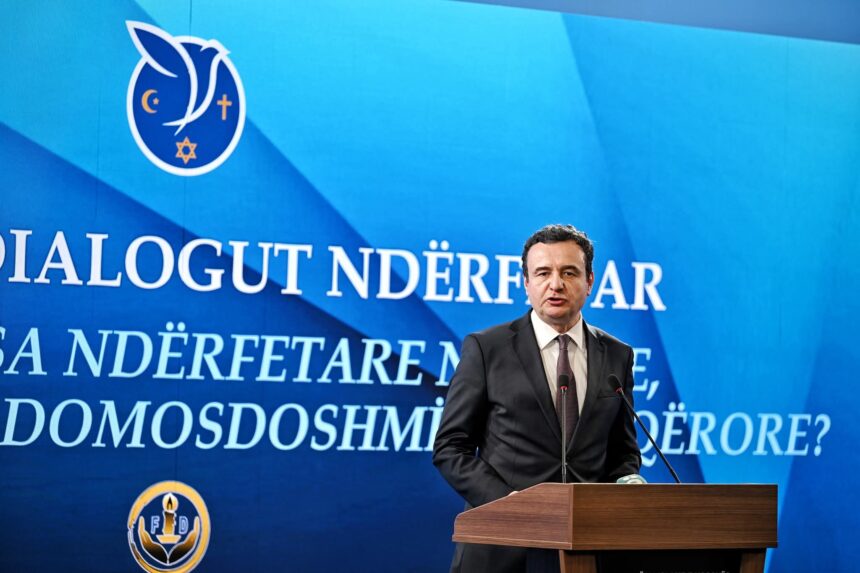
Prime Minister Albin Kurti emphasized the historical and contemporary importance of interfaith coexistence in the country, describing it as more than a modern aspiration.
“In Kosovo, interfaith coexistence is not just a modern aspiration, but a historical tradition built over centuries on respect and living together. It remains a fundamental societal value that has contributed to cohesion and stability, proving that diversity is not a source of division, but a shared wealth that must be preserved and cultivated for future generations,” Kurti stated.
He underlined that the Government of Kosovo has taken concrete steps to protect and promote cultural and religious heritage, including the restoration of mosques, churches, tekkes, hammams, and Jewish cultural centers, transforming them into living spaces of memory, faith, and dialogue.
Kurti also stressed that Kosovo has moved beyond the concept of mere tolerance.
“We are not speaking only about tolerance, but about coexistence, cooperation, coordination and interaction between different religious communities,” he added.
Concerns over attempts to undermine harmony
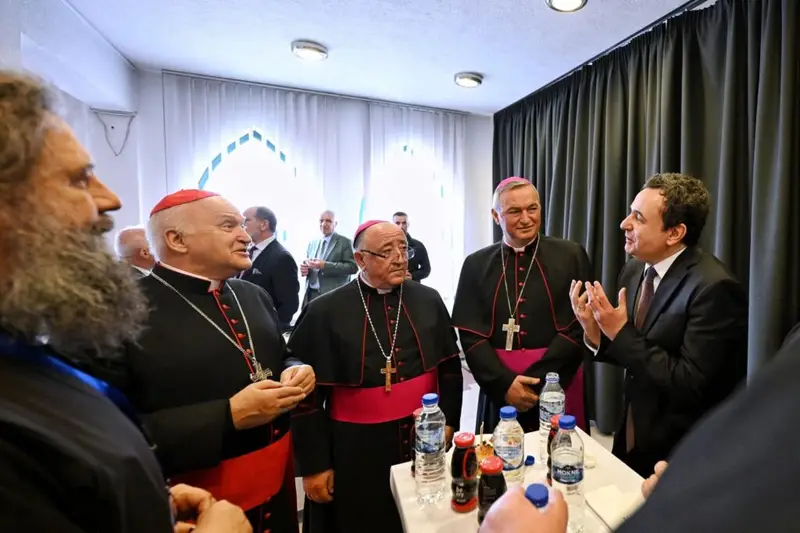
Recently, there have been noticeable efforts and tendencies aimed at damaging this harmony. This makes it even more necessary for joint engagement by institutions and religious communities in order to preserve, strengthen, and pass these values on to younger generations.
Kurti warned that such attempts whether intentional or unintentional must be carefully addressed through dialogue, vigilance, and equal application of the law.
“There are sometimes such attempts. I don’t know whether they are expressions of wrong intentions or unintentional mistakes. In any case, we must be careful, identify who is harming our internal harmony, and try to engage in dialogue with them. Of course, the law must apply equally to everyone. The law should not divide society into the unprotected and the untouchable, but rather ensure equality before the law. In this sense, I am optimistic that such attempts, as they have failed in the past and are failing in the present, have no future,” Kurti said.
He further emphasized that there may also be external factors contributing to attempts to undermine religious harmony, stressing the importance of strong institutional cooperation with religious communities, particularly the Islamic Community of Kosovo, with whom there is ongoing communication regarding any activities or narratives that contradict the country’s tradition of mutual respect and coexistence.
Call for unity and continued cooperation
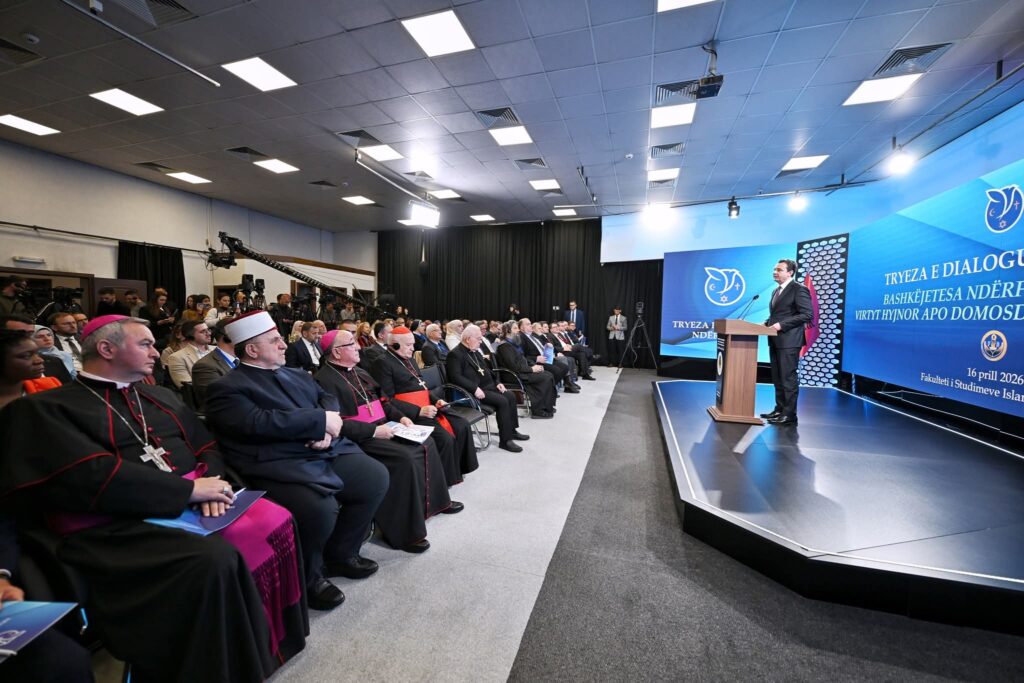
Participants at the roundtable agreed that preserving interfaith harmony requires continuous dialogue, mutual respect, and joint engagement between institutions and religious communities.
The shared message from the discussion was clear: dialogue, respect, and cooperation remain the foundation of a stable and united society. Participants concluded that peace, understanding, and tolerance must be preserved and further strengthened for future generations.