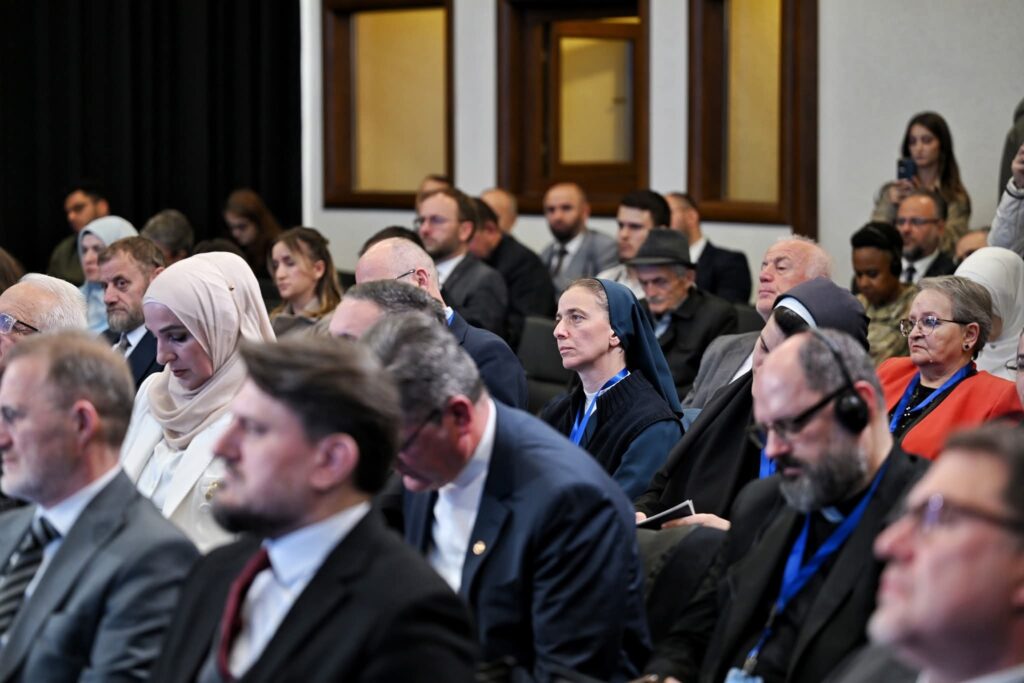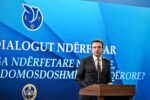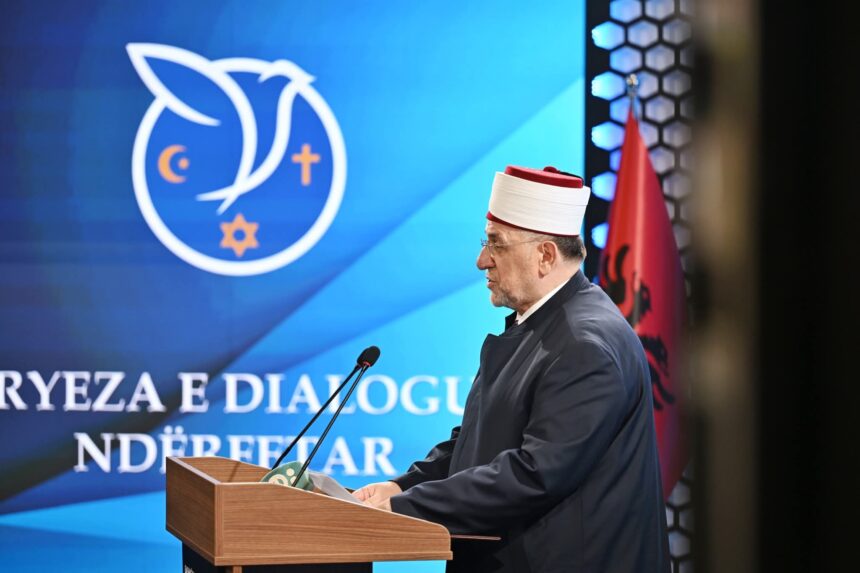
At a time when social challenges and external influences are testing societal cohesion, an interfaith roundtable held in Kosovo reaffirmed coexistence as one of the strongest pillars of the country’s identity.
The Mufti of Kosovo, Naim Tërnava, emphasized the spiritual and social dimensions of interfaith harmony, describing it as a value inherited through centuries and a shared obligation for the future.
“We have gathered here today, at the initiative of the ‘Drita’ foundation, to hold a roundtable on the topic: ‘Interfaith coexistence among us: divine value or social necessity?’, organized for the second consecutive year. This initiative represents a precious value and a sincere effort to affirm the divine and human dimension of coexistence,” he said.
According to him, the history of Albanians stands as proof of a harmony built across generations, where respect for others’ beliefs has become part of the national identity. He underlined that coexistence is not merely a theoretical ideal, but a lived reality in Kosovo.
“Our religious beliefs are spiritual and moral wealth that give meaning to life and strengthen social bonds. Therefore, we reaffirm our commitment to cultivating understanding, respecting our own faith while appreciating that of others. This is also a divine obligation,” Tërnava stated.
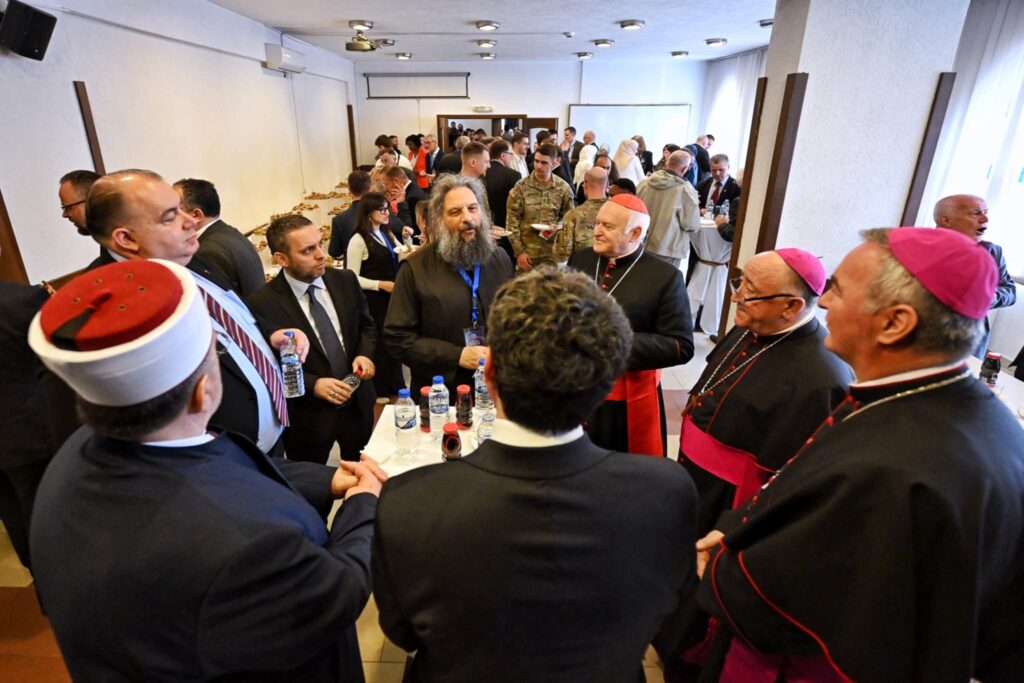
Leaders also stressed that, alongside the well-established values of coexistence, recent developments have revealed attempts and tendencies aimed at undermining this harmony. This makes a joint commitment by institutions and religious communities even more necessary, in order to preserve, strengthen, and pass these values on to future generations.
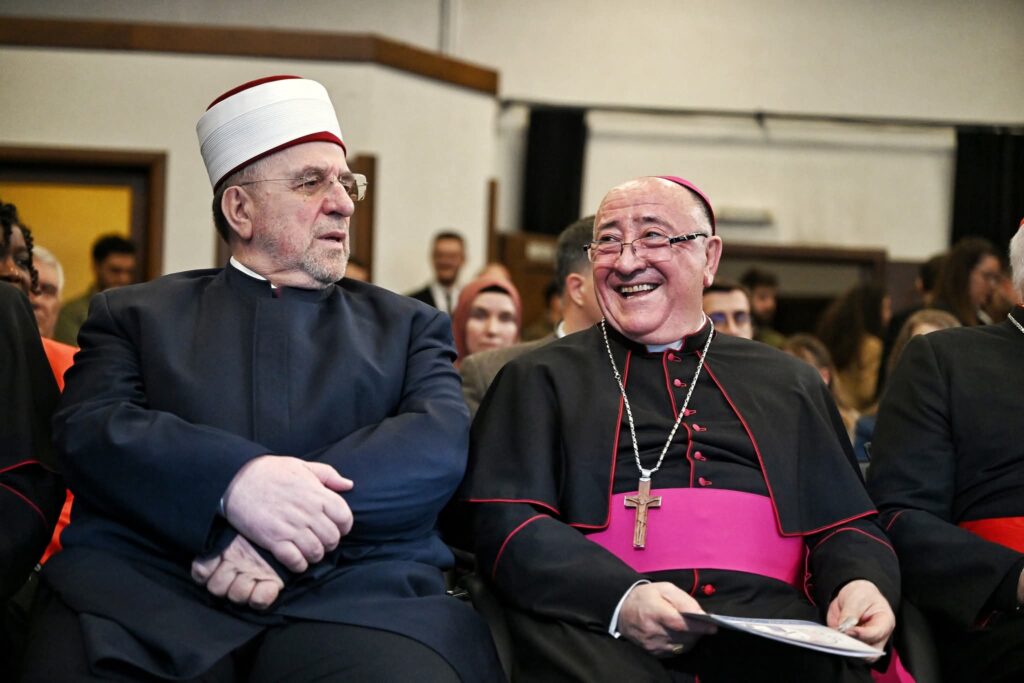
In this context, Tërnava raised concerns about developments that, according to him, are putting interfaith tolerance at risk, pointing to divisive narratives and calls that threaten social unity.
“In recent times, particularly over the last two decades, there have been those who have not welcomed this harmony and interfaith coexistence. Under the pretext of democracy and freedom of expression—without understanding what democracy truly is or the limits it entails—some are deliberately slipping into hate and continuously calling for division within the Albanian nation. There are calls for conversions, promoted in the name of a false ‘Albanianism,’ suggesting that one must abandon Islam to be a ‘good Albanian.’
This has nothing to do with reality. It is deeply demeaning—it is hatred, even a crime. A crime is not only taking someone’s life, but also violating their fundamental rights. We must respond with maturity and wisdom, and make it clear to these individuals and movements—who remain few compared to our population—that they are serving certain foreign agendas, which seek to sow division within the Albanian people through them.
However, Albanians know how to judge correctly. They see clearly, they understand reality, and I believe this remains only an attempt,” he emphasized.
In conclusion, Tërnava reiterated the message of unity and mutual respect, stressing that interfaith harmony in Kosovo is a national asset that must be safeguarded at all costs.
“Albanian identity does not deny religion; it honors religion, but rejects division in its name,” he concluded.