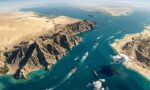
Safe passage through the Strait of Hormuz was called for by numerous countries in Paris. At the conference organized by Emmanuel Macron, discussions focused on securing the strait through a naval mission.
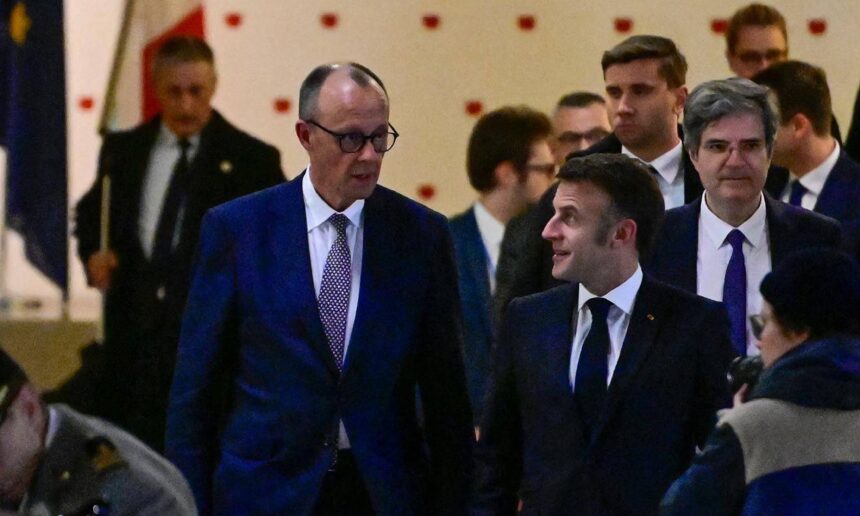
The President of France, Emmanuel Macron, the Prime Minister of United Kingdom, Keir Starmer, the Prime Minister of Italy, Giorgia Meloni, and the Chancellor of Germany, Friedrich Merz, appeared together before the media in Paris, aiming to send a signal of European unity.
Although Iran again threatened a new blockade, Macron initially welcomed Iran’s announcement to reopen the strait for the duration of the ceasefire, but stressed that this was not sufficient.
Addressing both Iran and the United States, Macron called for the permanent reopening of the strait. This was a joint message from around 50 countries and organizations that joined the conference via video link. He stated: “We call for the immediate, full, and unconditional reopening of the Strait of Hormuz by all parties involved. We demand the restoration of free movement as before the war and full respect for international maritime law.”
According to the Élysée Palace, about 50 representatives of states and organizations took part in the consultations. Most came from Europe, but participants also included China, India, and Australia. Meanwhile, the parties directly involved in the conflict—United States, Israel, and Iran—were not present.
Merz expressed surprise at the level of agreement among participants: “To be honest, I was somewhat surprised by how great the consensus was in assessing the situation and how clear and aligned the conclusions were.”
As expected, Macron and Starmer announced plans to establish a multinational mission to secure the Strait of Hormuz. The operation will begin as soon as conditions allow, said Starmer: “This will be a strictly peaceful and defensive mission to guarantee commercial navigation and support mine-clearing.” More than a dozen countries have pledged support.
Merz indicated in Paris that Germany may also take part in the mission: “From our perspective, such participation could include mine-clearing and maritime surveillance.” Germany will therefore participate in further military planning discussions.
However, the German chancellor also noted that participation would depend on the end of hostilities on the ground and the existence of an international mandate for the mission.