Interfaith coexistence in Kosovo is regarded as a value inherited over centuries and essential for the country’s future, while dialogue, mutual respect, and the preservation of diversity are seen as key to a stable and harmonious society, emphasizing the need for continuous cooperation among communities.
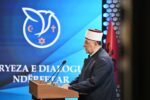
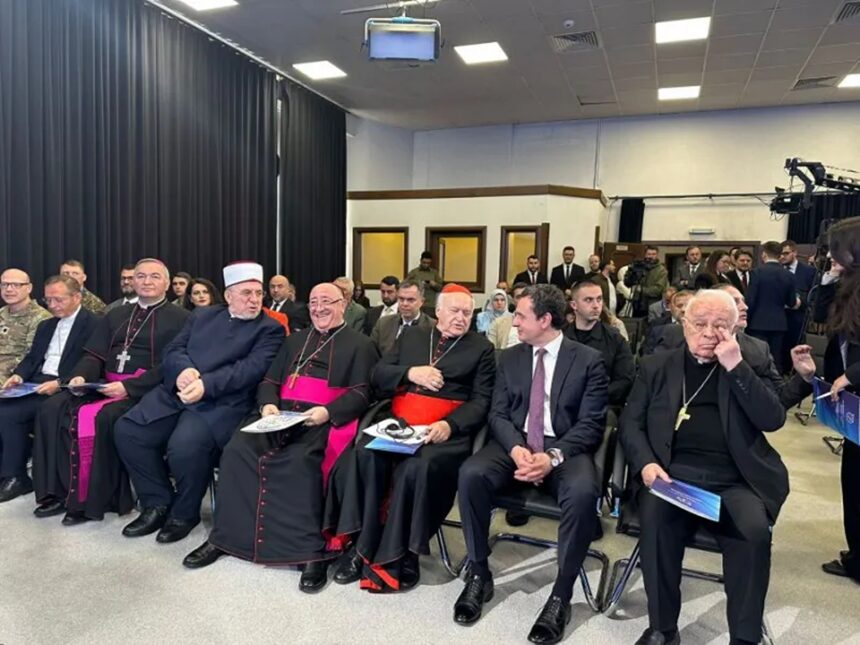
This was highlighted at the Interfaith Dialogue roundtable titled “Interfaith coexistence among us: divine virtue or social necessity?”, which brought together state and religious representatives as well as international partners.
Leaders also stressed that, alongside the proven values of coexistence, there have recently been attempts and tendencies aimed at damaging this harmony. This makes joint engagement by institutions and religious communities even more necessary, in order to preserve, strengthen, and pass these values on to younger generations.
In recent decades, especially over the last twenty years, there appears to be a growing discomfort among certain individuals with this harmony and religious coexistence. Invoking democracy and freedom of expression—often without fully understanding their meaning or limits—some individuals deliberately spread hatred and continuously call for division among Albanians. They promote conversions, claiming in the name of a distorted sense of national identity that one must abandon Islam to be a “true” Albanian.
Such claims, however, have nothing to do with reality. They are deeply offensive and constitute a form of hatred—arguably even a crime—because violating fundamental human rights is also a serious offense, not only acts of physical violence.
There is a need to respond to such individuals and movements with maturity, knowledge, and firm determination, making it clear that they represent a small minority compared to the broader population and may serve external agendas seeking to sow division within the Albanian people.
Despite this, Albanians continue to demonstrate their ability to judge fairly, understand reality, and uphold unity. These attempts are widely seen as failures that are unlikely to succeed in the future.
Today, freedom is a fundamental right, and every individual has the right to choose their beliefs. This freedom must be recognized and respected, but it should not be misused to spread resentment or incite hatred toward those with different views or life choices.
It is important to challenge anyone who seeks to divide society. Personal choices regarding faith should remain individual decisions, made freely and without external pressure or influence.
Calling on people to disrupt religious harmony or abandon their traditions is misguided. While freedom of expression allows such views, society equally has the right to reject them. Everything should take place in a spirit of voluntary choice and personal conviction.
There may be both intentional and unintentional attempts to undermine this harmony, but vigilance and dialogue are essential. The law must apply equally to all, serving as a unifying force rather than a dividing one.
There is also awareness that external factors may play a role in efforts to disrupt religious harmony. In this context, the success of institutions depends not only on professionalism and patriotism but also on strong cooperation with religious communities, including Islamic Community of Kosovo.
The message from the roundtable is clear: dialogue, respect, and cooperation remain the foundation of a stable and united society. Participants concluded with a shared call to preserve and further strengthen peace, understanding, and tolerance.