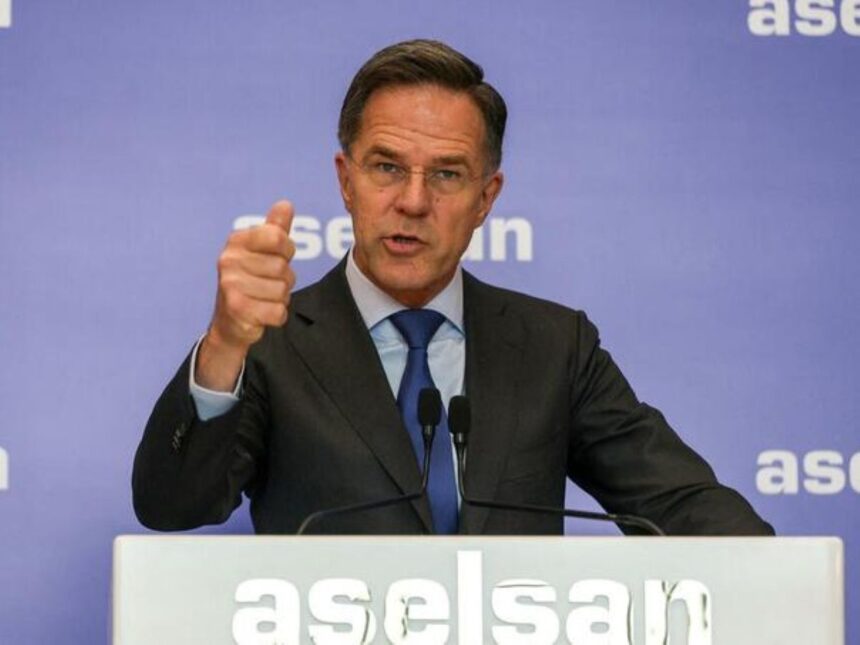
During a landmark visit to Montenegro on Tuesday, NATO Secretary General Mark Rutte lauded the country’s strategic role in the Western Balkans and its robust commitment to the Alliance’s defense targets.
Speaking alongside Montenegrin Prime Minister Milojko Spajić, Rutte highlighted Podgorica’s success in exceeding the 2% GDP defense spending threshold, positioning the nation as a leading example for smaller member states.
Strategic Importance and Global Threats
The Secretary General emphasized that Montenegro’s proactive promotion of peace is vital for the stability of the Western Balkans—a region he described as “strategically indispensable” to NATO. Rutte framed the need for increased military investment within the context of rising global tensions.
“As Russia continues its war of aggression and China becomes increasingly assertive, it is crucially important for allies to invest in their security to counter malign influences,” Rutte stated. He also expressed gratitude for Montenegro’s consistent military and humanitarian aid to Ukraine.
The “5% Ambition” and the Ankara Summit
In a significant look ahead, Rutte indicated that the Alliance is shifting toward even more ambitious financial commitments. He noted that the collective decision to aim for higher defense spending—potentially reaching toward a 5% target for some—reflects the gravity of the current security environment.
Both leaders agreed that the upcoming NATO Summit in Ankara, scheduled for early July, will serve as a definitive platform to demonstrate transatlantic unity and finalize modernization roadmaps.
Montenegro: “The Balkans in Miniature”
Prime Minister Spajić underscored Montenegro’s unique social fabric as a strategic asset for the Alliance. He described the country as “the Western Balkans in miniature,” noting its lack of a single ethnic majority as a source of strength rather than weakness.
“From this position, we can significantly contribute to calming the situation in the Western Balkans, connecting partners, and fostering better understanding,” Spajić remarked.
Key National Developments:
- U.S. Strategic Partnership: Spajić announced that a major bilateral agreement with the United States regarding military and civilian infrastructure is set to be signed in June 2026.
- Military Modernization: The Prime Minister emphasized that current investments are “just the beginning,” promising a more productive and technologically capable Montenegrin Armed Force.
Following the press conference, Secretary General Rutte met with President Jakov Milatović and engaged in a town-hall style discussion with students at the University of Montenegro to discuss the future of Euro-Atlantic security.