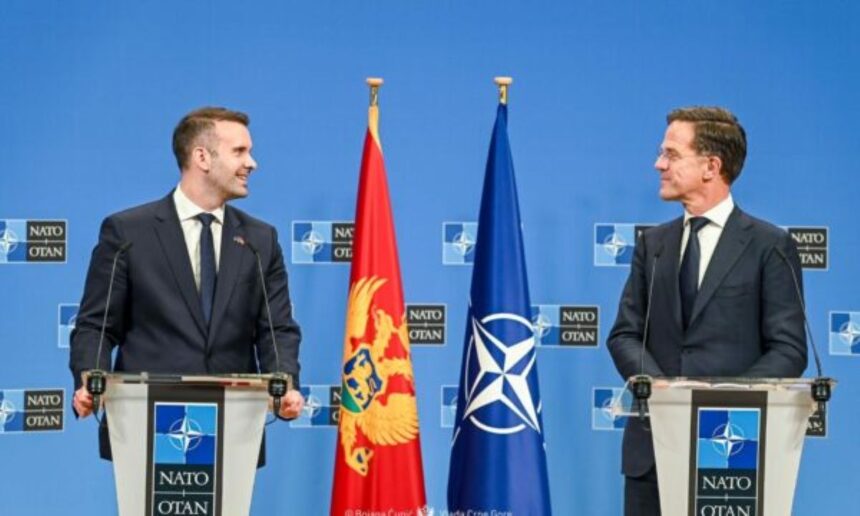
During a high-profile visit to Montenegro today, May 12, 2026, NATO Secretary General Mark Rutte reaffirmed the Alliance’s unwavering support for the Balkan nation, warning that the global security landscape is becoming increasingly perilous.
Escalating Global Threats
Addressing a joint press conference with Prime Minister Milojko Spajić, Rutte highlighted the dual challenges posed by Moscow and Beijing.
“Russia is becoming increasingly aggressive,” Rutte warned. “China is not making the situation easier as it follows its own path. NATO remains determined to contribute and support Ukraine.”
Rutte emphasized that regional stability in the Western Balkans remains a top priority for the Euro-Atlantic alliance. He also pointed toward the upcoming NATO Summit in Ankara, scheduled for July 7–8, 2026, where allies are expected to showcase a united transatlantic front.
Montenegro’s Strategic Milestone
Prime Minister Spajić used the visit to announce significant advancements in Montenegro’s defense capabilities and international partnerships.
- US Military Infrastructure Agreement: Spajić revealed that Montenegro is set to sign a major agreement with the United States in June 2026. The deal will focus on critical military and civilian infrastructure, marking a deeper level of strategic cooperation.
- Expansion of Partnerships: Similar agreements are currently being drafted with other key partners, including Germany and Canada.
- Defense Spending: Spajić noted that public trust in the military has reached a historical peak. Following commitments to surpass the 2% GDP defense spending threshold, Montenegro is actively investing in modernization and mission participation, including its role in KFOR.
The “Trump Factor” and EU Ambitions
The Secretary General also touched upon the political dynamics within the Alliance, specifically the influence of U.S. politics. Rutte acknowledged that the “future of NATO depends to some extent on Donald Trump,” noting that the recent push to increase defense spending thresholds was a response to pressures for more equitable burden-sharing across the Atlantic.
On the domestic front, Prime Minister Spajić confirmed that work has officially begun on drafting Montenegro’s EU Accession Agreement. While acknowledging the arduous task ahead, he expressed optimism that the process would lead to a successful outcome for the citizens of Montenegro.
During his stay in Podgorica, Rutte is also scheduled to meet with President Jakov Milatović before delivering a lecture to students at the Faculty of Political Sciences at the University of Montenegro.