A sustainable peace agreement in the Russia-Ukraine war is more attainable than ever before due to the frontline achievements of the Armed Forces of Ukraine (AFU) and the enduring resilience of the Ukrainian population.
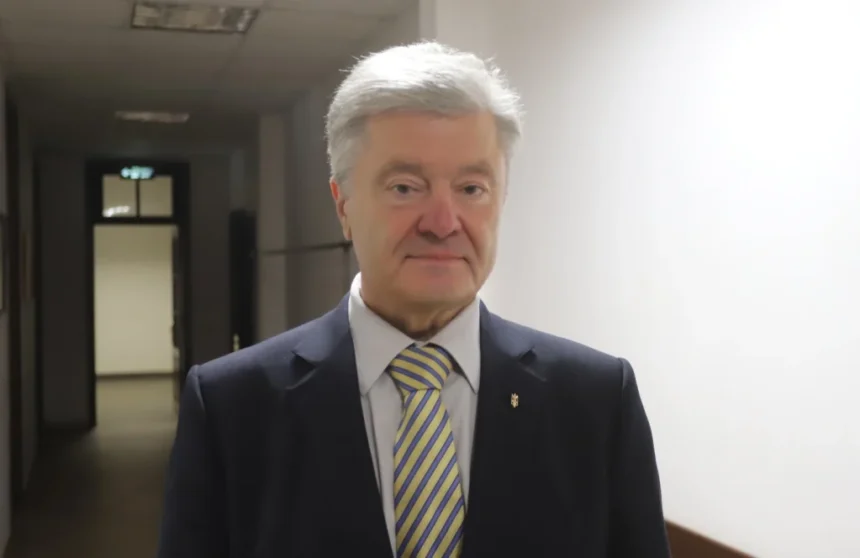
This assessment was delivered by Petro Poroshenko, the fifth President of Ukraine and current head of the parliamentary opposition faction “European Solidarity,” during his address at the Black Sea Security Forum, KyivPost reports.
A Strategic “Window of Opportunity”
Speaking dynamically to international delegates, Poroshenko emphasized that the shifting geopolitical and military landscape has created a rare strategic opening that Kyiv and its Western allies must aggressively exploit.
“I declare this responsibly. Right now, in May 2026, Ukraine, Europe, and the world have never been so close to peace as they are today, on this very day,” Poroshenko declared. “Our task is to take advantage of this narrow window of opportunity; to use the capabilities of the Armed Forces of Ukraine, the Ukrainian people, the Ukrainian government, Europe, and the United States.”
Poroshenko flipped a well-known geopolitical phrase often used by the Kremlin against the Russian leadership itself to outline the path forward.
“Russian President Vladimir Putin once liked the expression ‘peace by force.’ Well, now we must force Putin to enter into peace. I am ready to provide reasoned evidence that today this is absolutely possible,” he stated.
The former president reiterated his firm stance on the core parameters of any future diplomatic resolution, emphasizing earlier in the week that peace must be secured strictly on Ukraine’s terms—categorically ruling out any territorial concessions to Moscow.
Drawing Parallels to the Crisis of 2014
To back his assessment, Poroshenko reflected on the onset of Russian aggression 12 years ago. He noted that while Ukraine’s current security challenges are immense, the institutional and military baseline of the country in 2014 was profoundly more fragile.
Recalling his entry into office following the Maidan Revolution and the flight of former President Viktor Yanukovych, Poroshenko revealed the stark operational vacuum his administration inherited:
- Severe Troop Shortages: In September 2014, Ukraine possessed only 5,000 combat-ready soldiers, leaving the state without a single reserve battalion behind the front lines to halt the initial Russian advance.
- Grassroots Mobilization: The frontline was initially stabilized by volunteers who moved directly from the Maidan protests to training grounds in Novi Petrivtsi, deploying to combat zones in civilian clothing and school buses.
Despite these critical deficiencies, Poroshenko noted that tactical grit and diplomatic maneuvering successfully disrupted Putin’s 2014 summer offensive, securing a vital ceasefire that allowed Ukraine to spend the subsequent years rebuilding its military infrastructure.
“It was a miracle then that we developed a strategy that enabled us to establish a ceasefire,” Poroshenko recalled. “No one believed that we would be able to stop Putin and his offensive at that time.”
As Ukraine enters a decisive phase of the war, Poroshenko argued that the modernized, battle-hardened AFU of today—coupled with sustained Western defense technologies—now possesses the definitive leverage required to dictate the terms of a lasting peace.