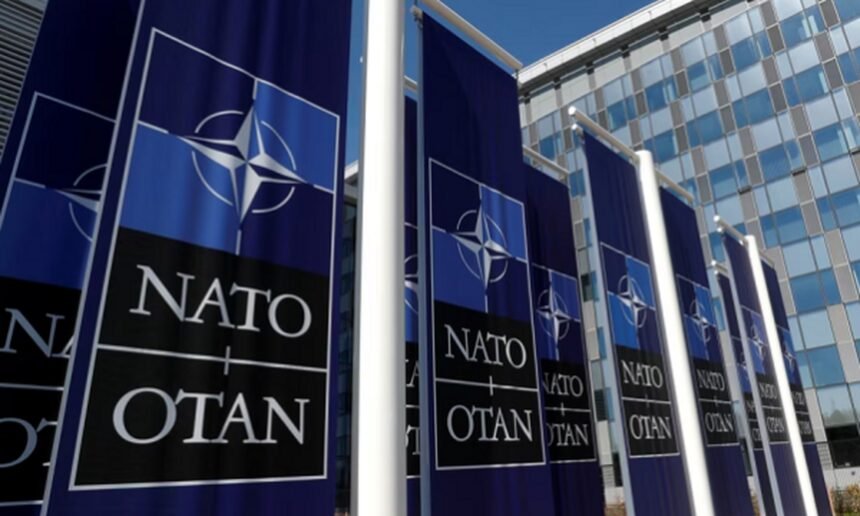
As NATO leaders prepare for next week’s summit in Turkey, the alliance’s plans to hold its following summit in Albania next year have reportedly been thrown into question due to resistance from the U.S. administration and dissatisfaction among allied nations over Tirana’s relatively low defense spending, according to a NATO diplomat, a European official, and three sources familiar with the matter who spoke to Reuters.
According to the sources, a draft declaration for the NATO summit in Ankara currently makes no reference to Albania hosting the next gathering, despite an earlier declaration stating that the summit would be held there.
The move comes as European NATO members seek to demonstrate to U.S. President Donald Trump in Ankara that they have made progress toward meeting defense spending commitments while also trying to avoid a direct confrontation with the American leader.
One source said Albania’s current level of defense spending could anger Trump if the NATO summit were held there in 2027.
A European diplomat said the latest draft declaration merely states that NATO leaders look forward to their next meeting without specifying either the time or location.
“Drafts are drafts, not decisions,” an Albanian government spokesperson told Reuters when asked about the draft declaration, which remains under negotiation and could still be amended.
The White House declined to comment, while a NATO official also said the alliance would not comment on the issue at this stage.
In recent years, official NATO summit declarations have consistently identified the location of the next summit. At last year’s summit in The Hague, leaders stated that they looked forward to meeting in Turkey in 2026 and then in Albania.
At that same summit, NATO leaders responded to Trump’s call by committing to increase defense spending to 5 percent of GDP over the next decade.
Under the agreement, member states pledged to allocate 3.5 percent of GDP to core defense expenditures—including troops and weapons—and an additional 1.5 percent to broader defense-related areas such as cybersecurity.
While many NATO countries have significantly increased their defense budgets in recent months, several members have yet to meet the alliance’s previous target of spending 2 percent of GDP on defense.
Earlier this month, NATO Secretary General Mark Rutte said that nearly all alliance members had reached the 2 percent target.
“Last year, Albania, the Czech Republic, and Slovenia did not meet that target, but they are committed to increasing their defense spending above 2 percent this year,” Rutte said.
The Albanian government told Reuters it is “finalizing the necessary fiscal measures to align Albania’s defense and defense-related spending for 2026 with the trajectory agreed upon by NATO allies at the Hague Summit.”
“Once these measures are approved in the coming days, Albania’s defense and defense-related spending for 2026 will reach 2.6 percent of GDP in accordance with NATO’s Defense Expenditure Methodology. Of this, 2.2 percent of GDP will represent core defense spending, while 0.4 percent will cover other defense- and security-related expenditures,” the government said.
Despite the current uncertainty, one European diplomat said Albania could still end up hosting the summit.
“They are increasing their spending, so let’s see where that leads,” the diplomat said. “I still believe the next summit will be held in Albania.”