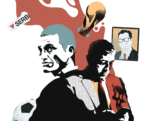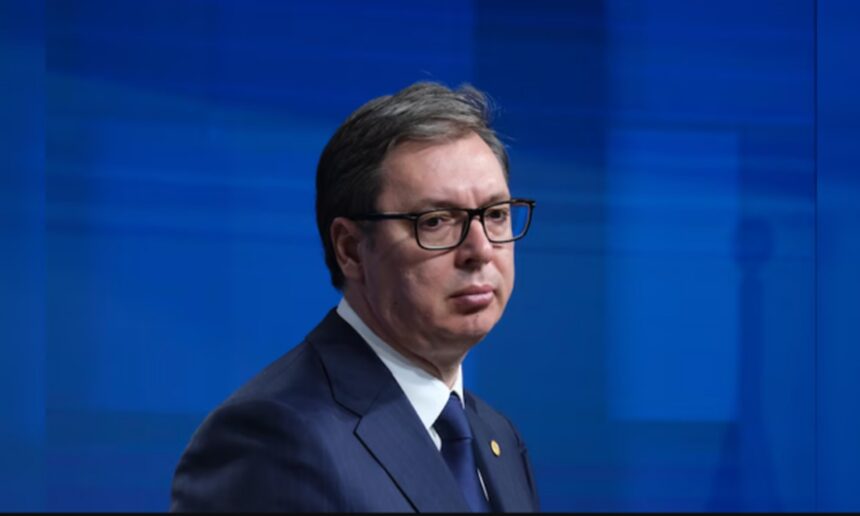
Serbian President Aleksandar Vučić has explicitly downplayed a major investigative report revealing a violent underworld plot against football icon Nemanja Vidić, declaring that neither Vidić nor the accused orchestrator, former FSS chief Slaviša Kokeza, hold any personal significance to him.
Speaking at a press conference following a Gendarmerie tactical exercise in Lipovica, near Belgrade, Vučić field questions from N1 regarding intercepted Sky ECC communications from 2020. The logs, published by the investigative outlet KRIK, detailed how Kokeza allegedly deployed criminal syndicates to threaten Vidić with death if he pursued reforms within the Football Association of Serbia.
Initially claiming he had “no idea” what KRIK had published, Vučić corrected himself moments later, stating he had read the material days prior. He dismissed the revelations regarding his brother, Andrej Vučić, whom Kokeza’s messages indicated had actively stepped in to protect Vidić from physical harm.
“I wouldn’t exactly say my brother is a massive fan of Nemanja Vidić,” Vučić countered. “It’s more likely Slaviša [Kokeza] fabricated that because, within those varied circles, he assumed Andrej wasn’t his greatest ally, so he lumped him onto the opposing side. Neither Nemanja Vidić is particularly important to me, nor is Slaviša Kokeza, nor anyone else. If a criminal act occurred, let the state authorities prosecute it.”
President Lists Deep Connections to Hooligan Underground
When confronted by journalists about a specific section of the KRIK report detailing his own intercepted interactions with prominent Red Star Belgrade hooligan leader Stevan Sojić, Vučić did not deny the association. Instead, he claimed the recordings were the result of illicit state wiretapping against him.
When pressed on whether he personally knows the ultra figure, Vučić delivered an extraordinary, detailed roster of his personal contacts spanning decades within the notorious Balkan soccer firm subculture:
“Not just Steva Sojić. I believe there is absolutely no one from the North Stand [Red Star ultras] whom I do not know. Not a single man exists that I do not know. Maybe these younger kids, but anyone who went to the stadium 30 years ago—I know every single one of them,” the President stated.
Vučić proceeded to list a dozen prominent underground ultra figures by their street monickers, covering rival factions from both Red Star Belgrade and Partizan Belgrade:
- The Red Star Old Guard: He named deceased figures such as “Zelja” as well as veteran leaders like “Šicko,” “Crvko,” “Šulca,” and “Tima.”
- The Younger Hooligan Generation: He confirmed active ties to contemporary leaders, explicitly naming “Peđa” and “Igor.”
- The Partizan “Grobari” (Gravediggers) Firm: He cited senior rival figures ranging from “Đovani” and Koprivica to “Čegi” and the local ultra figure known as “Ćume.”
“I grew up on the terraces, how could I not know them?” Vučić added, stating he has nothing to hide regarding a youth during which he was detained by police multiple times. “They wiretapped my calls with Sojić. It was their method at the time to uncover who knows what, and naturally, they found nothing because we were talking about nonsense—who unfurled a larger banner and who kicked the ball better.”
Gendarmerie Shielded from Questions Over Sanctioned Figures
The press conference grew further strained when N1 attempted to question Gendarmerie Commander Radoslav Repac regarding an independent investigation revealing that active, high-ranking officers within the Belgrade Gendarmerie are working as private security guards for internationally blacklisted figures.
The security detail reportedly protects:
- Milan Radoičić: The fugitive leader currently on an Interpol Red Notice for organizing the deadly armed paramilitary attack in Banjska, Kosovo.
- Zvonko Veselinović: A controversial northern Kosovo businessman currently under strict US and UK sanctions for organized crime.
Before Commander Repac could speak, President Vučić intervened to answer on behalf of the military police unit, directly disputing the timeline of the security deployments while defending Radoičić’s legal standing.
“Regarding the Gendarmerie, I have inquired. None of these individuals are currently securing Mr. Radoičić or Mr. Veselinović,” Vučić declared, turning to the commander for confirmation. “Though, I didn’t know you would characterize those who are persecuted by other countries—or entities that aren’t even countries—due to the situation in Kosovo, as criminals. Milan Radoičić is being pursued over Kosovo, not over crime.”
Commander Repac briefly echoed the President’s intervention, stating only: “The Gendarmerie does not secure the stated individuals.”
The statements stand in direct contradiction to documented findings showing active-duty officer Damljan Vukićević operating as Radoičić’s personal bodyguard on Mount Kopaonik, and officer Nikola Milutinović providing structural security for Veselinović’s corporate holdings on Mount Golija.