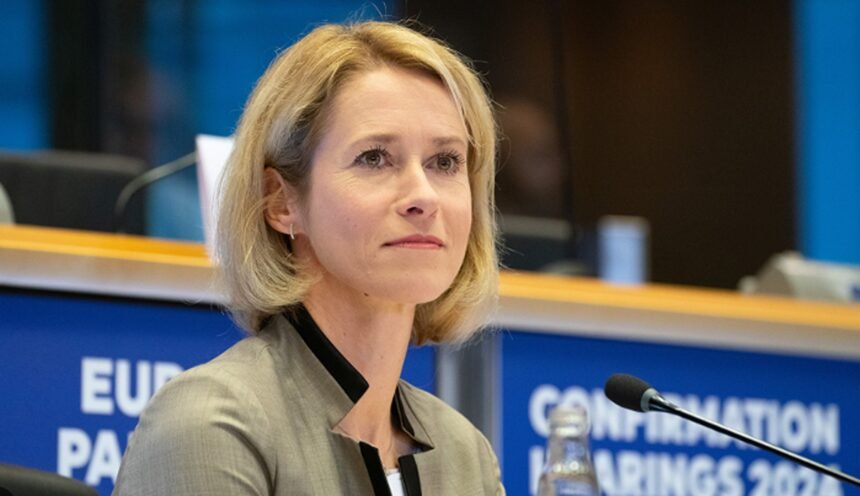
EU Foreign Policy Chief Kaja Kallas is scheduled to meet Turkish President Recep Tayyip Erdoğan on Tuesday, positioning geopolitical security at the forefront of the agenda ahead of next week’s critical NATO Summit in Ankara.
Kallas is leading a high-level EU delegation to Turkey alongside Enlargement Commissioner Marta Kos and Migration Commissioner Magnus Brunner. The diplomatic push comes at a time when concurrent wars in Ukraine and the Middle East are fundamentally reshaping Europe’s security architecture.
According to EU officials, the high-stakes discussions will focus on alignment before the July 7–8 NATO gathering and navigating regional flashpoints.
“Türkiye is an essential partner on defence, migration, trade and regional stability,” a member of Kallas’ team stated. “Tuesday’s talks are likely to cover the way forward on Iran, Syria, Gaza, and Russia’s war against Ukraine — all issues where Türkiye’s voice carries heavily.”
Expanding Trade and the “Middle Corridor”
Beyond immediate defense and military cooperation, Brussels is eager to make economic headway with Ankara. A primary economic goal of the trip is advancing plans to lower trade barriers and accelerate the development of the “Middle Corridor”—a critical trade route designed to link Asia and Europe while completely bypassing Russian territory.
Balancing Strategic Security with Rule-of-Law Concerns
The diplomatic outreach takes place despite a relationship that remains deeply fraught with political friction. Turkey’s formal EU accession bid has been stalled for years, and President Erdoğan continues to face severe international backlash over democratic backsliding, including the highly controversial imprisonment of Istanbul Mayor Ekrem İmamoğlu.
European lawmakers have heavily pressured the Commission delegation to directly confront Turkish officials over rule-of-law violations during the visit.
However, current geopolitical demands mean that security and defense are taking precedence. EU leaders are looking toward next week’s Ankara summit to stabilize transatlantic relations, which have been strained following sharp criticism from US President Donald Trump regarding Europe’s reluctance to back recent US military operations against Iran.
“Closer EU-Turkey cooperation serves us all,” Enlargement Commissioner Marta Kos emphasized. “Together with Turkey, we want to move in the direction of more stability and more certainty in the wider region.”