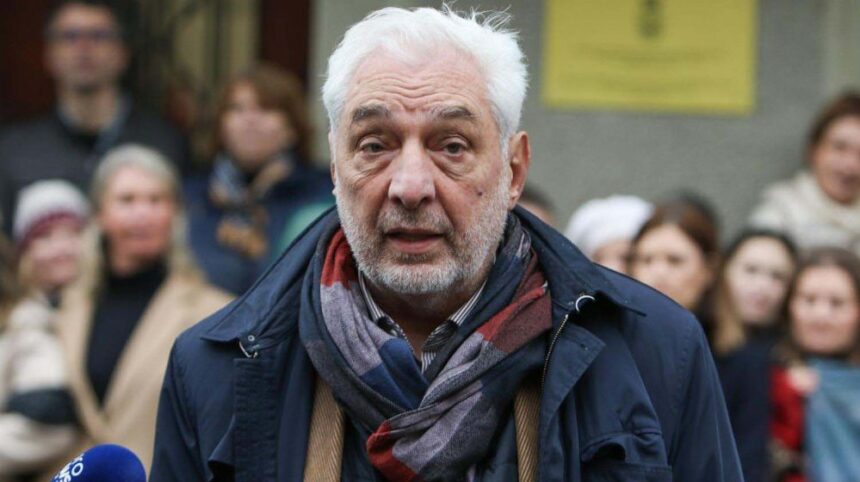
Serbian lawyer Božo Prelević has called for sweeping institutional reforms in Serbia following the October 25 parliamentary elections, arguing that the process must include accountability for media outlets that he says served President Aleksandar Vučić’s government for 14 years.
Prelević said a change of government should be accompanied by a strategic plan to reform state institutions, including the media sector, police and military.
According to the lawyer, the new authorities must first establish clear reform objectives, identify qualified people capable of implementing them and set specific deadlines for carrying out the changes.
“They need to develop a strategic plan. They must strengthen the state, understand exactly what is needed and identify the people who are obstructing progress. They must define their goals, identify those capable of achieving them and establish a timeline for implementing reforms,” Prelević said.
He argued that Serbia’s institutional problems require a systematic response rather than simply replacing political leaders.
Media accountability and editorial independence
Prelević identified the media sector as one of the central areas requiring reform, questioning the future role of the Regulatory Authority for Electronic Media (REM), private television broadcasters and outlets he accused of spreading false information during Vučić’s years in power.
“What should be done in the media sector? What will REM do? What should happen to private television stations? What should happen to those who have lied for 14 years? How can educational and cultural programming be restored? All these issues need to be addressed,” he said.
He also raised concerns about the influence of private media owners over editorial content, arguing that financial investment and ownership should not automatically grant unrestricted control over the information available to the public.
Prelević questioned whether a new television owner should be allowed to discontinue news broadcasts and create what he described as an “information blackout.”
“Can a new owner shut down the news bulletin? Does he have the right to create an information blackout? I believe he does not. Could they do that in Portugal? Of course not. They should not be able to do it here either,” he said.
He stressed the need to distinguish between private capital and editorial responsibility.
“Capital is one thing, and editorial policy and programming are another,” Prelević said.
His remarks point to a broader debate over media ownership, editorial independence and the role of public-interest obligations in Serbia’s broadcasting sector.
Calls to examine police and military conduct
Prelević said institutional reform should also include scrutiny of the police and the conduct of officials who may have violated the law during the past 14 years.
He questioned whether officials found responsible for misconduct should be entitled to generous salaries or privileged early retirement without their records first being examined.
“Who are the people who violated the law? We should examine whether they deserve to retire with privileged pensions at the age of 50 and receive some of the highest salaries in the country. Have they earned those benefits through their service over the past 14 years?” he asked.
The lawyer also called for an assessment of the Serbian military’s activities, criticizing what he described as an excessive focus on arms trading.
“What does the military do, or what has it been doing? Apart from engaging in the buying and selling of weapons, what else has it done?” he said.
A broader institutional overhaul
Prelević argued that Serbia’s political transition should extend beyond a change in government leadership and include a review of how institutions operate, how public officials perform their duties and whether they have been held accountable for potential wrongdoing.
He called for a structured reform process based on clear objectives, qualified personnel and measurable deadlines.
His comments come in the aftermath of Serbia’s October 25 parliamentary elections, which have prompted renewed debate about the future direction of the country’s institutions and the relationship between political power, the media and state authorities.
The allegations against media outlets and public officials reflect Prelević’s assessment and would require independent examination where specific wrongdoing is alleged.