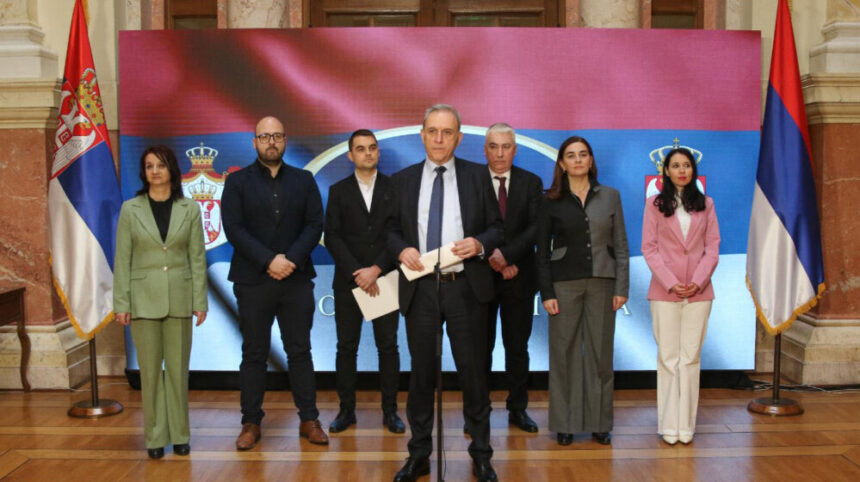
Serbia’s opposition Srbija Centar (SRCE) party has called for a clear explanation of the powers and responsibilities of the National Coordination Body for the Prevention and Fight Against Terrorism, warning that unclear authority and insufficient democratic oversight could create risks of political misuse.
The body was established in 2019 but was reportedly placed into “full capacity” only this month.
SRCE’s Committee for Defense and Internal Affairs said coordination itself should not be treated as an independent authority and questioned what the body’s role would mean in practice when coordinating institutions including the Interior Ministry, the Security Information Agency (BIA), police and prosecution services.
“If the body coordinates the work of the Ministry of Internal Affairs, the BIA, the police and the prosecution, it must be completely clear what that coordination means in practice and what it does not mean,” the committee said.
The party raised a series of questions about the body’s decision-making powers and accountability.
“Who makes decisions? Who bears responsibility? Who checks the legality of actions? What happens when jurisdictions overlap?” SRCE asked.
According to the party, clear answers to those questions should be established before the body begins operating at full capacity rather than after problems emerge.
Warning Against Political Misuse
SRCE also warned about the potential risks of leaving the boundary between genuine security threats and political activity unclear.
“The line between a real security threat and political activity is particularly dangerous when it remains broad and blurred. Terrorism is not a political label that the authorities can apply whenever they see fit,” the party said.
The National Coordination Body submits six-month and annual reports to the Serbian government.
SRCE acknowledged that reporting to the executive branch represents one form of accountability but argued that it was insufficient for the security system to effectively oversee itself primarily through the government.
The party called for stronger parliamentary oversight, while recognizing the need to protect classified information.
“What is missing is precisely what has been systematically avoided in this country for more than a decade — serious parliamentary oversight, within the limits of the law and with the protection of confidential information,” the committee said.
SRCE argued that Serbia’s National Assembly should not learn about developments inside the country’s security system only after information reaches the media.
Why Is the Body Being Activated Now?
The opposition party also questioned why the body, which it said had been largely inactive for six years, was being activated at full capacity at this particular moment.
“If it has not functioned since 2019, it should be explained exactly what did not function and who was responsible for it. What has changed now, apart from the date on the calendar?” SRCE asked.
The party stressed that it was not claiming in advance that the coordination body would necessarily be abused.
However, SRCE said safeguards designed to prevent potential misuse should be established before any situation arises in which such concerns become relevant.
“The question is not only who sits in the National Coordination Body. The more important question is who controls those who control the fight against terrorism,” the party said.
SRCE concluded that counterterrorism efforts must remain professional, decisive and grounded in the law.
“Without clear boundaries and democratic oversight, every security mechanism can become something entirely different,” the statement said.