Iran and the United States exchanged military strikes overnight into Monday in the first major escalation between the two countries in more than a month, raising fears that the conflict could intensify again after several weeks of relative military calm.
Iran launched missiles toward US military targets in Jordan in retaliation for an American strike against Iranian missile launchers that Washington said were being prepared to deploy naval mines in the Strait of Hormuz, the strategically vital waterway at the center of regional tensions and diplomatic efforts.
Later on Monday morning, the United Arab Emirates said it had intercepted a drone approaching from Iran over its territorial waters.
The exchange came only days after US President Donald Trump declared that the Strait of Hormuz had been cleared of mines, marking a shift away from Washington’s recent emphasis on maximizing economic pressure on Iran rather than pursuing further military action.
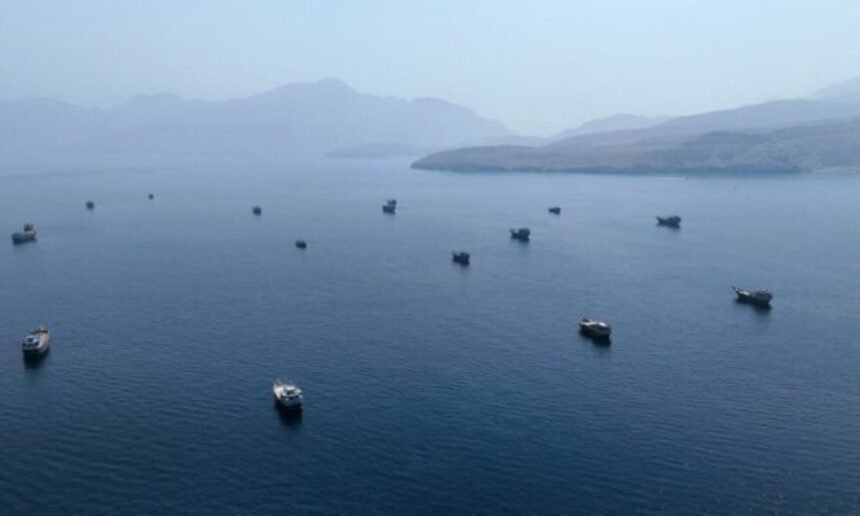
Six months into the expanded conflict, the United States and Iran remain locked in a struggle over control of the Strait of Hormuz, one of the world’s most important energy shipping routes.
Tehran has sought to assert control over the waterway through continued attacks on vessels, while the United States has moved to keep shipping lanes open by escorting commercial vessels and imposing a military blockade on Iranian ports.
US Strike Targeted Iranian Launchers
The US strike on Sunday targeted two Iranian missile launchers on Iran’s Larak Island, where American forces had observed Iranian personnel preparing to deploy mine-related weapons in the Strait of Hormuz, according to Captain Tim Hawkins, a spokesperson for US Central Command (CENTCOM).
The US military carried out what CENTCOM described as “limited and precise action” against Iranian forces deploying mines that posed an “imminent threat” to the strategically important waterway.
“Iran created the threat, and the US military eliminated it to protect civilian mariners, commercial shipping and the free flow of global trade,” CENTCOM said in a statement posted on X.
Residents reported hearing an explosion near Larak Island, a small landmass off the coast of Bandar Abbas in southern Iran. Iranian state media later reported casualties among Iranian forces and civilians.
Iranian President Masoud Pezeshkian said Tehran did not seek war but would respond to what it considers aggression.
“We are not seeking war… But in the face of aggression, we will never stand idly by and are capable of delivering a decisive response,” Pezeshkian said on Monday, according to state broadcaster IRIB.
Iran’s powerful Islamic Revolutionary Guard Corps (IRGC) described the US strike as a “strategic and deadly mistake” by the Trump administration and vowed retaliation.
Iran Claims Strikes on US-Used Bases
By Monday morning, Iran said it had struck bases used by the US military in both Jordan and the United Arab Emirates.
The exchange represents the most significant direct military confrontation between Washington and Tehran in more than a month and threatens to derail efforts to prevent the broader conflict from escalating further.
With the Strait of Hormuz remaining central to both global energy supplies and the military confrontation, any further attacks could have consequences far beyond the immediate conflict, potentially affecting international shipping, energy markets and regional security.
The latest exchange also underscores the fragile nature of the relative military calm that had emerged in recent weeks, with both Washington and Tehran now signaling that they remain prepared to respond militarily to further attacks or perceived threats.