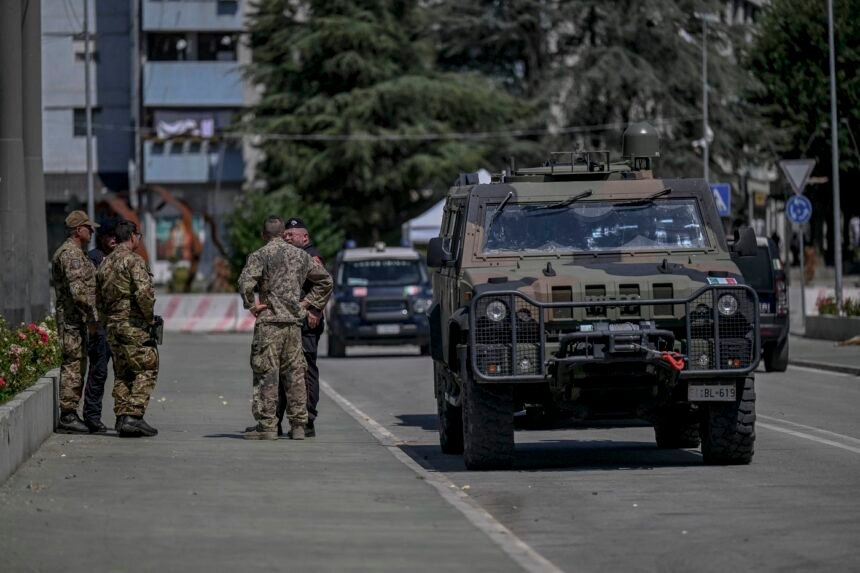
Srpska Lista has sent an open letter to the European Union Office in Prishtina expressing strong opposition to the planned opening of the main bridge over the Ibër River between northern and southern Mitrovica.
The party said it was deeply disappointed by the EU’s announcement that conditions had been met for opening the bridge and demanded clear answers about the security assessment behind the decision and who would be responsible for protecting the Serbian population.
Srpska Lista called on the EU and relevant institutions to publish the security analysis used to determine that the bridge could be opened, identify who prepared the assessment and explain which security parameters were taken into account.
The party also questioned whether the Kosovo Police could be relied upon to guarantee the safety of Serbs, citing what it described as serious allegations of mistreatment, excessive use of force and procedural violations involving Serbian residents.
“On what basis can it be claimed that the safety of Serbs can be guaranteed by relying on the Kosovo Police?” the party asked, pointing to what it described as unresolved cases involving attacks against Serbs.
Srpska Lista specifically referred to the beating of Nenad Rašković and other Serbs in the municipality of Zubin Potok, questioning why responsibility for the incident had allegedly still not been established.
The party also challenged the EU’s decision to support the opening of the bridge, arguing that the issue falls within the framework of the Brussels dialogue between Kosovo and Serbia.
“If issues that are part of the dialogue can be resolved unilaterally, the question arises as to what purpose the dialogue serves and what value agreements reached through EU mediation have,” Srpska Lista said.
The party further asked whether the European Union would assume political and institutional responsibility if the opening of the bridge resulted in security incidents or violence.
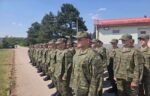
Srpska Lista also expressed concern over the gradual withdrawal of KFOR personnel from the bridge, arguing that the presence of the NATO-led peacekeeping mission remains an important security mechanism for the Serbian community.
The party said it opposed both opening the bridge to vehicle traffic and removing KFOR personnel from the site.
“Our position is not directed against freedom of movement or against any community. It is based on genuine concerns about the safety of citizens and the experiences of the Serbian people living in northern Kosovo,” the party said.
The EU has previously stated that the bridge should be opened following consultations with security partners. An EU spokesperson told Gazeta Express that the condition had been met following notification from KFOR that it had begun a “gradual transition of its permanent presence” from the bridge.
KFOR announced on August 10 that it had begun the gradual transition of its permanent presence at the site.
The main bridge across the Ibër remains closed to vehicle traffic and has been continuously guarded by KFOR troops. It divides Mitrovica into a predominantly Serb-populated northern area and a predominantly Albanian-populated southern area.
The bridge has been a flashpoint since the 1999 Kosovo war, with repeated incidents reported over the years as tensions persisted between the two communities.
Srpska Lista and officials in Belgrade continue to oppose the opening of the bridge, arguing that doing so without broader security guarantees could increase risks for Serbs living in northern Kosovo.