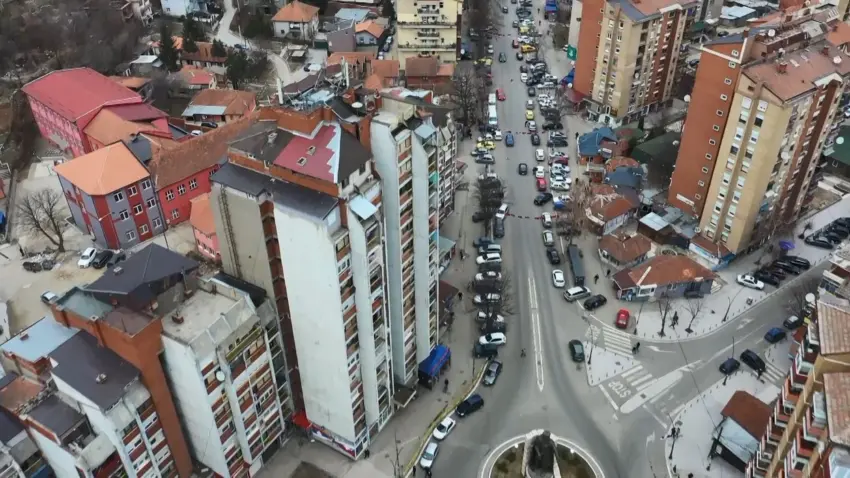
For nearly three decades, residents in the four Serb-majority municipalities of northern Kosovo have consumed tap water without ever receiving a bill. However, this long-standing loophole is coming to an end.
Residents of North Mitrovica, Zvečan, Zubin Potok, and Leposavić are expected to officially enter the regular billing system by the end of 2026. This structural shift marks the termination of a 27-year practice that operated entirely outside standard utility frameworks, leaving behind roughly €20 million in uncollected debts, according to data provided by the Regional Water Company (KRU) “Mitrovica.”
1. Why Billing Took Nearly Three Decades
Since the end of the Kosovo War in 1999, the political reality on the ground actively prevented standard public utility collection.
Key Drivers Behind the Decades-Long Free Utility System

 [ PARALLEL STRUCTURES ] ──► WEAK INSTITUTIONAL REACH
 • Following the war, northern Kosovo operated via Belgrade-backed parallel structures,
   severing technical and financial cooperation with institutions based in Prishtina.

 [ STATE SUBSIDIZATION ] ──► MULTI-MILLION EURO DRAINS
 • Between 2016 and 2025 alone, the Government of Kosovo quietly spent €5.2 million
   subsidizing KRU "Mitrovica" to maintain flow and avoid a humanitarian crisis.

 [ EQUALITY CONCERNS ] ──► "DOUBLE STANDARDS"
 • Policy analysts at the GAP Institute criticize the lengthy delay, arguing that
   taxpayer-funded free utilities create toxic double standards that demotivate paying citizens elsewhere.
Data shows that from 2016 to 2025, unbilled water consumption in the north drained an average of €900,000 to €1 million annually.
2. The Implementation Timeline: Delays into Late 2026
While the Water Services Regulatory Authority (ARRU) initially planned to roll out the billing mechanism during the first quarter of this year, KRU “Mitrovica” confirmed that logistical challenges have pushed the official start date to the end of 2026.
Technical Implementation Roadmap for Northern Municipalities
┌────────────────────────────────────────────────────────────────────────┐
│                                                                        │
│  [ MINORITY RECRUITMENT PHASE ] ───────────────────────────────────┐   │
│  • Out of 500 applicants, KRU "Mitrovica" hired 44 local Kosovo Serb   │   │
│    citizens who are currently being integrated into the company's     │   │
│    technical, commercial, and financial operating systems.            │   │
│                                                                        │   │
│  [ CONSUMER REGISTER & WATER METERS ] ─────────────────────────────┤   │
│  • The next immediate steps include launching local information       │   │
│    campaigns, registering household assets, and physically installing   │   │
│    individual water meters across all residential zones.              │   │
│                                                                        │   │
│  [ UNIFORM PRICING STRUCTURE ] ────────────────────────────────────┘   │
│  • ARRU has locked uniform tariffs across the entire operational      │
│    zone: €0.53/m³ for household consumers and €0.69/m³ for commercial   │
│    and institutional entities (excluding VAT).                        │
└────────────────────────────────────────────────────────────────────────┘
3. The €20 Million Question: Debt Collection vs. Silent Amnesty
One of the most legally and politically ambiguous aspects of the upcoming transition is the fate of the staggering historical debt accumulated since 1999.
| Utility Component | Financial Reality | Proposed Strategy & Risks |
| Historical Water Debt | Accumulation estimated at €20 million over 27 unbilled years. | KRU “Mitrovica” announced that new billing will start from zero, leaving the resolution of past debt entirely to future, unspecified political decisions. |
| The Electricity Precedent | Mirrors the Elektrosever model established in 2024. | Electricity billing successfully transitioned through a licensed Belgrade-managed vendor in Kosovo, offering a framework for local compliance. |
| Transparency Demand | Local residents express willingness to pay but cite a total lack of communication. | Activists and think tanks warn that writing off the €20 million without a clear transitional framework looks like a silent amnesty, which could trigger legal complaints regarding civic discrimination. |
“It is normal to pay. In any normal country, bills must be paid. We have Kosovo ID cards, so it is normal to pay the bills too.”
— Andrija Todorović, Resident of North Mitrovica
While the integration process faces technical delays, utility experts like Afrim Lajçi emphasize that pulling the northern municipalities into the national network is a vital step toward civil equity. It places northern residents on equal footing with utility payers in South Mitrovica, Vushtrri, and Skenderaj, ensuring localized revenue is directly reinvested into improving the region’s fragile water infrastructure.