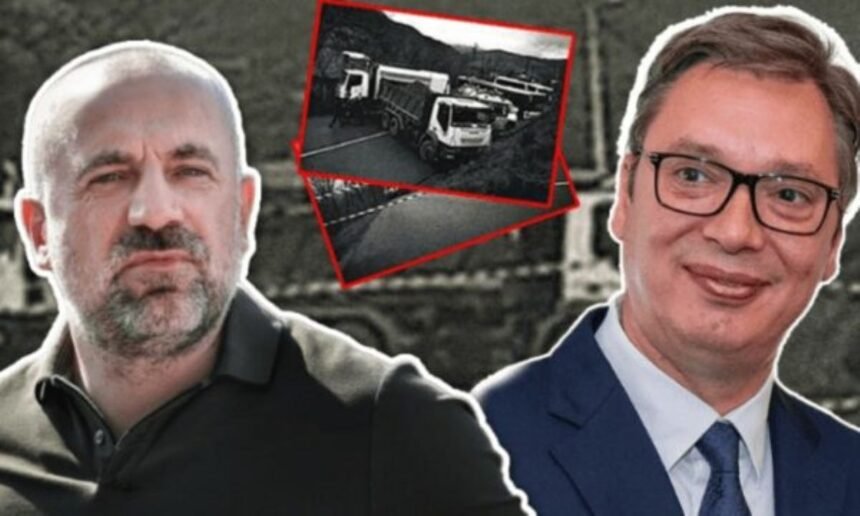
A newly unsealed indictment filed by the Special Prosecution Office of the Republic of Kosovo (PSRK) has laid bare the direct operational links between Belgrade’s political leadership and the illegal blockades that paralyzed northern Kosovo in late 2022.
The investigative case file explicitly documents a high-stakes, closed-door meeting held on December 28, 2022, in Račak, Serbia (located within the Raška region), where Serbian President Aleksandar Vučić directly ordered the dismantling of the barricades following the release of a high-profile detainee.
The Six Indicted and the Fugitive Commander
The PSRK has officially pressed charges against six individuals for criminal acts against the constitutional order, specifically targeting the aggressive barricading of transit routes in the Zvečan Municipality:
- Dušan Maksimović
- Miloš Radosavljević
- Nemanja Jolović
- Dušan Dobrić
- Srđan Vuničić
- Nenad Orlović
The prosecution asserts that this entire criminal network was orchestrated by Milan Radoičić, the sanctioned former Vice President of the Serb List (Lista Serbe). Because Radoičić remains outside the reach of Kosovo law enforcement, formal investigations against him regarding this specific case have been temporarily suspended pending his arrest, though the evidentiary core focuses entirely on his commands.
Inside the Račak Dossier: 48 Hours to Clear the Roads
The leaked prosecution files, obtained by local investigative outlet Betimi për Drejtësi, explicitly trace the command structure of the blockades directly into sovereign Serbian territory:
Excerpt from the PSRK Case File: “On 28.12.2022 in Račak, Serbia, the defendant Milan Radoičić—leader and official of Lista Serbe—alongside former northern mayors and resigned ethnic-Serb police officers, held a meeting with the President of Serbia, Aleksandar Vučić, where the latter requested that they remove the barricades within 48 hours, following the release of detainee Dejan Pantić from judicial custody.”
The 2022 Barricade Collapse Timeline
│
├── Dec 10, 2022: Barricades erected; EULEX patrol attacked with shock bomb
├── Dec 28, 2022: Command meeting in Račak; Vučić orders shutdown within 48 hours
├── Dec 29, 2022: Masked operatives begin dismantling 14 of the 16 blockades
├── Jan 03, 2023: KFOR units forcibly clear the "Kerrshi i Dudës" bridge blockade
└── Jan 05, 2023: KFOR removes the final remaining blockade on Zhazha Road
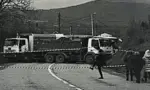
Exactly one day after the meeting in Račak, the orchestrated operation began to dissolve. The indictment details that the majority of the 16 total barricades were dismantled by the very individuals who built them. During this process, heavily masked operatives were recorded utilizing heavy industrial machinery to retract trucks filled with gravel, excavators, and buses from the primary highways.
The two highly fortified exceptions required international military intervention: KFOR peacekeepers stepped in to clear the strategic bridge at “Kërrshi i Dudës” on January 3, 2023, and dismantled the final operational blockade on the Zhazha Road in Zvečan on January 5.
Coercion, Armed Militias, and Terrorist Formations
The indictment outlines a calculated strategy by Radoičić’s group to use intimidation, blackmail, and physical force to compel local Kosovo-Serb civilians to man the blockades against their will, trying to engineer widespread civil unrest to permanently sever the northern territory from Prishtina’s jurisdiction.
The prosecution notes that the security detail guarding these blockades went far beyond local protesters. The grid was secured by:
- Resigned former Kosovo Police officers who possessed intimate knowledge of local law enforcement blindspots.
- Members of “Civil Protection” (Mbrojtja Civile), a highly organized, clandestine formation that has since been officially designated as a terrorist organization by the Government of the Republic of Kosovo.
International observers on the ground corroborated the volatile nature of the gridlock. The European Union Rule of Law Mission (EULEX) officially raised alarms regarding the heavy presence of masked and heavily armed actors operating at the flashpoints.
This warning followed a dangerous December 10, 2022, shock-bomb attack targeting a EULEX patrol in Rudare. Alongside tactical firearms deployments, the prosecution dossier logs systematic physical assaults carried out against journalists and local civilians who attempted to document or bypass the illegal checkpoints, framing the 2022 blockades not as organic protests, but as a heavily militarized insurgent exercise directed from across the border.