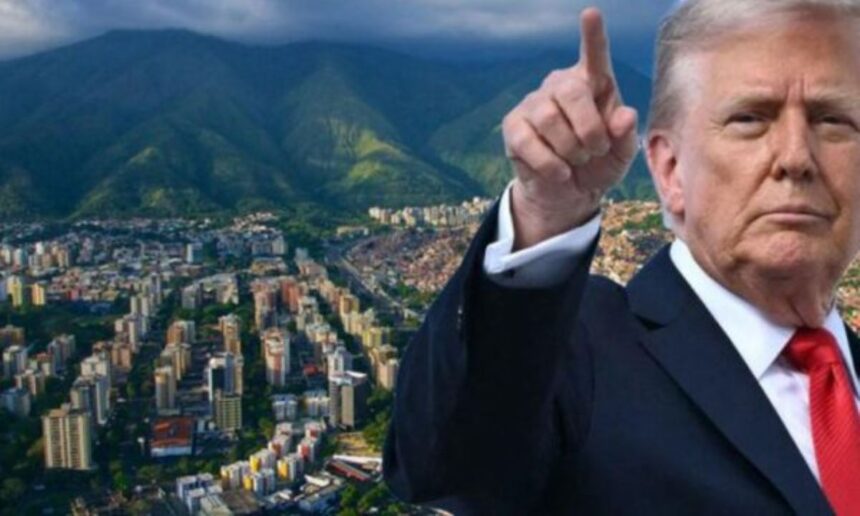
In an interview with Fox News’ John Roberts on Monday, May 11, 2026, President Donald Trump revealed that his administration is “seriously considering” a plan to annex Venezuela and integrate it into the Union as the 51st U.S. state.
Trump justified the potential move by pointing to Venezuela’s immense natural wealth, specifically its oil reserves, which he estimates are worth approximately $40 trillion. “I’m a businessman first,” Trump told reporters. “We’ve taken hundreds of millions of barrels… to the winner belong the spoils. And I said, ‘Why don’t we use that?'”
Context: The 2026 Venezuelan Crisis
The President’s comments follow a massive escalation in U.S. involvement in the South American nation earlier this year:
- Operation Resolve: On January 3, 2026, U.S. special forces conducted a military raid in Caracas, capturing President Nicolás Maduro and his wife, Cilia Flores.
- Legal Proceedings: Maduro and Flores were transported to New York, where they were indicted on narco-terrorism and weapons charges. They are currently detained in Brooklyn awaiting trial.
- Interim Government: Following the raid, Vice President Delcy Rodríguez was sworn in as interim president. While she has overseen a thawing of relations with Washington and opened sectors to U.S. mining and energy companies, she has remained firm on the issue of sovereignty.
International and Domestic Expansionism
The proposal to make Venezuela a state is part of a broader pattern of “New Expansionism” discussed by the Trump administration in 2025 and 2026. Trump has previously suggested or “refused to rule out” the acquisition of several other territories:
- Greenland: Trump renewed his interest in annexing the Arctic territory in early 2026, even suggesting military force against non-compliant “flag-hopping” ships.
- Canada: In 2025, Trump tied trade tariffs to an “annexation agenda,” citing fentanyl smuggling as a grievance.
- Cuba and Panama: Both have been mentioned in recent months as territories where Trump believes he can exercise “triumphal” control.
Venezuela’s Rejection
Interim President Delcy Rodríguez, speaking from The Hague on May 11, unequivocally rejected the statehood proposal.
“That is not planned. It would never be planned,” Rodríguez stated. “If there is one thing we Venezuelans have, it is love for our process of independence. We will continue defending our history… so that we might become not a colony, but a free country.”
Legal and Military Hurdles
Despite the President’s rhetoric, annexing a sovereign nation involves extreme legal complexities:
- Congressional Approval: Under the U.S. Constitution, the admission of a new state requires the approval of Congress.
- Consent: International law and U.S. precedent typically require a referendum or formal consent from the territory in question.
- Military Presence: To maintain leverage, the U.S. has dislocated one of its largest naval fleets in decades to the Caribbean, a move analysts describe as “gunboat diplomacy” intended to pressure Caracas into resource concessions.
Overview of Recent U.S. Territorial Ambitions
| Territory | Proposed Method | Primary Motivation | Status |
| Venezuela | Annexation / Statehood | $40 Trillion in Oil | Interim Gov. Rejection |
| Greenland | Purchase / Military Force | Rare Minerals / Arctic Defense | 86% US Public Opposition |
| Canada | Economic Coercion | Trade Control / Border Security | Total Rejection by Ottawa |
| Iran (Kharg Island) | Military Seizure | Oil Export Control | Ongoing Conflict (War 2026) |