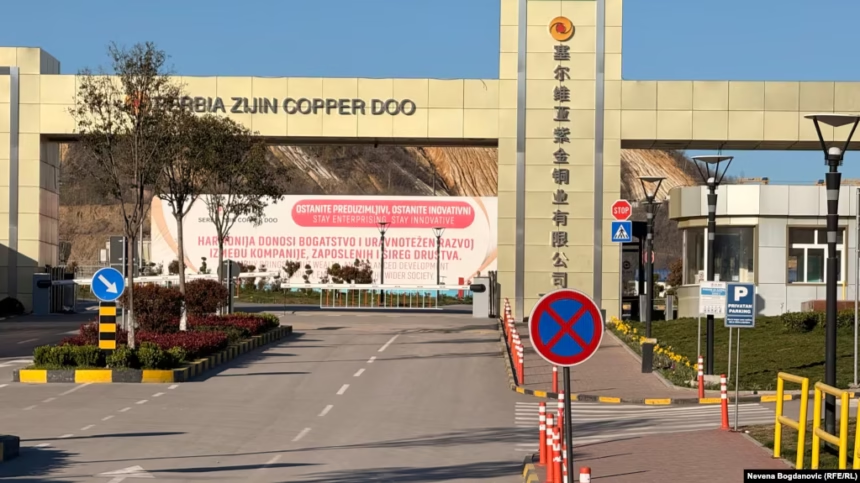
In a major enforcement action targeted at Chinese state-backed industrial projects in the Balkans, U.S. Customs and Border Protection (CBP) has issued an immediate Withhold Release Order (WRO) on all copper and copper derivatives produced in Serbia by the Chinese mining giant Zijin Copper D.O.O.
The federal mandate takes effect globally across all U.S. ports of entry. CBP personnel have been instructed to seize and detain all arriving shipments of copper products sourced from Zijin’s massive industrial complexes in Bor and Majdanpek, located in eastern Serbia, following an extensive investigation that uncovered systematic human rights abuses.
1. The Investigation: Mapping Six Indicators of Forced Labor
According to an official statement by Susan S. Thomas, the Executive Assistant Commissioner of the CBP Office of Trade, the federal seizure is backed by a mountain of scrutinized evidence. Investigators analyzed granular intelligence including firsthand worker testimonies, photo evidence, focus group field notes, internal text message logs, and independent NGO reports.
International Labour Organization (ILO) Breaches Identified at Zijin Bor

 [ 1. ABUSE OF VULNERABILITY ] ──► Exploiting foreign contract laborers
                                   who lack local legal protections.
 [ 2. WITHHOLDING OF WAGES ]   ──► Arbitrarily blocking or delaying pay
                                   to trap workers financially.
 [ 3. INTIMIDATION & THREATS ] ──► Deploying psychological coercion and
                                   retaliation threats by management.
 [ 4. RESTRICTION OF MOVEMENT ]──► Confining personnel to highly monitored,
                                   isolated industrial living quarters.
 [ 5. RETAINING DOCUMENTS ]    ──► Illegal confiscation of personal passports
                                   and travel identification.
 [ 6. EXCESSIVE OVERTIME ]     ──► Forcing involuntary, grueling shifts
                                   under hazardous physical conditions.
“American manufacturers face unfair competition when foreign companies cut costs by exploiting forced labor. By enforcing our anti-forced labor laws, CBP protects human rights as well as our nation’s economic security.”
— Susan S. Thomas, CBP Office of Trade
2. The Recourse for Importers & Market Context
The U.S. market acts as a highly lucrative destination for raw materials, and international trade logs verified a high probability of ongoing or imminent Zijin copper shipments into the United States. Under federal enforcement laws, corporate buyers holding blocked shipments face rigid options.
The Legal Crossroads for Blocked U.S. Shipments
┌────────────────────────────────────────────────────────────────────────┐
│                                                                        │
│  [ TOTAL MATERIAL DESTRUCTION ] ───────────────────────────────────┐   │
│  • Importers can elect to completely destroy the seized copper assets  │   │
│    under strict U.S. customs supervision at their own expense.         │   │
│                                                                        │   │
│  [ RE-EXPORTATION PATTERNS ] ──────────────────────────────────────┤   │
│  • The cargo can be legally rerouted and exported out of American     │   │
│    jurisdiction to alternative world markets that permit these goods.  │   │
│                                                                        │   │
│  [ COMPLIANCE BURDEN OF PROOF ] ───────────────────────────────────┘   │
│  • Importers can attempt to formally contest the seizure by presenting  │
│    irrefutable proof that the supply chain is clean of forced labor.   │
└────────────────────────────────────────────────────────────────────────┘
3. Pattern of Exploitation: China’s Balkan Infrastructure Under Fire
This blacklisting marks the second time the United States has blocked imports from a Chinese multinational operating in Serbia within a six-month window, revealing a systemic and structural disregard for labor standards within Beijing’s “Belt and Road” footprint in Europe.
| Company & Location | Core Product | Primary Violations & Historical Context |
| Zijin Copper D.O.O. (Bor, Eastern Serbia) | Copper & Copper Derivatives | Subject to current June 2026 WRO. The company is already facing intense scrutiny for severe environmental degradation, importing toxic raw components, and violating air safety limits with heavy arsenic levels. |
| Linglong Tire (Zrenjanin, Northern Serbia) | Automotive Tires | Blacklisted under a CBP Withhold Release Order in December. The factory became infamous across Europe after human rights organizations exposed the shocking, modern-day slavery conditions of Vietnamese and Asian workers trapped at the facility. |
This sweeping enforcement signal alerts international markets that Washington will not tolerate the outsourcing of labor exploitation into European candidate states. By aggressively freezing the financial upside of Chinese state-backed industrial projects in Serbia, the U.S. is applying severe pressure on Belgrade to either regulate the flagrant human rights violations occurring within its borders or risk seeing its primary industrial exports permanently locked out of Western supply chains.