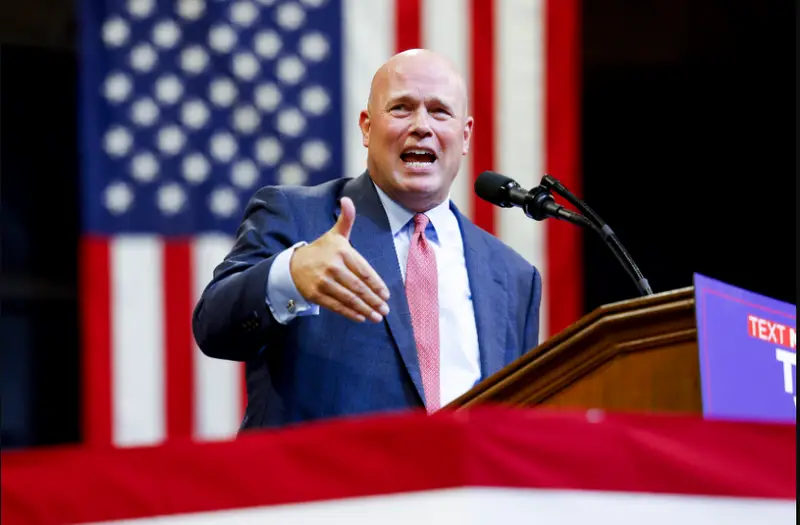
In a move that signals a hardening of Western diplomatic efforts in the Balkans, the U.S. Permanent Representative to NATO, Ambassador Matthew Whitaker, has issued a historic call for Serbia to fundamentally realign its foreign policy. Writing in an op-ed for the Belgrade-based daily Politika, Whitaker’s message was unambiguous: the era of “strategic balancing” is nearing its end, and Serbia’s future security lies exclusively in a deepened partnership with the United States and NATO.
The Ambassador’s intervention comes at a critical geopolitical juncture, as the Biden-Trump transition era seeks to solidify the “Eastern Flank” of Europe against external influences from Russia and China.
The “Clear Choice” Doctrine
Whitaker’s argument rests on the premise that Serbia’s current military and political posture is out of sync with its geographic and economic reality. He presented Belgrade with a strategic “choice” based on long-term survival rather than short-term political maneuvering.
- Breaking “Malicious” Dependencies: The Ambassador warned that relying on “unreliable partners” creates strategic traps—specifically citing the purchase of military hardware that is incompatible with Western systems. He characterized these dependencies as vulnerabilities that “malicious external forces” can exploit to destabilize the region.
- Geographic Inevitability: Whitaker argued that because Serbia is surrounded by NATO members and EU aspirants, its security architecture is naturally Western. Any movement away from this, he suggested, is a move toward isolation.
Washington as the Primary Partner
The core of the op-ed was a direct invitation for Serbia to prioritize its relationship with Washington over all other non-European actors. Whitaker emphasized that the U.S. does not just offer security, but a “vision of prosperity” that other rivals cannot match.
- Shared Democratic Aspirations: He asked the Serbian public to identify which partners truly share their values and their desire for economic growth.
- Military Interoperability: By announcing joint NATO-Serbia military exercises for next month, Whitaker signaled that Washington is ready to move past the baggage of the 1990s and integrate the Serbian military into a modern, high-standard command structure.
- Regional Leadership: The Ambassador noted that for Serbia to fulfill its potential as a regional leader, it must bring “predictability” to the Balkans. This predictability, he argued, is only possible through a formal alignment with U.S. security standards.
A Call for “Forward-Looking” Diplomacy
Whitaker’s rhetoric was carefully crafted to acknowledge the past while demanding a focus on the next 25 years. He reminded Serbians of their history as allies to the U.S. in both World Wars, using this historical “blood brotherhood” as a foundation for a modern-day strategic pivot.
“The choice that makes the most sense—geographically and strategically—is closer cooperation with the United States and NATO… It is time to think about the partners you want by your side to ensure your country is stable, safe, and prosperous.”
The “Whitaker Ultimatum”: Context and Consequences
Diplomatic observers in the region are calling this the “Whitaker Ultimatum”—a soft-power push backed by the heavy weight of NATO’s military infrastructure. The timing is significant:
- The Kosovo Factor: The U.S. is signaling that a move toward Washington would provide Serbia with a more stable platform to address its concerns regarding the Serbian community in Kosovo.
- Countering the East: This is the most direct attempt in recent years to decouple Serbia from its military and energy ties with Moscow and its growing infrastructure debt to Beijing.
The Path Forward
Ambassador Whitaker’s visit to both Prishtina and Belgrade, capped by this public appeal, suggests that the U.S. is ready to significantly upgrade its commitment to the region. The question now lies with Belgrade: will it maintain its current “neutrality,” or will it answer the call to become a pillar of Western security in the heart of the Balkans?