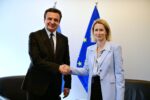
A report by the Parliamentary Assembly of the Council of Europe states that Kosovo’s parliamentary elections of December 28 were conducted in a “calm and professional” manner, but highlights serious structural problems within the system. The report was also submitted to Prime Minister Albin Kurti.
The report raises strong concerns about the politicization of the electoral administration, particularly the Central Election Commission.
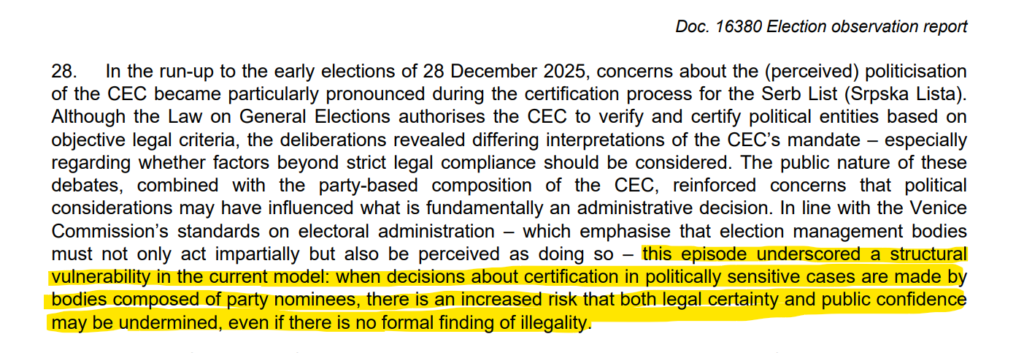
According to the findings, the party-based composition of the CEC creates a risk of political influence in decision-making, even when there are no formal legal violations.
“When decisions on certification in politically sensitive cases are taken by bodies composed of party nominees, the risk increases,” the report notes.
Observers warn that this undermines both legal certainty and public trust in the electoral process.
The report also highlights controversies surrounding the certification of Serbian List and the overturning of decisions by higher judicial instances, stressing that there were “attempts to politicize the work of the CEC.”
In this context, the Assembly calls for clear structural reforms:
“A full depoliticization of the CEC must be ensured, so that electoral bodies not only act impartially but are also perceived as such.”
Despite these issues, the elections were marked by political competition and relatively stable participation, even amid the institutional crisis that preceded them. However, “manipulation of preferential votes” and problems with voter lists weakened confidence in the process.
The report adds that both the Parliamentary Assembly of the Council of Europe and the Venice Commission are ready to work with Kosovo authorities to improve the electoral framework and strengthen administrative capacities.

Dispute over the final CEC member
Acting President Albulena Haxhiu has yet to appoint the tenth member of the CEC, a position contested between the Democratic Party of Kosovo and the Vetëvendosje.
While civil society and constitutional experts argue that the seat belongs to PDK, Vetëvendosje insists it should be theirs and has increased pressure for the appointment of a third representative.
The issue remains unresolved, raising concerns about institutional balance—especially as early elections could be called if a new president is not elected by the end of the month.
Experts warn that even a single vote within the CEC can determine key decisions, recalling a previous 6–5 vote on the election budget.
The current deadlock reflects broader tensions between the ruling party and the opposition over representation and constitutional interpretation, particularly Article 139, which states that six members are appointed by the six largest parliamentary groups.