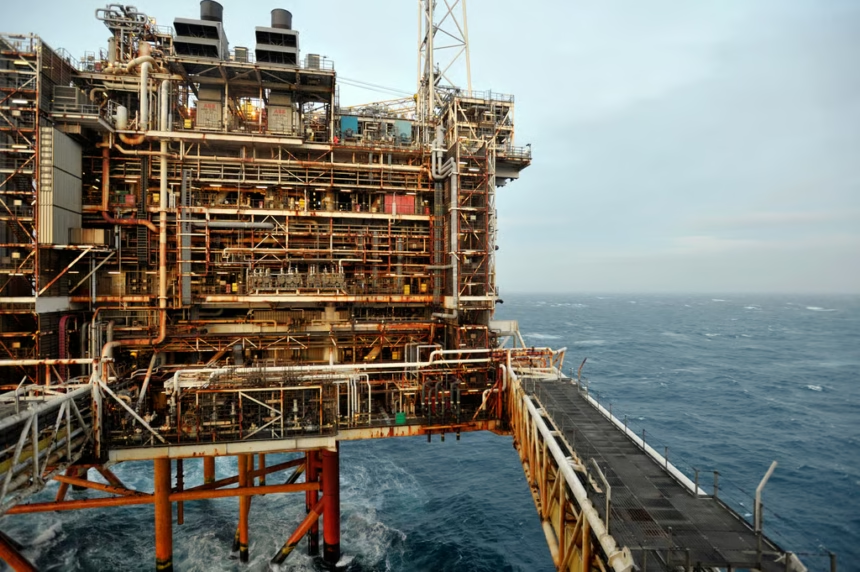
British Prime Minister Andy Burnham has said the United Kingdom “cannot ignore” its North Sea oil and gas reserves, signaling a more pragmatic approach to energy policy in a message that aligns with calls from U.S. President Donald Trump for greater exploitation of domestic energy resources.
Burnham said Thursday that he discussed the future of the North Sea with Trump during their first phone conversation last week, emphasizing that his government would take a practical approach to the energy sector.
“I indicated in the phone call that we had a week last Monday that I would take a pragmatic approach when it comes to the North Sea, and that is my intention as we go forward from here,” Burnham said.
“There is a resource there — when people are struggling, we can’t ignore that,” he added.
The comments mark a potential shift in tone from the Labour Party’s previous energy commitments. In its 2024 manifesto, Labour pledged not to issue new oil and gas drilling licenses, while promising to respect existing permits.
However, the government has faced growing pressure from opposition parties, including the Conservatives and Reform UK, to reconsider the policy amid concerns over rising energy costs and energy security.
Trump has repeatedly urged Britain to expand North Sea drilling and claimed that Burnham told him the UK would “open up the North Sea” during their first conversation.
“If you use the North Sea, the U.K. will be a really rich country,” Trump said, arguing that increased production could strengthen Britain’s economy.
Burnham has previously said he is “open-minded” about further drilling but has not yet announced any formal policy changes.
Two major oil and gas projects, Rosebank and Jackdaw, already hold licenses and are awaiting environmental approval and final decisions on their development plans. Approval from Burnham’s government would likely trigger political controversy but would not directly violate Labour’s existing manifesto commitments.
Meanwhile, the oil and gas industry is urging the Treasury to reduce its tax burden. The Energy Profits Levy, introduced as a windfall tax on energy companies, was extended and increased under the previous Labour government, resulting in an effective 78 percent tax rate on oil and gas producers until 2030.
The debate highlights the growing tension between Britain’s climate commitments, energy security concerns, and economic pressures facing households.