US intelligence has assessed that an explosive-laden drone discovered near a Ukrainian cargo aircraft at Leipzig Airport in early August bears characteristics associated with equipment used by Russia’s military intelligence service, the GRU.
The assessment was made in coordination with German security and intelligence agencies, according to a US intelligence source.
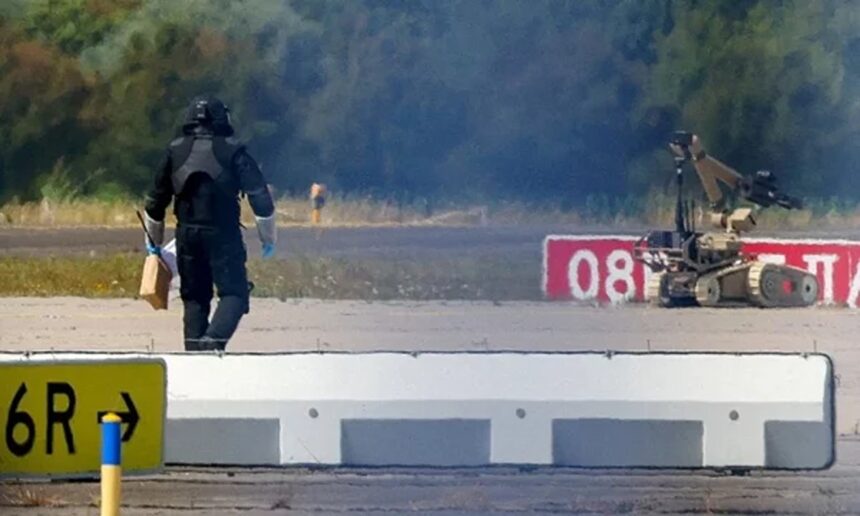
The device was discovered on 4 August and did not detonate because its activation mechanism had been disabled. Authorities subsequently closed parts of Leipzig Airport and deployed bomb-disposal teams, using specialised robots to secure and examine the drone.
Germany’s interior minister described the incident as a new type of threat requiring a high level of technical expertise.
Investigators believe the drone may have been designed to damage aircraft stationed at the airport. Leipzig is an important logistics hub for the movement of military equipment to Ukraine, making the facility a potentially significant target for an operation intended to disrupt deliveries.
Beyond the potential physical damage, investigators are also examining whether the incident was designed to send a warning to Germany over its continued military and political support for Ukraine.
US officials have noted that Leipzig Airport has previously experienced suspicious drone activity. Since January 2026, authorities have recorded 18 drone-related incidents that disrupted air traffic at the airport. Another drone was reportedly discovered near the facility on 14 August.
German Chancellor Friedrich Merz has warned that Germany is becoming “increasingly a target of hybrid attackers”. While avoiding a direct accusation against Moscow while the investigation remains ongoing, Merz said German authorities were working intensively to establish the circumstances surrounding the incident.
The Russian Foreign Intelligence Service, SVR, has rejected the allegations. It accused German politicians and European media of drawing premature conclusions and blaming Russia before the investigation had produced definitive findings.
The case comes amid growing concern among European governments over alleged Russian sabotage and other forms of hybrid activity targeting critical infrastructure and defence-related facilities across Europe.
If confirmed, the Leipzig incident would represent another serious indication of how the conflict surrounding Russia’s war in Ukraine is increasingly extending beyond the battlefield and into Europe’s critical infrastructure and logistics networks.