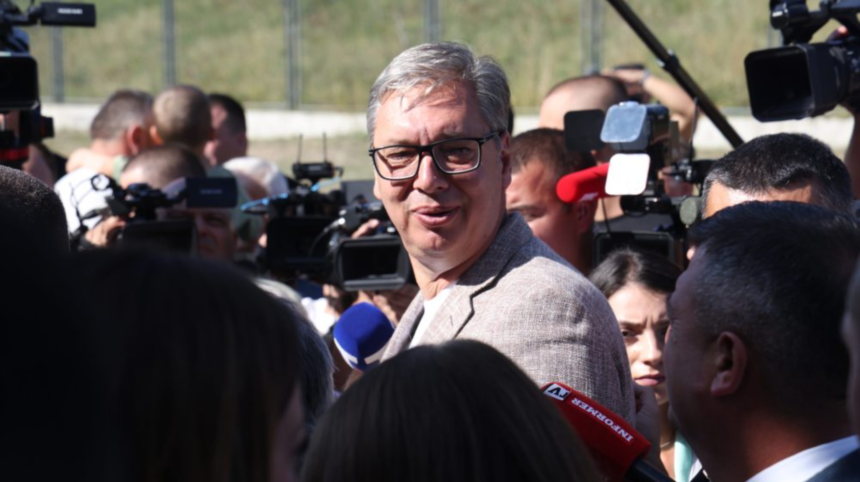
Serbian President Aleksandar Vučić has once again turned an issue inside Kosovo into a political instrument for Belgrade, presenting the reopening of the main bridge over the Ibër River in Mitrovica as a matter for Serbia and NATO to decide.
Vučić’s decision to appeal directly to NATO Secretary General Mark Rutte is not simply a security concern. It is part of a broader political strategy in which Belgrade repeatedly attempts to portray Kosovo’s internal affairs as matters subject to Serbia’s approval, despite Kosovo exercising authority over its territory and institutions.
The bridge itself has become a symbol in this political confrontation. For years, its restricted use has been justified through security arguments and political tensions between the two parts of Mitrovica. Kosovo’s institutions, however, have maintained that public infrastructure should serve citizens and that freedom of movement and the rule of law cannot remain permanently hostage to political pressure.
Vučić’s rhetoric also comes at a politically convenient moment. Rather than presenting a concrete solution for the Serbian community in Kosovo, he has once again chosen public statements, letters and accusations against Prishtina and Western institutions. The result is a familiar pattern: create a sense of crisis around Kosovo, present Belgrade as the defender of Serbs, and use that narrative to strengthen his political position at home.
What is particularly striking is the attempt to involve NATO in determining whether a bridge inside Kosovo should be opened. KFOR’s mandate is focused on maintaining a safe and secure environment and freedom of movement; it does not transform Serbia into an authority over Kosovo’s infrastructure or institutions.
Kosovo’s sovereignty cannot be reduced to whether Belgrade approves of decisions made in Prishtina or Mitrovica. The future of Kosovo’s roads, bridges, public institutions and territory must be determined through Kosovo’s constitutional and legal framework—not through political instructions from Belgrade.
Vučić knows this. That is precisely why the bridge has become useful political theatre.
The issue is therefore not simply a bridge. It is the continued attempt by Belgrade to question Kosovo’s sovereignty by turning every decision taken by Kosovo’s institutions into another confrontation with Serbia.
And once again, instead of offering a constructive path for Serbs living in Kosovo, Vučić is using their concerns as political ammunition—keeping tensions alive while presenting himself as the only person capable of “defending” them.