A disturbing new lead has emerged in Kosovo’s investigation into wartime killings around Zubin Potok, after police revealed that some of the weapons recently seized in the area may have been used in the massacre known as the “Group of Intellectuals.”
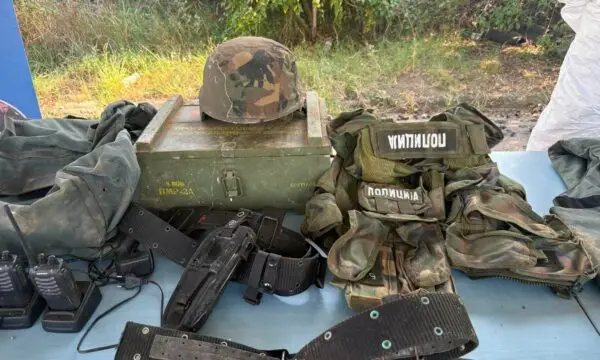
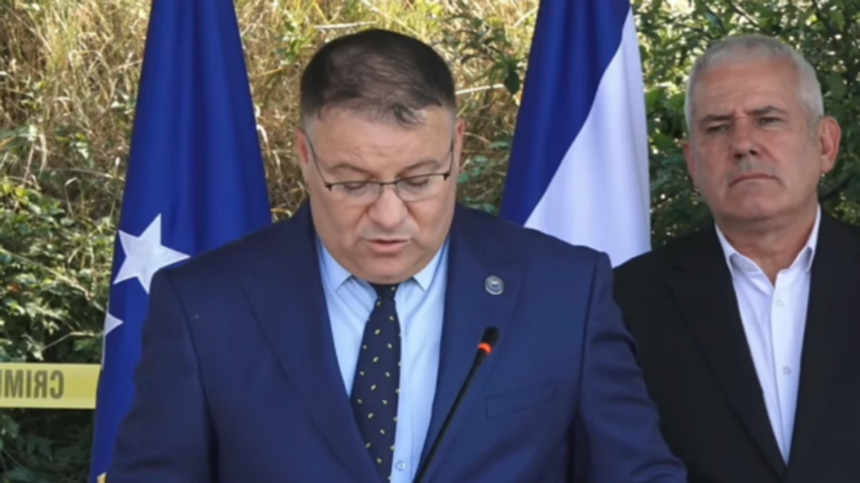
Kosovo Police Director General Gazmend Hoxha said investigators suspect that part of the arsenal recovered from villages surrounding Kalludër could be connected to the mass killing. The weapons were found alongside grenades, military equipment and uniforms associated with the Serbian Army and Serbian Police.
The possible connection is particularly serious because the discoveries come as Kosovo authorities continue excavations in Kalludër, where suspected mass graves and human remains linked to the 1998–1999 war have been investigated.
Hoxha stressed that the suspected connection must still be confirmed through forensic and ballistic examinations. However, the discovery raises a deeply troubling question: could weapons that remained hidden in the area for decades now provide evidence linking the wartime arsenal to crimes committed against Kosovo civilians?
“These are our suspicions that some of these weapons may have been involved in the mass killing in the case of the Group of Intellectuals,” Hoxha said, explaining that each weapon will be examined individually in Kosovo and, if necessary, in laboratories abroad.
The authorities’ findings add another disturbing dimension to the investigation. Police recently reported the seizure of 72 firearms, seven hand grenades and other explosive devices, as well as military equipment and uniforms connected to Serbian military and police structures.
The significance cannot be ignored. These are not simply forgotten weapons from a turbulent period. If forensic testing establishes that any of them were used in the killings, they could become physical evidence connecting the weapons to crimes committed during the war.
For years, the fate of Kosovo’s missing persons has remained a painful unanswered question for their families. The discovery of suspected mass graves, human remains and now potentially crime-linked weapons could help investigators reconstruct what happened and identify those responsible.
The evidence must still be tested, and no weapon can be definitively tied to a particular crime until forensic examinations establish the connection.
But the possibility is grave: weapons hidden for decades in the same region where suspected wartime graves are now being investigated could potentially help expose another layer of the crimes committed against Kosovo civilians.
For the families who have waited for answers for more than two decades, this investigation is not about political narratives. It is about uncovering evidence, identifying victims and, ultimately, establishing responsibility for the crimes committed against them.