The European Council reconvened in Brussels today for the second day of its high-profile biannual summit, officially placing the EU integration of the Western Balkans as Item 13 on the leaders’ strategic voting agenda.
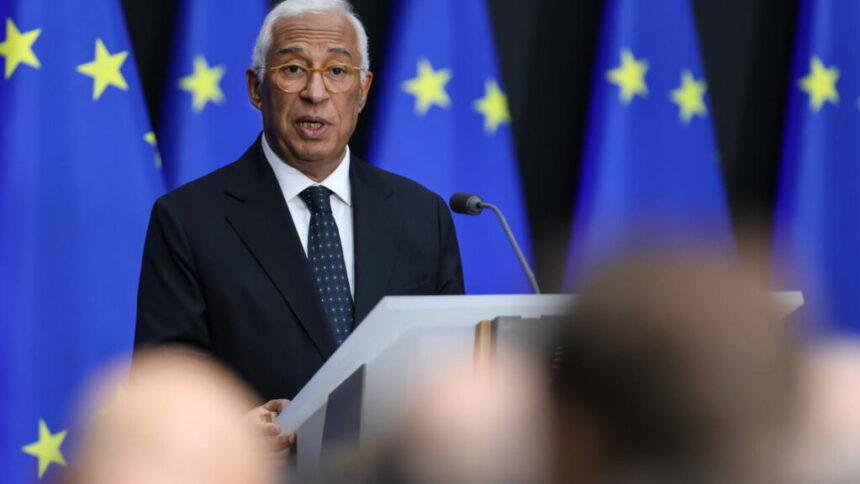
In his formal invitation letter dispatched to the 27 heads of state, European Council President Antonio Costa highlighted a structural shift in regional expansion tracking. Pointing specifically to the breakthroughs achieved at the recent EU-Western Balkans Summit in Tivat, Montenegro, Costa stated that the candidate countries are seeing an unprecedented acceleration in their accession trajectories.
Enlargement and the Strategic Balancing Act
The inclusion of the Western Balkans comes at a highly complex geopolitical moment for the Council, which is concurrently managing internal fractures over newly discovered diplomatic backchannels with Moscow.
Despite those tensions, Costa emphasized that the broader expansion of the union remains a primary mechanism for continental security.
European Council Integration Priorities (June 2026)

 ┌─────────────────────────────────────────────────────────┐
 │               ACCESSION & SECURITY TIMELINE             │
 └────────────────────────────┬────────────────────────────┘
                              │
       ┌──────────────────────┼──────────────────────┐
       ▼                      ▼                      ▼
  [ TOP OF AGENDA ]     [ ENLARGEMENT CLUSTER ] [ ITEM 13: BALKANS ]
  Multi-year defense    Green-lighting the      Capitalizing on the
  and financial support first formal chapters   "Tivat Momentum" to
  packages for Kyiv.    for Ukraine & Moldova.  advance Adriatic path.
In his address to the member states, President Costa linked the stability of Eastern Europe directly to the systemic integration of the Adriatic and Balkan corridors:
“Together with the new momentum regarding the Western Balkans, as witnessed during our recent summit in Tivat with our partners from that region, there is a renewed and clear impetus in the overall enlargement process. The Union’s dual-track approach—providing unwavering material support to Ukraine while systematically escalating economic and sanctions pressure on Russia—is delivering concrete results.”
Key Day 1 Deliverables: Unprecedented 12-Month Sanctions Mandate
Beyond the Western Balkans roadmap, the first day of the Brussels summit yielded a massive legislative shift in how the bloc penalizes the Kremlin. On Thursday evening, EU leaders universally agreed to renew broad economic sanctions against the Russian Federation for an uninterrupted 12-month period.
This marks a major departure from established EU foreign policy protocol. Since the initial annexation of Crimea, economic and sectoral sanctions against Russia had strictly been subject to rigorous renewals every six months to accommodate shifting diplomatic consensus among more hesitant member states.
The transition to a mandatory one-year extension is being interpreted by diplomats as a firm signal of institutional resilience, designed to lock in Western strategy regardless of domestic political fluctuations across European capitals.