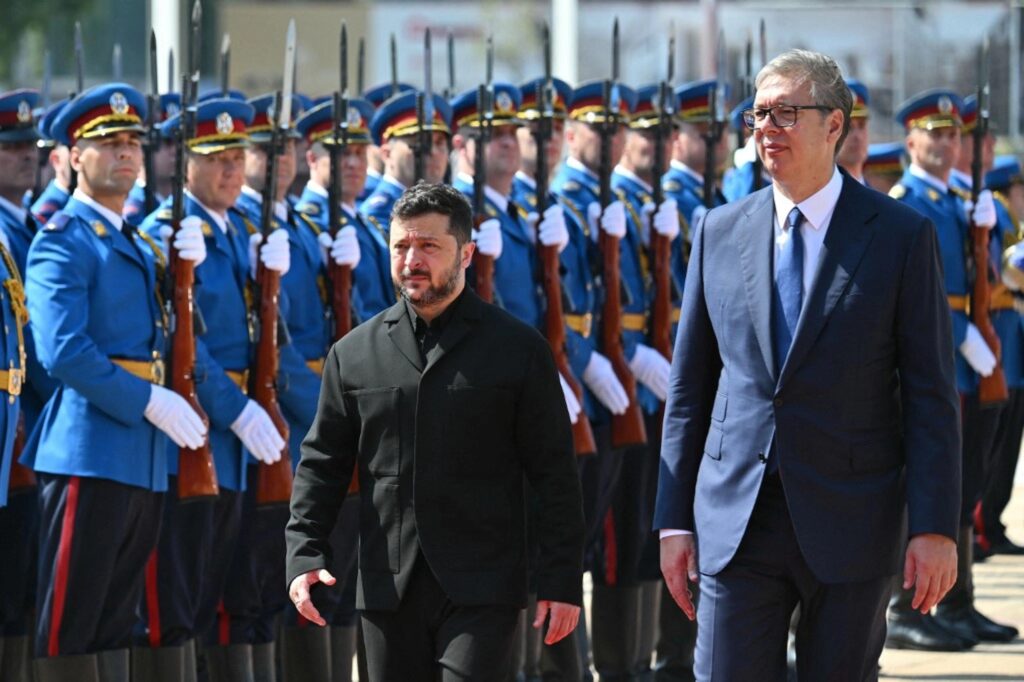
Ukrainian President Volodymyr Zelensky’s visit to Serbia, presented as a diplomatic step aimed at strengthening relations between the two countries, has sparked reactions and controversy across the Balkans.
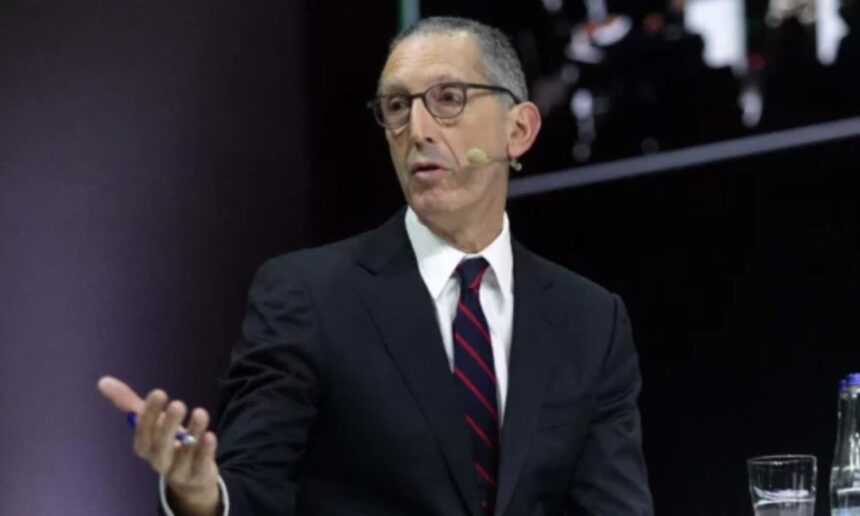
American Balkan expert Edward P. Joseph, a professor at Johns Hopkins SAIS in Washington, argues that Zelensky’s visit served Ukraine’s interests, but at the same time gave Serbian President Aleksandar Vučić an opportunity to strengthen his political position.
In an analysis published by Vox Ukraine, Joseph writes that Serbia remains an important partner for Russia and China in the Balkans, even while supplying significant quantities of ammunition to Ukraine through third countries.
According to Joseph, this puts Belgrade in a paradoxical position: Serbia cooperates with Ukraine while simultaneously refusing to join the European Union’s sanctions against Russia.
Joseph notes that Russian President Vladimir Putin and Russian diplomacy have repeatedly criticized Serbia over its ammunition supplies to Ukraine. He also cites Russian Foreign Minister Sergei Lavrov, who described Serbia’s involvement in arming Ukraine as unacceptable.
However, the American expert argues that Zelensky’s visit is unlikely to change Serbia’s strategic orientation.
“Before the visit, Vučić made it clear that Serbia would not change its position on sanctions against Russia,” Joseph writes.
He further argues that Belgrade cannot fully distance itself from Moscow without undertaking deep reforms in the rule of law—reforms that, in his view, the current Serbian leadership is unwilling to implement.
Criticism of Zelensky’s Position on Kosovo
One of Joseph’s strongest criticisms concerns Zelensky’s statements on Kosovo.
He argues that the Ukrainian president was wrong to compare Ukraine’s position on Kosovo with respect for territorial integrity, noting that the International Court of Justice ruled in 2010 that Kosovo’s declaration of independence did not violate international law.
According to Joseph, by repeating Serbia’s narrative on Kosovo, Zelensky risks strengthening arguments used by the Kremlin, which has repeatedly invoked the Kosovo case in an attempt to justify Russia’s invasion of Ukraine.
Joseph concludes that Ukraine should reconsider its approach toward Kosovo. In his view, recognizing Kosovo would serve Kyiv’s strategic interests and could also influence several NATO members that have yet to recognize Kosovo’s independence.