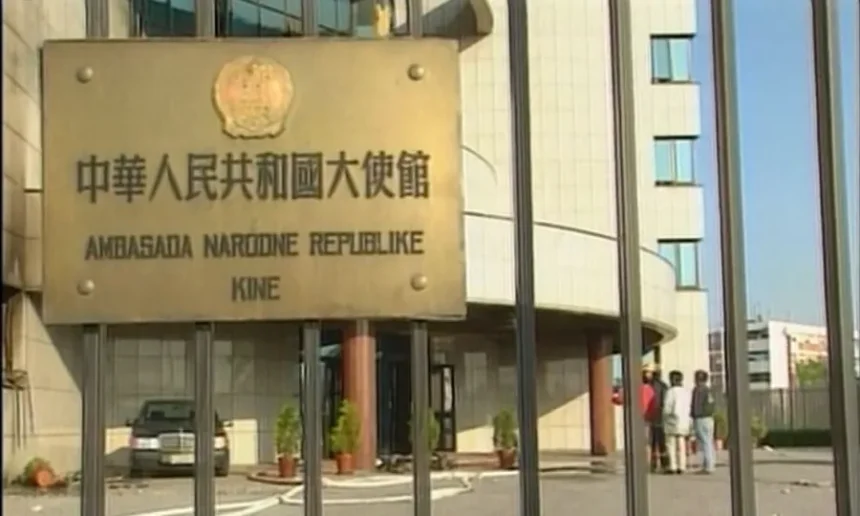
Today marks the 27th anniversary of one of the most controversial incidents during the 1999 NATO intervention in Yugoslavia: the bombing of the Chinese Embassy in Belgrade. On the night between May 7 and 8, 1999, NATO missiles struck the diplomatic mission, killing at least three people and injuring over twenty others.
The event, which significantly strained relations between the West and Beijing, remains a pivotal moment in the history of the Kosovo War.
A Night of Intense Bombardment
The strike on the embassy was part of what was described at the time as the heaviest night of bombing in the Yugoslav capital since the start of Operation Allied Force on March 24, 1999.
- Targets Hit: In addition to the embassy, NATO missiles struck the Yugoslav Army Headquarters, the Ministry of Foreign Affairs, and the Government of Serbia building.
- Hotel Jugosllavia: NATO also targeted the Hotel Jugosllavia, stating it was being used to accommodate members of “Arkan’s Tigers,” a notorious Serbian paramilitary force.
- Casualties: Rescuers worked through the night to pull victims from the rubble of the embassy. Three Chinese journalists—Shao Yunhuan, Xu Xinghu, and his wife Zhu Ying—were identified as the deceased.
The Diplomatic Fallout
Belgrade officials immediately characterized the strike as a deliberate “criminal act.” Goran Matić, then a Yugoslav minister, argued that hitting a building with two bombs could not be considered an accident.
In Beijing, the reaction was explosive. The Chinese government labeled the incident a “flagrant violation of Chinese sovereignty” and called for an emergency meeting of the UN Security Council to condemn the attack and demand a full investigation.
Clinton’s Stance: “The Bombing Continues”
While then-President Bill Clinton expressed regret for the loss of life and maintained that the embassy was hit by mistake due to outdated maps, he refused to halt the air campaign. Instead, he placed the moral responsibility squarely on Slobodan Milošević.
“If they want the bombing to stop, then the Kosovars must return home. We must reverse ethnic cleansing,” Clinton stated on May 8, 1999. “I would like to see some demonstrations against the inhumane treatment of defenseless Kosovars as well. I don’t blame people for being angry about this [the embassy strike]—I am angry too.”
The Legacy of the Strike
For NATO, the incident was a tragic intelligence failure that nearly derailed the mission’s diplomatic support. For China, it remains a symbol of Western “imperialism” and is still commemorated annually in Beijing as a reminder of the violation of diplomatic immunity.
In Kosovo, however, the day is remembered as a moment when the international community, led by the U.S., refused to let a tragic error stop the intervention intended to halt the genocide and displacement of the Albanian population.