The Ministry of Foreign Affairs of Serbia has yet to comment on allegations that cocaine was hidden in the Embassy of Serbia in Lisbon, but it has meanwhile introduced a controversial “travel traffic light” system advising Serbian citizens about safety risks abroad.
Under the new system, countries are categorized from green to red based on security assessments. Notably, Croatia has been placed in the orange zone, meaning citizens should “travel only if absolutely necessary.”
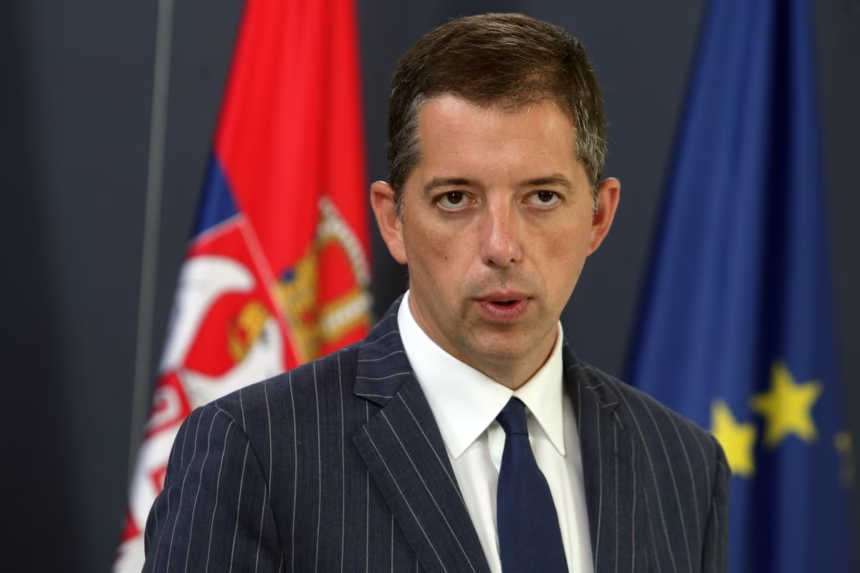
The announcement was promoted by Serbia’s Foreign Minister Marko Đurić, who shared a video explaining the new travel advisory initiative on social media.
Croatia singled out in Europe
According to the ministry’s website, Croatia is the only European country among 28 states placed in the orange category. Authorities claim the recommendation is linked to recent incidents and rising tensions that could potentially affect the safety of Serbian citizens visiting the country.
The ministry advised travelers to avoid large public gatherings, remain cautious in communication, and pay attention to personal safety while in Croatia. Travel organizers such as sports teams and cultural delegations were also urged to consult institutions before visiting.
Lisbon cocaine scandal
The timing of the advisory has drawn criticism because it came days after media reports about alleged drug trafficking linked to Serbia’s diplomatic mission in Portugal.
Montenegro’s newspaper Vijesti previously reported that in 2020 the Serbian embassy in Lisbon was allegedly used as a safe location to store cocaine belonging to a criminal group connected to Montenegrin politician Milo Božović.
At that time, Serbia’s ambassador to Portugal was Oliver Antić, a diplomat and one of the founders of the ruling Serbian Progressive Party. His career had previously been marked by controversies before his death in 2022.
Critics accuse government of diversion
Analysts say the travel advisory appears to be an attempt by authorities to divert public attention from political scandals involving the government of President Aleksandar Vučić.
Former diplomat Srećko Đukić criticized what he called “traffic-light diplomacy,” arguing that the government frequently raises tensions with neighboring countries whenever a major controversy emerges.
He also described the alleged cocaine affair as one of the most serious scandals in recent years, claiming it could potentially destabilize the government if fully investigated.
The controversy comes amid broader political tensions in Serbia and ongoing public scrutiny over several high-profile cases, including large drug seizures and corruption allegations linked to political figures.