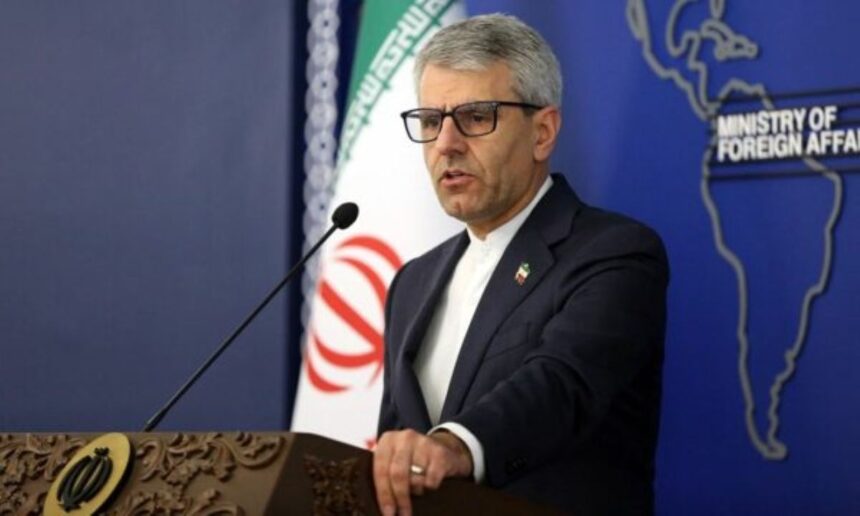
The Iranian government has officially confirmed the extension of its current ceasefire with the United States, but remains firm on its refusal to enter new diplomatic talks unless specific preconditions are met. While the move offers a temporary reprieve from active hostilities, it highlights a deep-seated “deadlock of conditions” between Washington and Tehran.
The announcement was made by the Spokesperson for the Iranian Foreign Ministry, Esmail Baghai, during a state television broadcast late Wednesday.
Diplomacy as a Strategic Tool
Baghai avoided confirming whether an Iranian delegation would attend the rumored upcoming summit in Islamabad. Instead, he framed diplomacy as a conditional instrument of national interest:
- National Interest First: Baghai stated that Tehran will engage in diplomacy only when conditions are “necessary and reasonable” to protect the Iranian nation against “the malicious pursuits of enemies.”
- Open Channels: Analysts interpret the spokesperson’s language as a strategy to keep communication channels open with mediators while maintaining a “hardline” public posture for domestic audiences.
The “Red Line”: The U.S. Maritime Blockade
Diplomatic sources in Tehran have been more explicit than the official spokesperson, identifying the U.S. blockade of Iranian ports as the absolute barrier to formal negotiations.
“Without the lifting of the American blockade on Iranian ports, we will not return to negotiations. We will not negotiate under threats,” Iranian diplomats stated.
Current Demands for Resuming Talks:
- Lifting of Blockades: Immediate removal of maritime restrictions affecting Iranian energy exports.
- Removal of “Threat-Based” Diplomacy: A demand that Washington ceases its current military pressure maneuvers in the Persian Gulf.
- Mediator Verification: Iran is currently working with Pakistani mediators to ensure that “the conditions of the Islamic Republic” are fully understood by U.S. representatives before any face-to-face meetings occur.
Strategic Analysis: Ceasefire vs. Peace
The extension of the ceasefire is a tactical success for regional stability, but the underlying conflict remains unresolved.
- The Pakistani Role: Islamabad has become the primary diplomatic conduit, working to bridge the gap between the U.S. demand for “de-escalation first” and the Iranian demand for “blockade relief first.”
- The Looming Deadline: With the U.S. Vice President JD Vance reportedly ready to travel for talks, the pressure is now on Tehran to decide if the ceasefire extension is a precursor to a deal or merely a pause to regroup.
The world now watches the diplomatic activity in Pakistan, as the “Islamabad Process” remains the only barrier preventing the current stalemate from returning to active naval warfare in the Gulf.