As a direct neighbor of Iran, Turkey is closely and anxiously monitoring the escalation in the Middle East. Ankara fears that the conflict could spread across the wider region.
Turkey has long positioned itself as a mediator between East and West and maintains diplomatic relations both with the European Union and countries in the Middle East. Ankara has attempted to mediate disputes between the United States and Iran on several occasions, though without success.
Recent statements by Turkish Foreign Minister Hakan Fidan suggest a certain frustration after years of diplomatic efforts, warning that the war may only have been delayed. He referred to a phone call with Washington at the end of January.
“They called me in the middle of the night,” Fidan said.
He said he immediately understood how serious the situation was and urgently informed President Recep Tayyip Erdoğan.
“Those were very dark times. We expected war or the first attack at any moment,” Fidan added.
A Complex Conflict with Multiple Risks
Ankara fears that a war with Iran could quickly escalate into a broader regional conflict involving much of the Middle East. Turkey shares a 530-kilometer border with Iran and is concerned about humanitarian, economic, and political consequences.
Turkey views the current war as a complex conflict with multiple risks. Economically, it fears further increases in already high inflation, possible energy supply disruptions, and losses in tourism.
Politically, Ankara is worried about uncertain shifts in the balance of power in the Middle East, as well as the potential resurgence of conflict with armed Kurdish groups in the region.
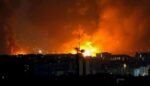
Due to missile attacks in Iran and southern Lebanon, Ankara may also face a possible new wave of refugees from both countries.
Restraint from NATO Member Turkey
So far, Iran has not targeted either the Incirlik Air Base—widely used by American forces—or the Kürecik Radar Station in Anatolia.
A ballistic missile was intercepted by a NATO air defense system on Wednesday. However, Iran emphasized that Turkey was not the intended target.
Sources close to the Turkish government also suggested that the missile may have simply gone off course.
For now, Turkey remains neutral and has intensified diplomatic contacts with the United States, the European Union, and Gulf states since the war began, urging all sides to return to the negotiating table before the conflict spreads further.
However, these mediation efforts have so far received little response, according to Sinan Ülgen of the Centre for Economics and Foreign Policy Studies (EDAM).
At this stage of the war, negotiations are not yet being considered, he said, interpreting Turkish diplomacy as an attempt to position Ankara for a later moment.
According to government sources, Ankara is already working on a formula that could eventually bring the warring parties to negotiations as equal partners.
Turkey faces a dilemma: the collapse of the regime in Tehran could lead to uncontrolled chaos in its immediate neighborhood. But if the regime emerges from the crisis strengthened, that could also create new political tensions and conflicts.
Ethnic Tensions and the Kurdish Conflict
Some media outlets are already speculating that the United States could use Kurdish forces as ground troops in Iran—a major concern for Ankara.
Although the Kurdistan Workers’ Party (PKK) in Turkey and its sister organization, the People’s Protection Units (YPG), have weakened, the arming of Iranian Kurdish militant groups could trigger a new regional dynamic.
According to Ankara, this could also jeopardize the rapprochement process between the Turkish state and the Kurds launched under the slogan “Turkey without terrorism.”
Ethnic conflicts in and around Iran are considered the worst-case scenario.
A New Refugee Wave?
During the war in Syria, Ankara accepted millions of refugees despite its own severe economic challenges.
Turkey is now trying to prevent a similar scenario if people begin fleeing Iran. According to media reports, there are plans to establish reception camps on the Iranian side of the border, while construction of a border wall with Iran has been significantly accelerated in recent years.
However, neither the government nor experts currently expect a major increase in refugee numbers.
Security expert Sinan Ülgen recalls the experiences of Iraq and Syria in the 1990s and 2010s: large refugee waves occurred only when full-scale civil wars with multiple factions broke out.
So far, border authorities have not recorded significant population movements. If a mass exodus were to occur, it would not only involve Iranian citizens—more than two million Afghan refugees currently living in Iran could also move westward.
The Role of Ursula von der Leyen
A social media message from Ursula von der Leyen further fueled discussions about possible new migration flows into Turkey.
In the message, she clearly praised President Erdoğan’s preparations to deal with migration.
Many in Turkey interpreted this as a signal that the European Union wants to once again turn Turkey into a “buffer state” or “gatekeeper” tasked with preventing a potential refugee wave from Iran from reaching Europe.