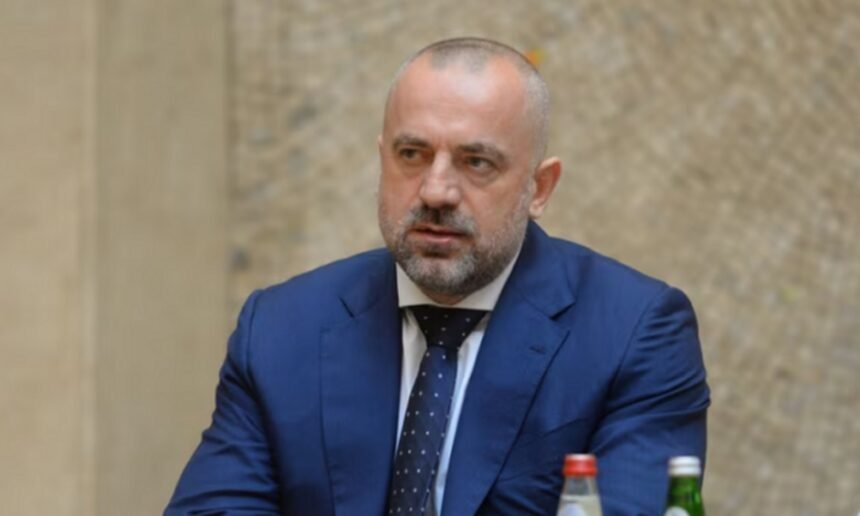
In Pristina, the first decision for the Banjska attack is being announced today, while in Belgrade no indictment has yet been filed.
Despite calls from the EU, the US, and NATO, as well as promises from Serbian President Aleksandar Vučić that those responsible will be prosecuted, this has not happened.
Nearly three years after the armed attack on the Kosovo Police in the north of the country, there is still no indictment against the organizer Milan Radoičić, who is in Belgrade.
He is still prohibited from leaving his place of residence and is obliged to report to the police, the High Court in Belgrade confirms for Radio Free Europe, while the Prosecutor’s Office remains silent on the indictment.
Dushan Janjić from the Forum for Ethnic Relations in Belgrade says he does not expect an indictment to be filed.
“An indictment for Banjska would discredit the president of the state, the army, the police, and the politics of Serbia and the Serbian Progressive Party (SNS) towards Kosovo,” he says for Radio Free Europe.
Responsibility for the armed attack in Banjska was taken by Radoičić himself, who at that time was deputy leader of the Serbian List – the largest party of Serbs in Kosovo, supported by Belgrade.
A Kosovo police officer was killed in that attack, and three others were injured, while in the armed clashes that followed, three Serbian attackers were also killed.
In several recordings published by the Kosovo authorities, armed men can be seen, including Radoičić, wearing military camouflage uniforms.
According to the authorities, they were filmed in the courtyard of the Banjska Monastery after the attack on the Kosovo Police on 24 September 2023.
What is preventing the indictment in Belgrade, which Chief Prosecutor Nenad Stefanović had announced for the end of 2024 or beginning of 2025, is not clear.
The High Public Prosecutor’s Office in Belgrade has not responded to Radio Free Europe’s questions on this issue.
Questions have also remained unanswered about what the investigations have revealed so far and whether, besides Radoičić, other persons have been investigated.
In its last response to Radio Free Europe, on 8 February 2024, the Prosecutor’s Office stated that it is “verifying the testimony of the suspect” Radoičić.
Out of 45 persons included in Kosovo’s indictment for the armed attack in Banjska, only three have been tried – those arrested in Kosovo – while the others are on the run.
For them, in December 2023, an international arrest warrant was issued by the international police agency Interpol.
The Ministry of Internal Affairs of Serbia has not responded to Radio Free Europe’s questions on whether it is searching for the other suspects and what obstacles exist for their arrest.
High Court: Radoičić must continue to report to the police
Milan Radoičić is still not allowed to leave his place of residence, go to Kosovo, or leave Serbia without court approval.
His Serbian passport has been confiscated.
The High Court in Belgrade also told Radio Free Europe that the compulsory measure of reporting on the 1st and 15th of each month at the competent police station in Savski Venac municipality is still in force and is being implemented.
The ban on leaving his place of residence was last extended on 31 March, for another three months, the Court said.
This measure can last as long as necessary and at the latest until the final decision becomes final, but the court reviews every three months whether its continuation is justified.
In the territory of Savski Venac municipality in Belgrade there are several villas and luxury buildings owned by companies and individuals linked to Radoičić.
Janjić: Kosovo condemns “the marginalized”
The Basic Court in Pristina is today announcing the first-instance verdict for three accused of the armed attack in Banjska.
Out of 45 accused, only three have been tried – those arrested in Kosovo: Vladimir Tolić, Blagoje Spasojević, and Dušan Maksimović.
They have denied the accusations and said they did not intend to kill.
“Kosovo condemns ‘the marginalized’,” says Janjić.
“Belgrade has made a farce of the detention and confession of Radoičić that he takes responsibility, but in the end it has charged him only with arms trafficking,” he adds.
The former deputy leader of the Serbian List was released after questioning in Belgrade in October 2023.
In Serbia, Radoičić is suspected of “serious crimes against general security” and illegal production, possession, and trafficking of weapons.
Kosovo classifies the Banjska attack as terrorist, while Radoičić and others involved are charged with undermining the constitutional order and actions against the legal system of Kosovo.
Belgrade refuses to extradite the accused, insisting they will be tried in Serbia.
President Aleksandar Vučić has repeated this several times.
Dragan Popović from the Center for Practical Politics in Serbia assesses that those involved enjoy full protection from the Serbian authorities.
“I have never expected an indictment, because the persons involved in Banjska, like Radoičić, are very close to the top of power in Serbia and to Aleksandar Vučić himself,” he says.
Janjić sees another reason for the lack of action.
According to him, the trial for Banjska in Serbia could open other cases, such as clarification of the killing of Serbian politician from Kosovo, Oliver Ivanović, in 2018.
In Kosovo, in June 2024, four persons of Serbian nationality were sentenced for involvement in this killing, but the perpetrators and organizers have not yet been discovered.
The Kosovo Prosecutor’s Office has linked this case also to Radoičić and his business partner from northern Kosovo, Zvonko Veselinović.
Radoičić and Veselinović are mentioned in the indictment as “leaders of a criminal group” that planned the killing of Ivanović.
No indictment has been filed against them, as they are on the run.
In Serbia, the case for the killing of Oliver Ivanović is still in the preliminary investigation phase.
Each is conducting “its own investigation”
Earlier, the High Prosecutor’s Office in Belgrade requested information from Kosovo through the EU rule of law mission EULEX, but Pristina rejected the request.
Kosovo’s Ministry of Justice stated that only Kosovo judicial institutions have jurisdiction over cases committed on its territory.
The EU confirmed that Kosovo’s request for legal cooperation through EULEX was forwarded to Serbia, but no response was received.
The Ministry of Justice of Serbia has not explained why it did not respond.
Janjić assesses that this case was an opportunity to break the blockade of mutual non-recognition between institutions.
Serbia does not recognize Kosovo institutions, but continues dialogue on normalization of relations.
Kosovo accuses Serbia of involvement in the Banjska attack, which Belgrade denies.
Vučić has stated that Banjska “did not fall from the sky” but was “resistance of the Serbian people against persecution.”
Meanwhile, some persons included in Kosovo’s indictment were seen during the summer of 2025 guarding the building of the Presidency of Serbia during mass anti-government protests.
Banjska on Serbia’s path
The EU, US, and NATO have repeatedly reminded Belgrade of its promise to prosecute those responsible for the armed attack.
In annual European Commission reports since 2023, Banjska is described as the most serious escalation in recent years.
The European Parliament has qualified the attack as a “terrorist act” and demanded accountability.
The US State Department has also called on Serbia to bring to justice all those involved in planning and executing the attack.
NATO Secretary General Mark Rutte stated that the Serbian president had promised full clarification of responsibility.
According to Popović, Banjska has affected the cooling of relations between the West and Vučić’s government.
The case is also seen as a serious obstacle to dialogue between Kosovo and Serbia for normalization of relations.
Kosovo Prime Minister Albin Kurti has repeatedly stated that extradition of Radoičić is a condition for continuation of this process.
But according to Popović, at this political moment dialogue has no real conditions for restarting.
He says Banjska is at the same time an obstacle and justification for lack of progress.
Radoičić, meanwhile, has withdrawn from public and political life.
According to official data from the business registry in Serbia, currently there is no company registered in his name in this country.
In 2023, he withdrew from ownership of the company Inkop and its branches after publicly admitting the organization of the armed attack in Banjska.
He donated his share in Inkop and related companies to business partners, the Veselinović brothers, Zvonko and Žarko.
Research by Radio Free Europe shows that these companies have for years benefited from construction contracts financed from the state budget of Serbia.
Both Radoičić and the Veselinović brothers are under US and UK sanctions due to suspicions of links with international organized crime.