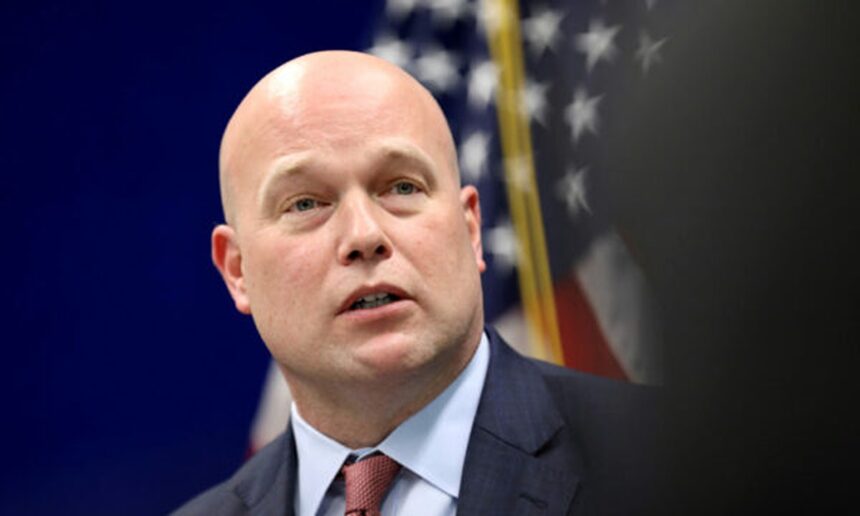
The United States Ambassador to NATO, Matthew Whitaker, has stated that Serbia should refrain from defense and security cooperation with unreliable partners, emphasizing that the country’s strategic future should be “aligned with the West.”
“Security depends on choosing the right partners,” he wrote on X on April 23, noting that he conveyed this message to the President of Serbia, Aleksandar Vučić, during a meeting in Belgrade a day earlier.
Serbia, even four years after the start of Russian invasion of Ukraine, has not joined the sanctions imposed by the West against Russia over the war.
At the same time, Belgrade has not abandoned its political ties with representatives of power in Russia.
Whitaker also said he had a constructive meeting with Aleksandar Vučić on “launching a new era in relations between the United States and Serbia.”
“We appreciate Serbia’s role in regional stability and look forward to the joint exercise between Serbia and NATO in May,” he said.
“But I was clear: Serbia’s cooperation in defense and security with unreliable partners creates long-term strategic dependency, which is difficult to break free from, and complicates future cooperation,” Whitaker added.
Earlier, Aleksandar Vučić said that discussions with the U.S. Ambassador to NATO focused on security issues, regional politics, and relations between Belgrade and Washington, D.C..
U.S. intelligence agencies warned in their annual report that the Western Balkans remains an area of heightened political tensions and external influence, highlighting in particular the role of Russia in destabilizing the region.
The report, published on March 18, stated that the war in Ukraine has deepened divisions between the West and Russia, which is also reflected in the Balkans.
According to the report, Russia “foments instability between Serbia, which it favors, and Kosovo,” and also “supports the secession of Republika Srpska from Bosnia and Herzegovina.”