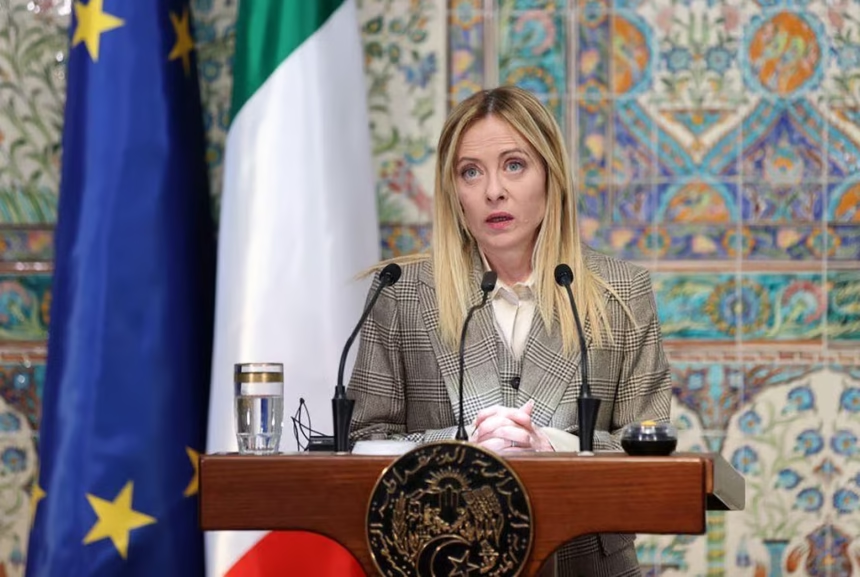
Giorgia Meloni is preparing to relaunch her political agenda following a significant referendum defeat, as rising energy prices and her perceived alignment with Donald Trump have triggered voter backlash.
The Italian prime minister is expected to outline a renewed strategy in parliament, placing energy security at the center of her government’s priorities while signaling a more cautious approach toward Washington.
Coalition officials have attributed the electoral setback partly to the economic strain caused by escalating fuel costs, exacerbated by ongoing instability in the Middle East. Paolo Barelli of Forza Italia noted that the conflict has heightened uncertainty and public concern over rising petrol prices.
Meloni has already taken steps to mitigate the economic impact, including cuts to fuel excise duties aimed at supporting households and businesses. However, a recent report from the Bank of Italy downgraded growth forecasts, citing “exceptionally high uncertainty.”
Energy policy is also shaping Italy’s stance within the European Union, with the government advocating for more flexible fiscal rules to address the crisis. Deputy Prime Minister Matteo Salvini described existing EU debt constraints as overly restrictive, while European officials have shown openness to adjustments.
On foreign policy, Meloni has begun to distance herself from Trump, emphasizing Italy’s alignment with European partners and the need to safeguard civilian infrastructure amid heightened geopolitical tensions. Rome recently declined to support a U.S. bomber mission passing through Sicily, underscoring a more independent stance.
Analysts suggest that Meloni’s previous close ties with Trump have become politically costly, with some experts noting that association with the U.S. president has grown increasingly controversial across Europe.
Despite the setback, the Italian government has ruled out early elections, citing global instability and economic pressures. Meloni’s political future will likely depend on her ability to navigate the ongoing energy crisis, maintain coalition unity, and recalibrate Italy’s international positioning.