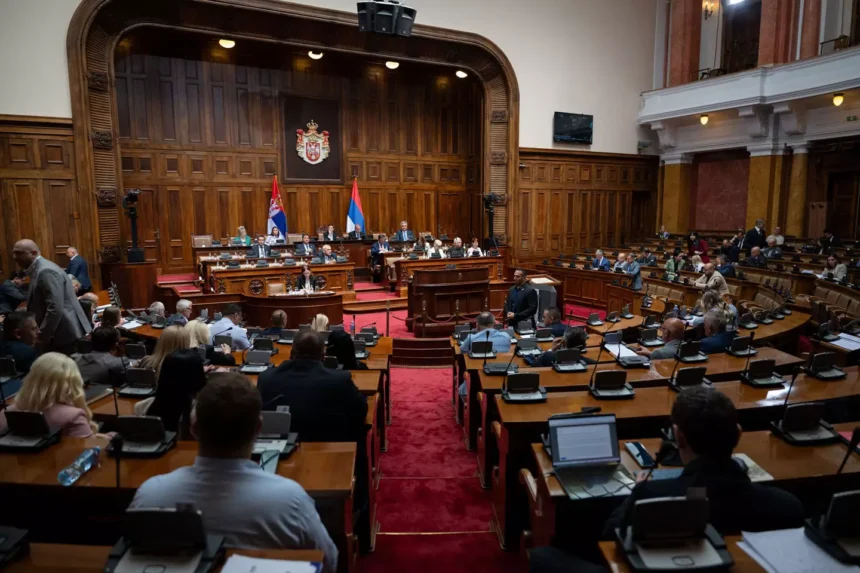
Today the Serbian National Assembly’s Committee on Justice and Public Administration began debating a new set of proposed amendments to the country’s electoral laws. While the ruling Serbian Progressive Party (SNS) claims the changes fulfill the recommendations of the OSCE Office for Democratic Institutions and Human Rights (ODIHR), the opposition has dismissed the move as a strategic maneuver to avoid meaningful reform.
The proposals, submitted by SNS MP Miroslav Petrašinović, include amendments to the Law on the Election of the President, the Law on Local Elections, the Law on the Election of Members of Parliament, and the Law on the Constitutional Court.
The Core Dispute: What Is Missing?
Opposition leaders and legal experts argue that the government has cherry-picked minor technical recommendations while ignoring the “engines of fraud.” According to Danijela Nestorović, an MP from the People’s Movement of Serbia, the regime is only changing laws that “hurt them the least.”
The Missing Reforms:
- Unified Voter Registry: There are no proposed changes to the laws governing the voter list, which has been the primary source of allegations regarding “phantom voters” and organized migrations of electors.
- Independent Audit Commission: The demand for an independent commission with the power to audit and clean the voter registry has been entirely omitted.
- Media Access: Reforms regarding equal media representation on national broadcasters remain unaddressed.
What the Proposed Changes Include
The government’s current package focuses on procedural standardizations and technical timelines:
- Mandatory Training: Members of election commissions and polling boards must now undergo standardized training and obtain certification from the Republic Election Commission (RIK) before being appointed.
- Constitutional Court Deadlines: The proposed law clarifies that the Constitutional Court must issue rulings on election appeals within 30 days.
- National Minority Lists: Minor adjustments were made to the rules governing minority lists to prevent their misuse by majority parties—a long-standing complaint from the civil sector.
The “Selective Compliance” Strategy
Nestorović warns that the government is preparing an “argument of compliance” to use against international critics. “The authorities will claim they have done everything in their power and followed ODIHR’s advice, framing any further opposition dissatisfaction as being ‘impossible to please,'” she stated.
Upcoming Public Hearings
In an attempt to project transparency, the government has scheduled a series of public hearings across the country:
- Kragujevac: April 26
- Niš: April 28
- Novi Sad: April 29
- Belgrade: April 30
The Verdict Awaiting ODIHR
The opposition highlights a critical procedural irony: the recommendations used to draft these laws were issued before these specific proposals existed. Therefore, it remains unknown whether ODIHR will actually view these specific amendments as a genuine fulfillment of their democratic requirements or merely a superficial adjustment designed to preserve the status quo ahead of the next election cycle.