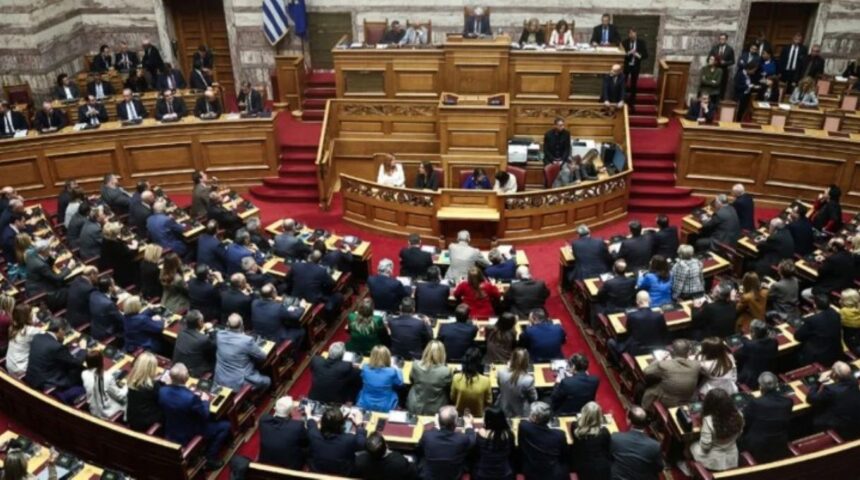
In a near-unanimous decision, the Hellenic Parliament has voted to strip the legal immunity of 13 Members of Parliament (MPs) embroiled in a massive agricultural fund scandal. The vote marks a dramatic escalation in one of Greece’s most significant corruption investigations in recent years.
Out of the 300-seat legislature, 288 deputies participated in the roll-call vote. The results for each of the 13 lawmakers were overwhelming, with “pro-removal” votes ranging between 285 and 287, while only two votes were cast against the measure.
The Lawmakers’ Response: “Proven Innocence”
In a rare display of political unity—or strategic legal maneuvering—at least 10 of the 13 accused lawmakers voted in favor of removing their own immunity.
During the heated parliamentary debate preceding the vote:
- The Request: The accused MPs explicitly asked their colleagues to vote for the removal of their immunity.
- The Defense: They argued that they wished to face ordinary justice to “prove their innocence” and clear their names in a court of law rather than behind parliamentary privileges.
- Political Impact: This collective stance is seen by analysts as an attempt to mitigate public backlash and demonstrate transparency as the agricultural sector remains on edge due to the alleged misappropriation of funds.
Overview of the Voting Results
| Category | Figures |
| Total Participating MPs | 288 |
| Absent MPs | 9 |
| Votes in Favor (Avg.) | 286 |
| Votes Against (Avg.) | 2 |
| Lawmakers Impacted | 13 |
Context of the Agricultural Fund Scandal
While the specific details of the embezzlement remain under judicial seal, the investigation centers on the suspected misuse of EU and national agricultural subsidies intended for small-scale farmers and rural development.
The investigation is expected to focus on:
- Ghost Beneficiaries: Funds allegedly diverted to entities that do not exist or do not meet agricultural criteria.
- Kickback Schemes: Accusations that a portion of the subsidies was returned to officials in exchange for approval.
- Money Laundering: Determining if the misappropriated funds were integrated into legitimate businesses or transferred abroad.
What Happens Next?
With their immunity removed, the 13 MPs will now be subject to the same criminal proceedings as ordinary citizens. The Supreme Court of Greece is expected to oversee the prosecution, given the high-profile nature of the defendants.
This move is seen as a crucial test for the Greek judicial system and the government’s “zero tolerance” policy toward corruption, especially as the nation navigates a complex economic period characterized by regional instability and energy price hikes.