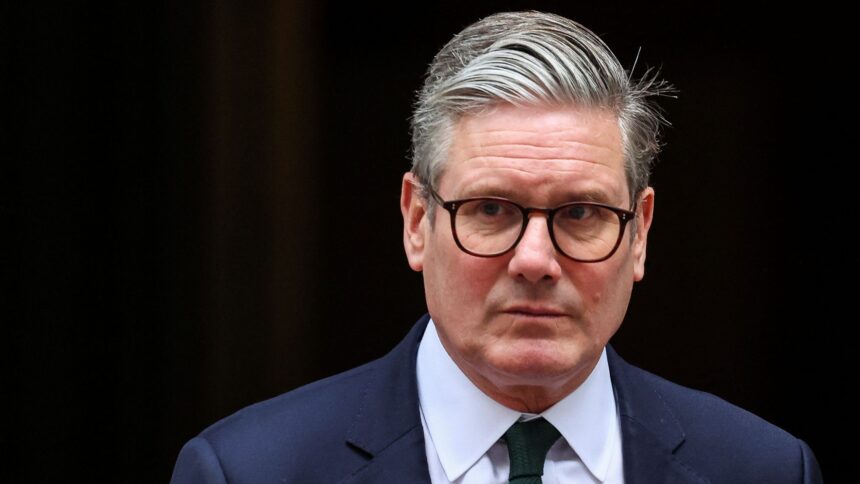
Prime Minister Keir Starmer is fighting for his political life today, May 12, 2026, as he enters an extraordinary and “painful” Cabinet meeting facing an open revolt from within his own party.
Following a catastrophic performance in last week’s local elections, the Prime Minister’s authority has effectively evaporated. BBC Political Editor Chris Mason describes Starmer as “hanging by a thread,” with the government’s top tier now fundamentally divided over whether he can—or should—continue to lead.
A Cabinet Divided
In a dramatic escalation late Monday night, several senior Cabinet ministers reportedly confronted the Prime Minister, urging him to oversee an “orderly transition of power.”
- Internal Opposition: Home Secretary Shabana Mahmood and Foreign Secretary Yvette Cooper are leading a minority faction within the Cabinet calling for Starmer to set an immediate timetable for his departure.
- The Stalwarts: Other ministers remain wary of plunging the party into a leadership contest during a period of economic instability and regional conflict, arguing that “stability is a premium” the country cannot afford to lose.
- Mass Resignations: The crisis deepened as six parliamentary private secretaries (PPS) resigned on Monday, including aides to high-profile figures like Wes Streeting and David Lammy, citing a total loss of confidence in the current leadership.
The “Mauling” at the Polls
The catalyst for this collapse was the local elections held on May 7, which saw the Labour Party suffer its worst defeat in recent history:
- Seats Lost: Labour lost approximately 1,100 council seats and surrendered control of nearly 40 local councils, including traditional strongholds.
- The Rise of Reform UK: Nigel Farage’s Reform UK emerged as the primary beneficiary, gaining over 1,400 seats and seizing control of authorities like Essex and Sunderland.
- Nationalist Surge: In Wales and Scotland, nationalist parties (Plaid Cymru and the SNP) dominated, leaving Labour significantly weakened in its former heartlands.
Starmer’s “Last Chance” Speech
On Monday, Starmer attempted to “reset” his premiership with a passionate address at the Coin Street Community Center. He vowed to prove his “doubters” wrong and insisted he would not “walk away” and plunge the country into the same chaos that characterized the previous Conservative administrations.
However, the speech was widely criticized by backbenchers as lacking new policy substance. Critics pointed out that his only offerings—a youth experience scheme with the EU and the nationalization of British Steel—were either old news or insufficient to address the scale of the electoral defeat.
What Happens Next?
As the Cabinet meets this morning, the Prime Minister faces three potential paths:
- Immediate Resignation: If the Cabinet consensus shifts against him today, Starmer could be forced to step down by this evening.
- The Timetable: He may offer a compromise by announcing a departure date (e.g., after the summer) to allow for a managed leadership contest.
- The “Institutional Battle”: Starmer could attempt to sack the dissenting ministers and appoint a “loyalist” Cabinet, though with over 75 Labour MPs publicly calling for his head, the arithmetic for survival is bleak.
Potential successors, including Wes Streeting, Andy Burnham, and Rachel Reeves, are reportedly already being briefed by their respective camps as the Labour Party prepares for its most significant leadership crisis since taking power in 2024.