While the topic of European Union (EU) integration remains a fixture of Serbian political discourse, analysts warn that “pro-Europeanism” alone is no longer a sufficient platform to win elections. As the country prepares for its next electoral cycle, the EU theme is increasingly viewed as a political tool rather than a comprehensive program.
The Shift from 2008 to 2026
Political experts suggest that the era of winning votes solely on the promise of “entering the EU”—a strategy that was highly effective between 2008 and 2012—has passed. Today, the Serbian electorate is deeply divided and largely skeptical.
According to the latest Eurobarometer data:
- 35% of citizens view EU membership as a “good thing.”
- 30% view it as a “bad thing.”
- 35% remain neutral.
Furthermore, research by the Centre for European Policy reveals that nearly a quarter of the population (23.9%) believes Serbia will never join the union.
Translating European Values into Daily Life
Nemanja Todorović Štiplija, editor of Savremena politika, argues that for the EU topic to resonate, it must be “translated” into issues that affect citizens’ daily lives.
“Integrations are not just a foreign policy goal, but a framework for organizing society,” Štiplija told Danas. He emphasizes that parties must focus on the “value dimension” of politics, including:
- Rule of Law: Strengthening democratic institutions and an independent judiciary.
- Transparency: Fighting corruption and organized crime.
- Civil Liberties: Protecting media freedom and the right to assembly.
The “Opportunity” Tool
Tamara Bajčić, Executive Director of Demostat, notes that while economic standards and justice remain the top concerns for voters, many do not directly link these improvements to EU accession requirements (specifically Chapters 23 and 24).
“The EU theme will not be dominant in the next elections; instead, it will be used opportunistically by all actors for various purposes,” Bajčić concluded. She also pointed out a unique political paradox: while many supporters of the current government hold anti-EU views, they would likely shift their stance if encouraged by leadership, illustrating the fluid and often superficial nature of the “European path” in current Serbian politics.
The Political Front
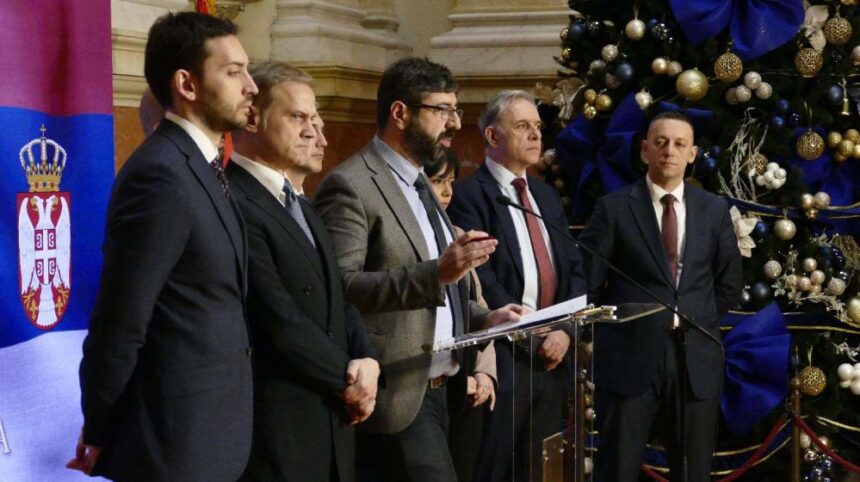
A group of pro-European parties (SSP, SRCE, PSG, and NPS) continues to aim at mobilizing citizens dissatisfied with the slow progress toward Brussels. However, internal shifts—such as the Green-Left Front (ZLF) moving to support student-led lists—show that the “European front” remains fragmented as it struggles to present a unified alternative to the current status quo.