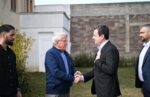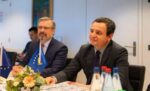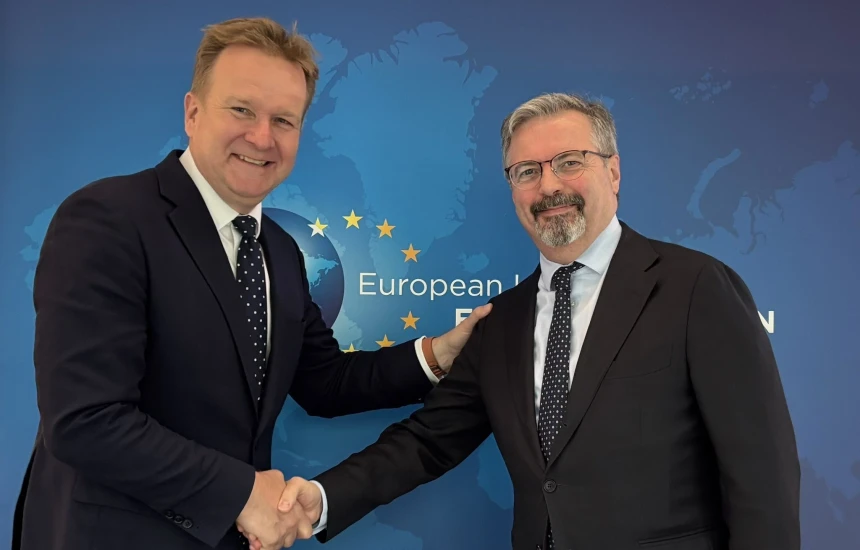
Kosovo’s chief negotiator for the normalization of relations with Serbia, Agron Bajrami, met on Wednesday with the European Union’s Special Envoy, Peter Sorensen, to discuss the future of the stalled dialogue process.
During the high-level meeting, Bajrami delivered a firm message: there can be no meaningful progress in the Brussels-mediated dialogue without Serbia facing consequences for the September 24, 2023, terrorist attack in Banjska.
The Demand for Accountability
Bajrami emphasized that the normalization process is directly tied to the pursuit of justice regarding the armed group led by Milan Radoičić.
“Further progress in the process will depend heavily on accountability for the terrorist attack in Banjska, which includes the handover of the leader of this attack, Milan Radoičić, and his group, to face justice in Kosovo,” Bajrami stated, according to a Ministry of Foreign Affairs press release.
Mutual Recognition as the Final Goal
The Chief Negotiator reiterated Kosovo’s “constructive” stance, insisting that the dialogue must conclude as quickly as possible with a final agreement centered on mutual recognition. He argued that this is the only path to open the door for the full integration of both Kosovo and the wider Western Balkans into the European Union.
Key demands presented by Bajrami during the meeting included:
- International Integration: Increased pressure on Serbia to stop obstructing Kosovo’s membership in the Council of Europe, NATO, and the UN.
- Territorial Integrity: Full and non-selective implementation of the Brussels Agreement and the Ohrid Annex, requiring Serbia to respect Kosovo’s sovereignty over its entire territory.
- Ending Obstructionism: A call for the EU to hold Belgrade accountable for the obligations it has committed to over years of technical and political dialogue.
A Critical Turning Point
The meeting comes at a sensitive time as the international community seeks to revive the normalization process ahead of the 2026 European political cycle. Envoy Sorensen and Negotiator Bajrami exchanged views on “concrete steps” for the implementation of past agreements, though the shadow of the Banjska incident continues to be the primary hurdle for Pristina.
While the EU continues to push for the establishment of the Association of Serb-Majority Municipalities, the Kosovo government maintains that security and accountability are the non-negotiable prerequisites for further political concessions.