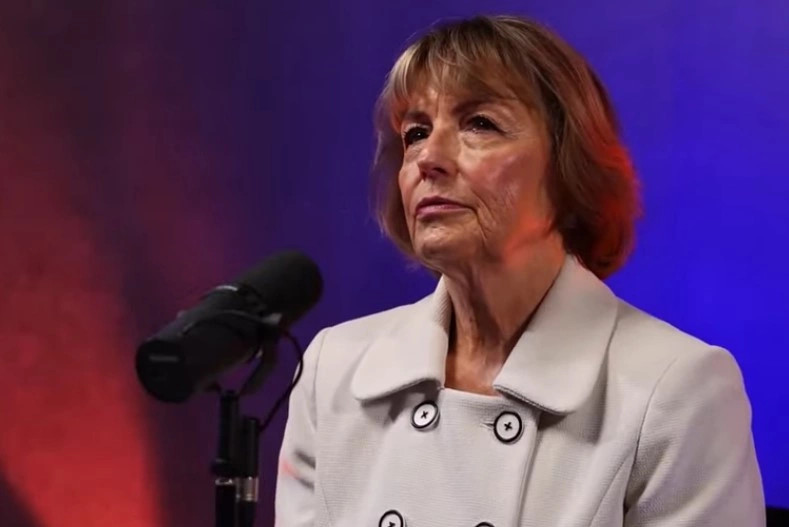
Former Croatian Foreign Minister Vesna Pusić has stated that political leaders who accumulate personal wealth while in power exhibit a strong tendency to align themselves with Russian President Vladimir Putin, systematically distancing their nations from European values.
Speaking on the PIKË podcast hosted by publicist Veton Surroi, Pusić analyzed the geopolitical landscape of the Western Balkans and Central Europe, emphasizing that anti-EU propaganda in Serbia has been intensely weaponized for over a decade to reshape public opinion.
The Mechanism of Anti-Western Propaganda
According to Pusić, Serbia’s internal political discourse has deliberately skewed the perception of global powers. She noted that state-aligned narratives consistently frame the European Union as neutral or outright hostile, while systematically promoting China and Russia as Serbia’s primary benefactors.
This state-sponsored media landscape has had a measurable impact on the population’s aspirations. Pusić pointed out that the fact that public support for EU membership in Serbia has hovered around a low 30 percent is a direct, calculated consequence of this multi-year anti-European propaganda campaign.
The Orbán Metaphor and Eastern European Autocracy
To illustrate her point, the former diplomat pointed to the political trajectory of Hungarian leader Viktor Orbán, tracking his transformation from a young defender of democracy and European integration into a close ally of the Kremlin.
“Within the EU, his veto was openly referred to as the Russian veto—Putin’s veto,” Pusić remarked. She added a sobering note on institutional resilience, highlighting that it took 16 years of consolidated political effort to finally build a domestic majority capable of challenging Orbán’s hold on Hungary.
According to Pusić, this trajectory reveals a distinct and dangerous pattern across Eastern and Central Europe:
“There is a visible model: The more a ruling leader enriches themselves while in power, the closer they gravitate toward Putin, and the further they drift away from Europe.”
A Clear Regional Pattern
Pusić explicitly applied this autocratic, wealth-driven model to three prominent figures in the region:
- Aleksandar Vučić – President of Serbia
- Milorad Dodik – President of Republika Srpska (the Serb-dominated entity of Bosnia and Herzegovina)
- Viktor Orbán – Former Prime Minister of Hungary
She concluded that for these leaders, aligning with Moscow provides an ideological shield that protects their ill-gotten domestic power structures and personal wealth from the transparency, anti-corruption standards, and rule-of-law requirements demanded by Brussels.