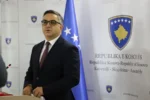
Kosovo’s acting Interior Minister Xhelal Sveçla has accused Serbian President Aleksandar Vučić of using the case of Nenad Rašković to divert international attention from the discovery of suspected mass graves and a weapons arsenal in Kosovo, while political analyst Eduard Gashi has warned that the case should be addressed through both an independent investigation and a broader assessment of how Belgrade is using the issue politically.
Sveçla said Vučić was attempting to exploit allegations surrounding Rašković to minimize Serbia’s responsibility for crimes committed during the Kosovo war.
“I want to mention the absolutely unacceptable behavior of President Vučić, who is attempting to use an allegation to minimize the actions of the Serbian state in the last war in Kosovo and to divert attention from findings that are horrific,” Sveçla said, referring to the discovery of three suspected mass graves and 71 long-barreled weapons.
Gashi: Allegations must be investigated, but Serbia may be exploiting the case
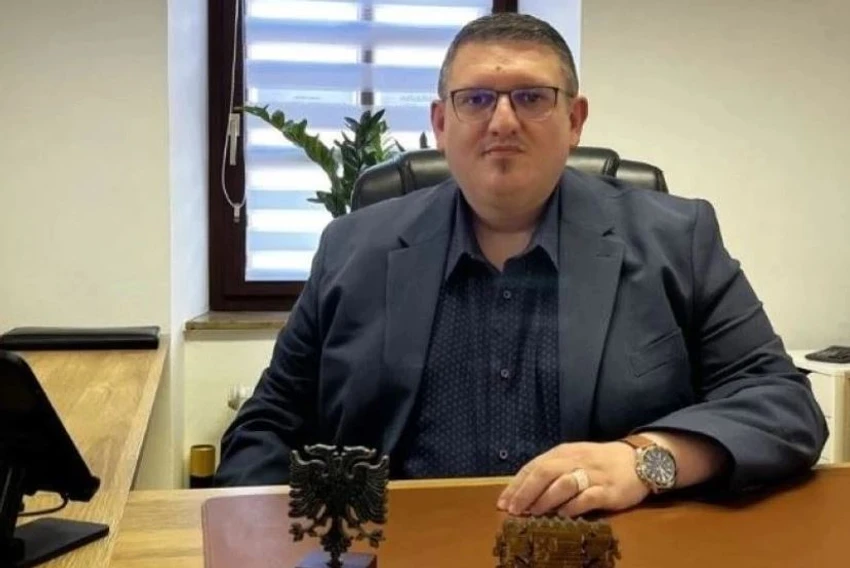
Speaking to Bota Sot, analyst Eduard Gashi said the Rašković case should be viewed on two separate levels.
He said allegations that Rašković was mistreated by members of the Kosovo Police must be investigated fully and independently, regardless of the political context surrounding the case.
The fact that Kosovo’s Police Inspectorate has intervened and that two police officers have been suspended is, according to Gashi, an indication that allegations of misconduct should be handled through institutional mechanisms.
“If there have been violations, those responsible must be held accountable. Kosovo gains nothing by relativizing an allegation of mistreatment; on the contrary, its strength lies in its ability to investigate itself as well,” Gashi said.
At the same time, he warned that an investigation into possible police misconduct should not prevent scrutiny of the political campaign surrounding the case.
Gashi argued that Vučić has given the Rašković case unusually high-profile attention while the discovery of suspected remains belonging to at least 23 people and a substantial weapons arsenal in the same broader area has received far less international attention.
“I would not automatically call every statement from Serbia ‘disinformation,’ because such a term requires concrete evidence,” Gashi said. “But Serbia has a clear political interest in shifting the international agenda away from war crimes, missing persons and the responsibility of Serbian institutions toward a narrative that Serbs in Kosovo are victims of systematic repression today.”
He added that the Rašković case “serves that communication strategy perfectly,” describing the dispute as part of a wider battle over competing narratives between Prishtina and Belgrade.
Call for stronger international focus on war crimes and missing persons
Gashi also criticized what he described as an imbalance in international media attention toward developments in Kosovo.
He stressed that there had been no complete media blackout over the suspected mass graves, noting that international outlets, including the Associated Press, had reported on the discoveries.
However, he argued that dramatic political incidents often attract substantially more international attention than the painstaking investigation of war crimes and the identification of victims.
He pointed to international coverage of political confrontations in Kosovo as an example of how highly visual incidents can generate greater headlines than discoveries related to wartime crimes.
“This does not necessarily prove a conspiracy against Kosovo, but it shows that the logic of international news often favors political spectacle over serious historical processes that require context,” Gashi said.
He called on the European Union to take a more consistent approach to the issue of missing persons.
Kosovo and Serbia have adopted a declaration on missing persons, while a trilateral meeting of the Joint Commission on Missing Persons was held earlier this year.
According to Gashi, the mechanism must produce concrete results rather than remain largely ceremonial.
He argued that Serbia should provide genuine access to archives, information, suspected locations and documentation that could help establish the fate of those still missing from the Kosovo war.
“The EU already has the political instrument to demand this and should link European progress to concrete cooperation, not merely statements,” he said.
Kosovo faces a difficult balance between sovereignty and coordination
Gashi also addressed the broader question of Kosovo’s exercise of sovereignty and its coordination with international partners.
He said Kosovo has the right to enforce its laws and institutions throughout its territory, but warned that Prishtina must take into account the country’s security dependence on KFOR, the United States and European partners.
“Kosovo cannot demand that the EU, NATO and the United States stand beside it whenever Serbia threatens Kosovo’s security, while considering coordination with those same partners unnecessary when their advice is not what we want to hear,” Gashi said.
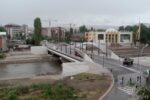
He argued that the same strategic calculation applies to the Mitrovica bridge over the Ibër River.
Kosovo should ultimately seek to make the bridge a normal crossing in a normal city rather than allow it to function as an ethnic dividing line, he said. But the political question is not simply whether Kosovo has the legal right to act, but how it can exercise that right at the lowest possible strategic cost.
Banjska remains a test of Serbia’s accountability
Gashi also pointed to the 2023 Banjska attack as an example of the limits of Kosovo’s ability to secure accountability when key suspects remain in Serbia.
He noted that it would be inaccurate to claim there have been no legal consequences, as three defendants were convicted by Kosovo’s justice system earlier this year.
However, he said the central problem remains that several major suspects, including Milan Radoičić, remain in Serbia.
The European Union has repeatedly criticized Serbia over its level of cooperation in investigating and prosecuting those responsible for the Banjska attack and other serious incidents affecting security in northern Kosovo.
For Gashi, the issue demonstrates why Kosovo needs both a firm position on accountability and closer coordination with its international partners.
“Kosovo must be firm, but strategically intelligent”
Gashi warned that international actors frequently prioritize preventing escalation over immediately determining which side is morally or politically justified.
“If violence breaks out tomorrow in the north, the international headline will be ‘unrest in northern Kosovo.’ The explanation of who provoked the situation, who was legally right and who reacted will come later — if it comes at all,” he said.
He therefore urged Prishtina to pursue a strategy that combines sovereignty with diplomatic discipline.
“Serbia must remain the party that becomes diplomatically isolated, not Kosovo,” Gashi said.
In the Rašković case, he argued, Western governments should demand full Serbian cooperation on missing persons and war-crimes investigations while also encouraging Kosovo to restore close coordination with its international allies.
“For Kosovo today, the question is not only: ‘Are we right?’ The decisive question is: ‘How do we turn our right into a political result without losing the allies we need to defend it?’”
“That is the difference between demonstrating sovereignty and building long-term state power,” Gashi concluded.