A pre-election delegation from the Parliamentary Assembly of the Council of Europe (PACE) has warned that Serbia’s parliamentary election campaign is unfolding in a highly polarized political environment that could undermine equal conditions for all participants ahead of the October 25 snap elections.
Following a two-day visit to Belgrade on October 12–13, the five-member delegation urged all political actors, including governing parties, opposition movements and civil society representatives, to refrain from inflammatory rhetoric, intimidation and conduct that could threaten a peaceful and democratic electoral process.
The delegation also stressed that election observers must be granted access to all stages of the electoral process and called on the authorities to ensure a peaceful environment throughout the campaign and around election day.
It emphasized that national security institutions must refrain from using force or imposing unjustified restrictions on freedom of assembly, a right protected by the European Convention on Human Rights, to which Serbia is a party.
Concerns over electoral conditions
According to PACE, the October 25 elections are taking place amid political rhetoric framing the vote as a referendum and continuing a pattern of frequently called early elections.
The delegation also criticized amendments to four electoral laws adopted in May 2026, shortly before the elections, saying the timing was inconsistent with international standards.
While acknowledging some positive changes, including restrictions on campaign financing and mandatory training for polling station board members, the delegation said the amendments had not sufficiently addressed earlier recommendations from the Organization for Security and Co-operation in Europe’s Office for Democratic Institutions and Human Rights (ODIHR) and the Venice Commission.
Persistent concerns include the alleged misuse of public resources, pressure on voters and abuse of provisions intended for national minority electoral lists.
During meetings with political representatives and other stakeholders, the delegation heard concerns about unequal campaign conditions and what it described as disproportionate media coverage of the ruling party.
Questions were also raised about the accuracy of voter registers and arrangements for voting abroad, with concerns that shortcomings in addressing these issues could create risks of electoral manipulation.
Concerns over intimidation and media freedom
The delegation reported hearing concerns about hostile and aggressive rhetoric directed at opposition activists, civil society representatives and journalists. It also noted persistent and credible allegations of surveillance, alongside concerns about the safety of voters and election observers.
“Demonization of critical voices and smear campaigns against them have no place in a democratic society,” the delegation said, adding that such tactics cannot serve as a response to demands expressed by an active civil society.
It also noted widespread uncertainty across Serbia’s political spectrum about the period following the elections.
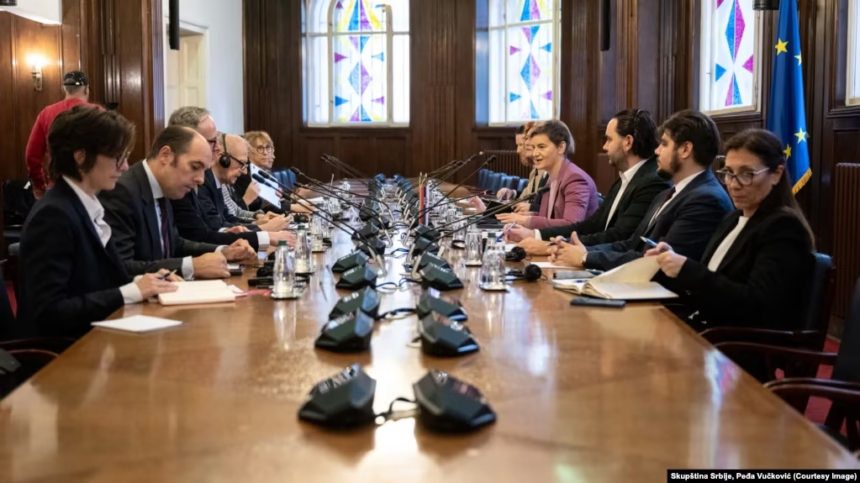
During its visit, the delegation met with Serbian Parliament Speaker and Acting President Ana Brnabić, members of Serbia’s PACE delegation, representatives of parliamentary groups and non-parliamentary parties, including minority parties.
The delegation also held discussions with representatives of the Interior Ministry, the Republic Electoral Commission, the voter-register audit commission, the OSCE/ODIHR election observation mission, civil society organizations and the media.
PACE announced that it would deploy a full election observation mission to monitor voting and the counting of ballots on October 25, working alongside ODIHR, the OSCE Parliamentary Assembly and the European Parliament.