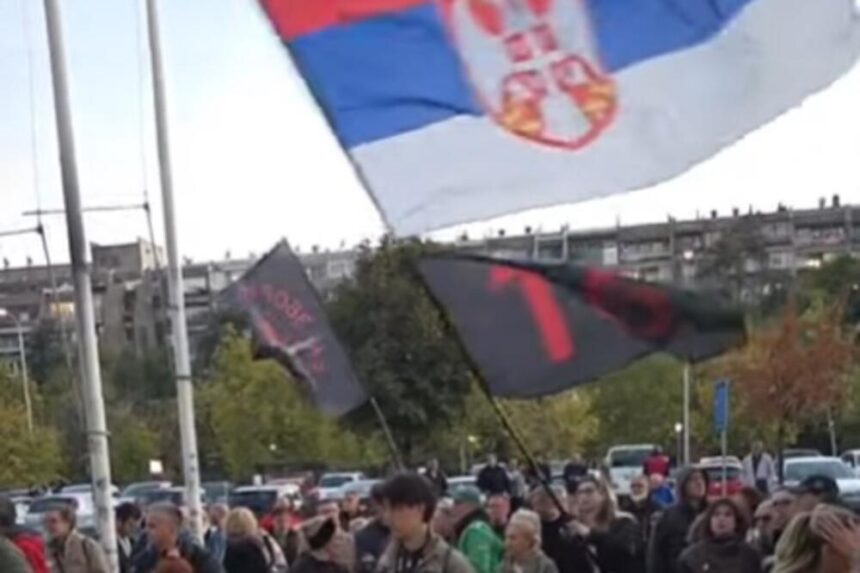
A large number of citizens gathered outside the Nova.rs newsroom in Belgrade on Wednesday to support journalists who have been threatened with dismissal if they refuse to work under newly appointed editor-in-chief Marko Stjepanović.
The protest began at 6 p.m. at 8a Zorana Đinđića Boulevard in New Belgrade and attracted journalists from other independent media outlets, as well as public figures from the cultural, scientific, legal and sporting communities and members of the Konjarnik Citizens’ Assembly.
Demonstrators blocked traffic along the boulevard, according to a reporter for the Beta news agency.
The dispute follows changes in the management of Nova.rs and the wider media group formerly operated by United Media. Pedro Vargas Santos David, owner of Alpak Capital and director of United Media Digital, recently introduced Stjepanović as the portal’s new editor-in-chief, alongside deputy editor Ivana Mastilović Jasnić. The newsroom has rejected both appointments.
Stjepanović and Mastilović Jasnić previously held editorial positions at Ringier, the Swiss media company that owns the pro-government tabloid Blic.
Nova.rs employees said they had been given 48 hours to decide whether to accept the new management or take severance packages. The deadline for responding to the offer was set for Thursday at 7 p.m.
According to Ranko Pivljanin, editor of the Nova newspaper, the newsroom voted almost unanimously to remain in their positions and reject the offer.
“Nearly 99 percent of the staff voted to stay and continue working, rejecting what we consider an unacceptable offer,” Pivljanin told N1, describing the level of solidarity among colleagues as unprecedented in his experience.
Stjepanović previously said that employees who disagreed with the editor-in-chief and company management would have to leave the company.
Journalists’ association criticizes the process
Tamara Filipović, secretary-general of the Independent Journalists’ Association of Serbia (NUNS), criticized the handling of the changes at Nova.rs and other media outlets previously owned by United Media, arguing that the process did not meet professional or European standards.
She described the severance offer and the 48-hour deadline as unacceptable and said the short timeframe placed additional pressure on employees.
Filipović also questioned the involvement of the editorial board in decisions concerning salaries and severance payments, noting that, according to publicly available information, the ownership transaction had not yet been fully completed.
She cited European recommendations emphasizing the importance of involving and informing newsroom staff when media ownership structures and editorial leadership change. Such safeguards, she said, are intended to protect editorial independence and ensure that journalism serves the public interest.
The developments have attracted particular attention because they are unfolding around ten days before Serbia’s parliamentary elections. Filipović said the process had begun earlier but had accelerated in recent days.
The dispute has raised broader concerns among journalists and media organizations about newsroom autonomy, employment security and editorial independence during a politically sensitive period in Serbia.