NATO has officially placed any further deepening of its institutional partnership with Serbia on ice, conditioning any future geopolitical alignment on absolute legal accountability for the September 2023 Banjska paramilitary attack.
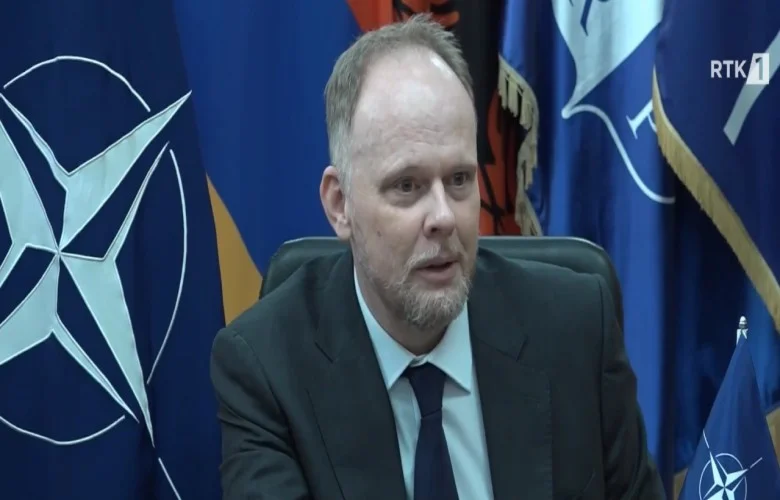
The strict diplomatic ultimatum was delivered in Prishtina by NATO’s Deputy Assistant Secretary General, Kevin Hamilton, during an exclusive briefing with journalists following his high-level security rounds through the Western Balkans.
Hamilton revealed that he traveled directly to Prishtina from Belgrade, where he personally delivered the exact same confrontational mandate to top-tier Serbian state leaders.
The Ultimatum Matrix: Three Core Red Lines
The Atlantic Alliance’s freeze on Belgrade is not limited to a single flashpoint. Hamilton explicitly outlined three critical security incidents occurring within Kosovo over the last three years where NATO demands full domestic prosecution by Serbian judicial authorities before any diplomatic thaw can occur:
   [NATO'S THREE CONDITIONS FOR SERBIA]
   1. The Zveçan Riot (May 29, 2023):        Justice for the wounding of 90+ KFOR peacekeepers.
   2. The Banjska Attack (Sept 24, 2023):     Full prosecution of the organized paramilitary raid.
   3. The Ibër-Lepenac Aqueduct Sabotage:    Accountability for critical infrastructure attacks.
The NATO envoy made it clear that while Brussels fundamentally desires a transparent and stable relationship with Serbia, the alliance refuses to gloss over organized violence against its deployed troops.
“Those incidents—the attacks on KFOR personnel—were entirely unacceptable,” Hamilton told reporters. “The message to the Serbian authorities was that NATO demands accountability, and justice must be served against those who executed and organized these operations. While NATO wishes to have a deeper, more transparent, and positive relationship with Serbia, certain aspects of this partnership simply cannot advance until there is accountability for those attacks. The ball is squarely in Belgrade’s court.”
Shadows of Belgrade-Backed Destabilization
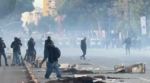
Hamilton’s reference to the Zveçan clashes points directly to the worst outbreak of violence the region had seen in a decade. On May 29, 2023, organized mobs of Serb demonstrators in Zveçan clashed violently with KFOR peacekeepers outside the municipal building, utilizing shock bombs, improvised explosive devices, and firearms.
The resulting clashes left over 90 multinational soldiers seriously injured, sparking a rapid reinforcement of NATO troops along the volatile border. NATO’s current position draws a straight line from those riots to the subsequent armor-clad paramilitary raid in Banjska, treating both events as a synchronized effort by nationalist factions to forcibly compromise Kosovo’s northern security perimeter.
Russian Hybrid Playbook Target: The Western Balkans
A significant portion of Hamilton’s briefing focused on the shifting defense theater in Southeast Europe, specifically pointing to the Kremlin’s aggressive exploitation of these regional ethnic fault lines.
               [THE KREMLIN'S BALKAN HYBRID VECTOR]
                                 │
       State-Backed Russian Disinformation Networks (Sputnik/RT Balkan)
                                 │
                                 ▼
       Weaponized Media Narratives to Exacerbate Local Ethnic Fault Lines
                                 │
                                 ▼
       Sowing Instability to Divert Euro-Atlantic Focus Away from Ukraine
The Deputy Assistant Secretary General warned that foreign malign actors are actively using sophisticated cyber-enabled disinformation campaigns to systematically undermine Kosovo’s internal security architecture.
“Unfortunately, we see external actors—and I will explicitly name one: Russia—engaging in heavy disinformation campaigns and hybrid activities, not just here in the Western Balkans, but globally,” Hamilton warned. “This is a core chapter of the Russian playbook: to sow deep societal divisions. It is absolutely paramount that the people here in Kosovo, and across the wider region, remain profoundly vigilant about what they read.”
Kosovo’s NATO Aspirations vs. The Reality of Consensus
Addressing Prishtina’s long-term strategic goal of achieving full NATO membership and entering the Partnership for Peace (PfP) framework, Hamilton offered a grounded, realistic assessment of the current geopolitical landscape.
While acknowledging the Kosovo government’s legitimate sovereign aspirations, he reminded local leaders of the structural reality governing the alliance:
- The Consensus Rule: NATO functions strictly on an all-or-nothing consensus basis among its 32 member states, several of whom (including Spain, Greece, Romania, and Slovakia) still do not formally recognize Kosovo’s independence.
- Enlargement Fatigue: Hamilton noted that given the immense conventional defense burdens currently facing the alliance in Eastern Europe, NATO is “not in the immediate disposition to absorb new members.”
- Tactical Focus: For the foreseeable future, NATO’s operational focus will remain anchored on maintaining its rock-solid practical cooperation through the KFOR mission on the ground, securing everyday stability along the Kosovo-Serbia border.