Following the successful, high-profile capture of Venezuelan dictator Nicolás Maduro earlier this year, the Trump administration has turned its sights toward Havana.
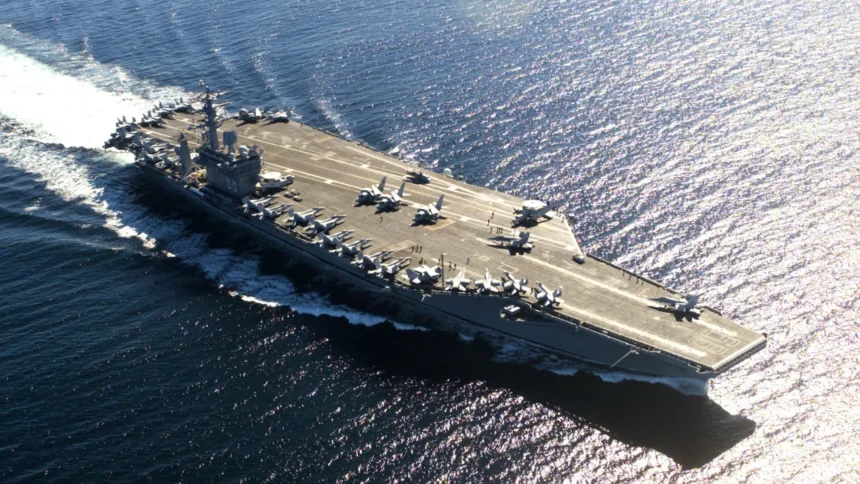
The deployment of the nuclear-powered aircraft carrier USS Nimitz and its strike group to the southern Caribbean has signaled a massive escalation, sparking fears that Cuba is slated to undergo an engineered regime change mirroring the ongoing transition in Venezuela.
While a senior administration source assured The New York Times that the naval deployment is a “show of force rather than a major imminent military invasion,” regional analysts warn that the geopolitical machinery to topple the over-90-year-old Raúl Castro regime has already been set in motion.
   [THE CARACAS MODEL VS. THE HAVANA REALITY]

   THE CARACAS MODEL (Applied Jan 3, 2026)
   • Target:       Dehead the executive (Capture Maduro via USS Gerald Ford raid).
   • Transition:   Install co-opted insider (Interim President Delcy Rodríguez).
   • Focus:        Maintain mid-level bureaucratic stability; immediately resume oil trade.
   • Result:       "Chavismo" dismantled overnight; democracy sidelined for business.

   THE HAVANA OBSTACLE (May 2026 Axis)
   • Status:       Raúl Castro indicted; CIA Director John Ratcliffe issues ultimatum.
   • Complication: Hardline Miami diaspora rejects any "hybrid" Castro-lite stability.
   • Risk Factor:  No domestic political opposition exists; potential for total military collapse.
The Architecture of the “Caracas Model”
The strategic template favored by President Donald Trump is highly transactional. Developed during the January 3 extraction of Maduro to New York to face drug-trafficking trials, the “Caracas Model” avoids protracted nation-building. Instead, it slices off the supreme leader, leaves mid-level administrative and military officials intact to prevent state collapse, and immediately locks in multi-billion-dollar trade and commodity deals.
In Venezuela, this has translated into interim President Delcy Rodríguez working in lockstep with the White House to swiftly restart frozen oil flows, effectively mothballing 26 years of Chavismo in exchange for economic survival, even as democratic elections remain frozen.
However, White House officials are learning that Havana cannot simply be treated as a second Caracas.
The Miami Veto: Why Rubio Cannot Compromise
The primary impediment to a smooth, corporate-style transition in Cuba lies not within the communist island, but within the fierce domestic political dynamics of the United States.
Unlike the fragmented Venezuelan diaspora, Cuban-Americans wield immense institutional power in Washington, controlling 11 congressional seats and anchoring Trump’s core electoral base in Florida.
                  [THE CUBAN DIASPORA PRESSURE AXIS]
                                  │
         11 Cuban-American Members of the United States Congress
                                  │
                                  ▼
         Secretary of State Marco Rubio (Faced with a 27-Point Drop in Latino Polls)
                                  │
                                  ▼
         Total Rejection of "Hybrid Dictatorship" ──> Direct Regime Change Demanded
Prominent Cuban-American businessman Hugo Cancio, founder of the island-centric e-commerce platform Katapulk, highlighted this structural rigidity in an interview with Corriere della Sera:
“In my discussions with administration officials, I see absolutely no room for the current leadership, nor for the president, nor for the Castro family. I am convinced that Trump’s ultimate goal is an absolute change of government in Cuba, in the very short term.”
This reality places Secretary of State Marco Rubio—who is currently managing sensitive, non-secret communications with Raúl Castro’s increasingly powerful grandson, Raúl Rodríguez Castro—in a tight political bind. Rubio is acutely aware that the Miami electorate will never accept a hybrid, “Uncle Sam-approved Castroism.”
This domestic pressure is compounded by a devastating new Pew Research Center poll showing that Trump’s approval rating among Hispanic voters has plummeted by 27 percentage points since the start of his second term, currently sitting at just 66%.
Ratcliffe’s Mob-Style Ultimatum to Havana
The geopolitical pressure cooker is reaching a boiling point due to a catastrophic domestic fuel and food crisis in Cuba. Taking advantage of the island’s depleted energy reserves, CIA Director John Ratcliffe recently conducted a historic, unannounced visit to Havana to deliver a blunt ultimatum to Cuban Interior Minister Lázaro Casas and Raúl Rodríguez Castro.
According to New York Times briefings, Ratcliffe delivered a mob-style warning to the regime:
“It would be a shame if something bad were to happen to this beautiful island.”
                 [THE HAVANA ENERGY & DIPLOMATIC MATRIX]
                                    │
       Havana Confirms National Fuel & Food Reserves Are Entirely Depleted
                                    │
                                    ▼
       CIA Director Ratcliffe Delivers Hardline Ultimatum to Regime Leaders
                                    │
                                    ▼
       Rubio Coordinates a Conditional $100 Million Humanitarian First-Aid Package
While Cuba has officially bowed to pressure by accepting a $100 million emergency U.S. humanitarian aid package, the structural future of the island remains highly volatile.
If backchannel negotiations fail to produce a total abdication of the communist apparatus, Washington insiders hint that a direct military blockade or targeted intervention remains on the table—a scenario with entirely unpredictable consequences for a highly indoctrinated military and a population starved of basic resources.