Bypassed by the raw military force shaping the conflict between the United States, Israel, and Iran, Germany has launched a major diplomatic restructuring.
Rather than attempting to act as a direct mediator between Washington and Tehran, Foreign Minister Johann Wadephul (CDU) has initiated an intensive diplomatic campaign. Berlin is shifting its strategic focus toward fortifying partnerships with the Gulf States and resource-rich Southeast Asian nations.
The Failure of the Western “Shield”
This diplomatic push follows a public shift from Chancellor Friedrich Merz. In late April, following the initial outbreak of the full-scale war between the U.S., Israel, and Iran, Merz openly expressed deep “disappointment” with the lack of a quick resolution from U.S. President Donald Trump and Israeli Prime Minister Benjamin Netanyahu.
With the war locked in a volatile stalemate and Russia actively supplying Iran, the traditional security dynamic in the Persian Gulf has fractured.
       [GERMANY'S MULTI-VECTOR DIPLOMACY — MAY 2026]
                             │
     ┌───────────────────────┼───────────────────────┐
     ▼                       ▼                       ▼
THE GULF ANCHOR:        ENERGY SECURITY:        THE ASEAN AXIS:
• UAE & Jordan talks    • Absorbing Ukrainian   • Sultan of Brunei hosted
• Rebuilding trust        lessons on protecting   • Clearing the Strait
  outside U.S. shadow     power grids               of Hormuz blockade
Max Hofmann, Berlin Bureau Chief for Deutsche Welle (DW), notes that Arab capitals are experiencing a crisis of faith in Washington’s role as a reliable security guarantor.
“The U.S. is not succeeding as a protective power,” Hofmann observed. “Instead, it is actively damaging the security and business models of many regional players through the economic spillover of this war. The old strategy of viewing Washington as the sole mediator has failed.”
High-Stakes Engagements in Berlin
To fill this vacuum, Foreign Minister Wadephul conducted an unusually dense week of high-level bilateral summits in Berlin:
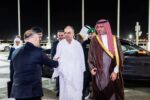
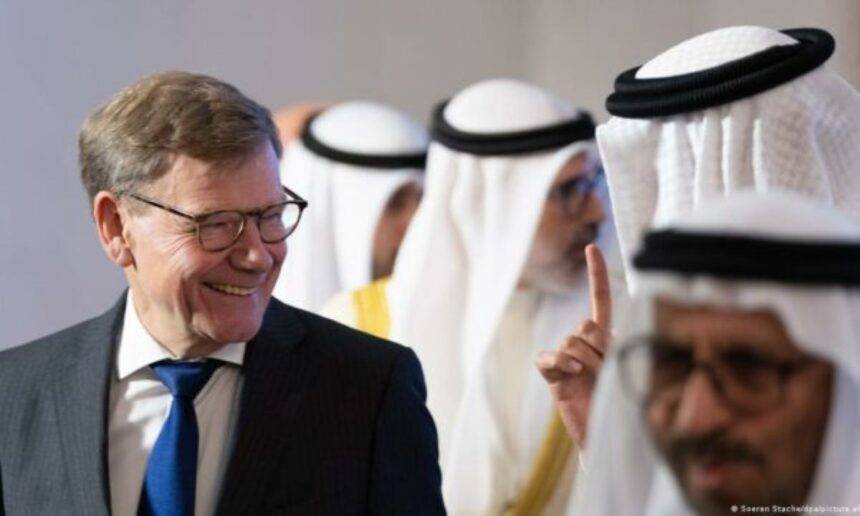
- The Middle East Track: Wadephul hosted the Foreign Minister of the United Arab Emirates (UAE), Sheikh Abdullah bin Zayed, alongside Jordan’s Crown Prince Hussein bin Abdullah. The sessions focused on defensive stabilization and mitigating Iranian drone and missile threats.
- The Anatolian Corridor: A key strategy session was held with Turkish Foreign Minister Hakan Fidan to coordinate migration paths, Black Sea logistics, and regional trade.
- The Ukrainian Energy Model: Wadephul convened a joint security conference with the German Ministry of Economic Affairs and Energy and Ukrainian delegates. After four years of war with Russia, Ukraine has developed world-class methods for protecting civilian energy grids from external strikes—tactics Germany is now studying to harden its own domestic infrastructure.
The Green Hydrogen Horizon and the Hormuz Blockade
Berlin’s diplomatic shift is also heavily driven by long-term economic and energy necessities.
Wadephul hosted Sultan Hassanal Bolkiah of Brunei, the current chair of the Association of Southeast Asian Nations (ASEAN). The 11-nation Southeast Asian trade bloc has seen its shipping routes severely disrupted by Iran’s ongoing maritime blockade of the Strait of Hormuz.
  [GLOBAL SHIPPING IMPREATIVE — BALKAN & ASIAN OUTLOOK]
                            │
                            ▼
 ┌────────────────────────────────────────────────────────┐
 │ CHOKEPOINT:     Strait of Hormuz (Blocked by Iran)     │
 ├────────────────────────────────────────────────────────┤
 │ ECO-IMPACT:     Paralyzed ASEAN-to-Europe trade lanes  │
 ├────────────────────────────────────────────────────────┤
 │ FUTURE REMEDY:  Gulf-backed bypass routes & green      │
 │                 hydrogen supply pipelines to Germany   │
 └────────────────────────────────────────────────────────┘
While Germany works with Gulf partners to build alternative overland transport corridors to bypass the blocked strait, Berlin is also looking ahead to its post-fossil fuel economy. The German government views the Gulf region as a crucial future supplier of green hydrogen to feed its heavy industrial base.
The June 3 UN Security Council Race
Germany’s diplomatic surge arrives just ahead of a critical international vote. On June 3, 2026, the UN General Assembly will convene to select its next non-permanent members for the UN Security Council.
Germany is locked in a tight, unpredictable three-way race against Austria and Portugal for the coveted European seats. By positioning itself as a reliable partner committed to a rules-based international order, Berlin is using its diplomatic engagements this week to secure vital voting blocks across the Global South.