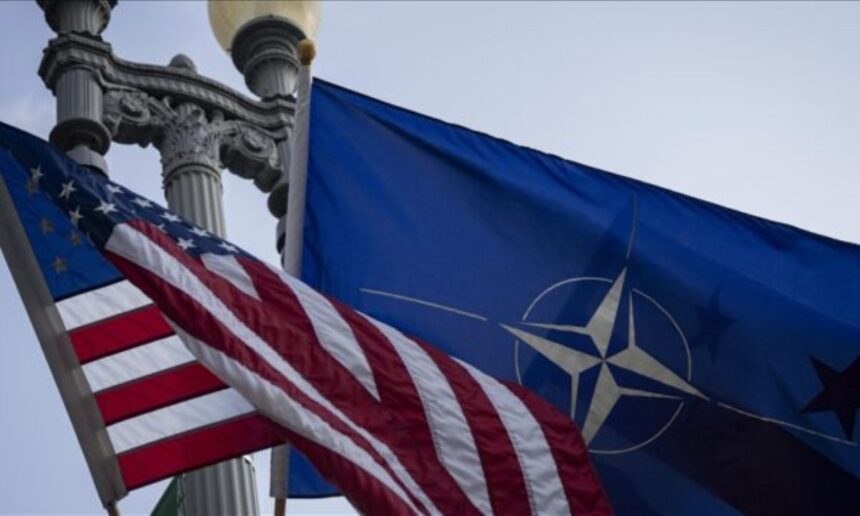
The United States has quietly informed its European allies of plans to drastically scale back its military contributions to NATO’s core readiness frameworks, urging European capitals to swiftly fill the resulting security gaps.
According to an investigative report published on Tuesday by the German weekly Der Spiegel, the bombshell directive was delivered during a confidential, high-level briefing at NATO headquarters in Brussels last week, catching European defense officials completely off guard by the sheer scale of the planned American drawdown.
Shift to the Indo-Pacific: The Rationale Behind the Drawdown
The briefing was delivered by Alexander Velez-Green, a senior envoy representing U.S. Secretary of Defense Pete Hegseth. According to diplomatic and military sources speaking on the condition of anonymity, Velez-Green explicitly told allies that the Trump administration intends to slash the volume of critical American assets pledged to the NATO Force Model (NFM).
The strategic rationale behind Washington’s decision is clear: strategic decoupling for Indo-Pacific flexibility. By stripping away formal, binding earmarks that legally tie specific U.S. hardware to European defense contingencies, the Pentagon aims to free up its global inventory to counter rapid military expansionism in East Asia.
                   [U.S. GLOBAL FORCE REALIGNMENT]
                                  │
         ┌────────────────────────┴────────────────────────┐
         ▼                                                 ▼
NATO FORCE MODEL (NFM):                            INDO-PACIFIC THEATER:
• Binding hardware earmarks dissolved.             • Assets unlocked for flexible,
• Europe must handle conventional defense.           rapid deployment.
The Anatomy of the Cuts: What the U.S. is Withdrawing
The planned reductions strike at the very spine of NATO’s high-readiness air, naval, and intelligence networks. The specific asset clawbacks detailed in the leak include:
- Air Superiority and Strategic Strike: The U.S. is weighing an approximate one-third (33%) reduction in the number of front-line fighter jets committed to NATO rosters. Furthermore, the number of nuclear-capable strategic bombers designated for European reinforcement plans will be severely curtailed.
- Naval Assets: Washington plans to place fewer guided-missile destroyers at NATO’s immediate disposal and has stated it does not plan to offer any submarines to the NATO Force Model.
- Force Enablers: The drawdown will sharply minimize the number of deployable U.S. reconnaissance drones (UAVs) and aerial refueling tankers—the backbone that allows European air forces to sustain long-range combat missions.
The New Reality: “Nuclear Umbrella Only”
The Pentagon’s message to Europe signals an end to decades of reliance on conventional American military might:
The U.S. Strategic Mandate to NATO: Washington will maintain its robust strategic nuclear deterrent over Europe to prevent total war. However, European member states must now shoulder total, primary responsibility for conventional defense—including ground troops, localized air defense, and naval patrols.
                    [THE NEW NATO DEFENSE SPLIT]
                                 │
        ├─► UNITED STATES ─────► Retains the Strategic Nuclear Umbrella
        │
        └─► EUROPEAN ALLIES ───► Must fund & field 100% of Conventional
                                 Defense (Troops, Jets, Tanks, Ships)
While Poland has aggressively pushed its defense spending to a record 4.8% of GDP and secured localized troop commitments, Western European giants like Germany, France, and Italy are now under intense pressure to radically accelerate their defense industrial output.
With the U.S. actively shifting its heavy armor, naval fleets, and high-tech surveillance platforms toward Asia, the continent faces an unprecedented race against time to achieve autonomous conventional military readiness.